What the New United States Space Academy Order Actually Creates
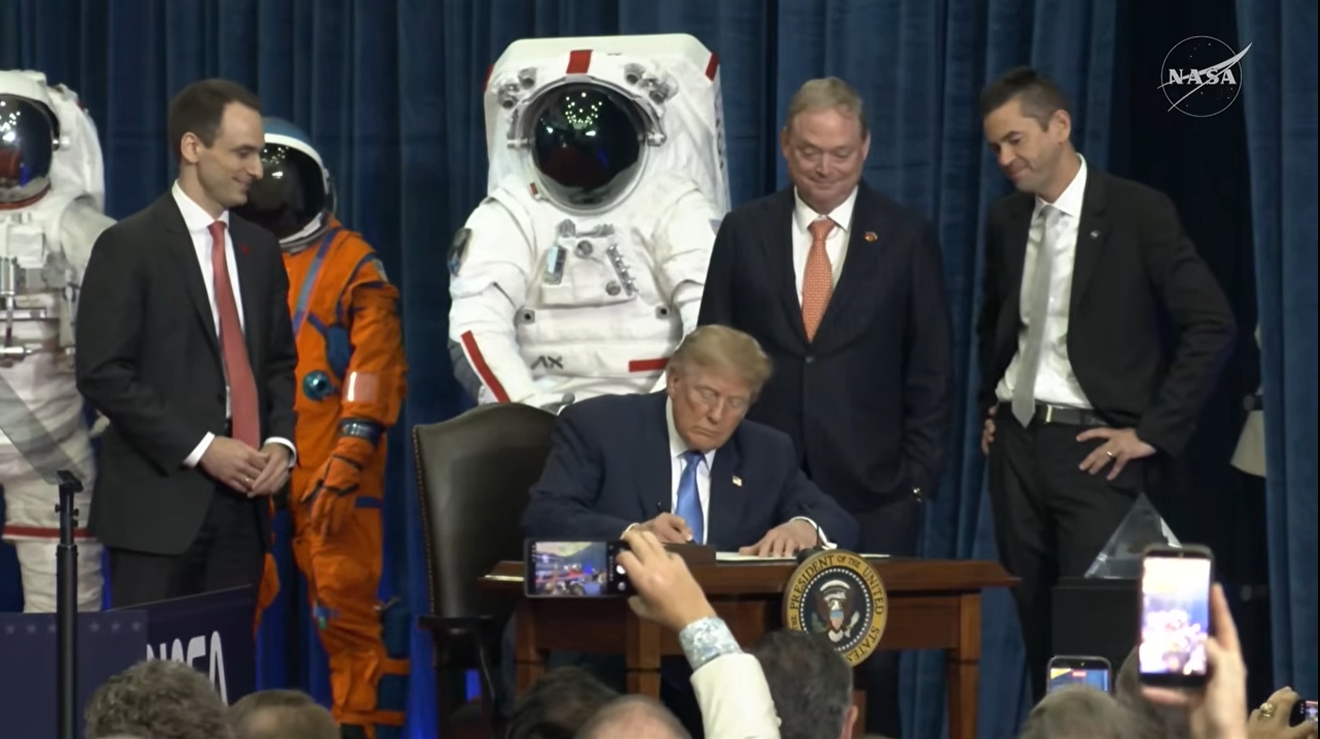
The United States did not open a new space academy on August 28. What the new order actually created is a Presidential Commission on the United States Space Academy—a group charged with designing recommendations for a possible future institution. That distinction matters for anyone following space careers: there is no announced application, class, campus, degree program, or graduate service requirement today. The Commission has 120 days to report to the President, putting its recommendations due by December 26, 2026.

President Donald Trump signs the executive order at NASA’s Johnson Space Center. Credit: NASA. Source)
The order frames the proposed academy as a NASA-led federal model that could combine rigorous technical education with leadership development, discipline, and public service. But “proposed” is doing important work here. The document asks the Commission to work through the questions that would turn an idea into an institution. Join the Cosmic Match space community to follow the stories, missions, and people shaping that future.
What did the Space Academy executive order actually establish?
Legally, it established the Presidential Commission on the United States Space Academy. The NASA Administrator chairs it; the White House science and economic-policy advisers serve as vice chairs; and the NASA Deputy Administrator is its executive director. The order also brings in specified White House, budget, national-security, defense, and Air Force officials or their designees.
Its job is advisory: to develop proposals and a report for the President. It does not itself announce an operating school. The White House order is explicit that the academy is a proposed NASA-led federal academy. The White House fact sheet similarly describes the Commission as beginning the design process.
What will the Commission decide in the next 120 days?
The report has a wide brief. It must recommend a governance framework, including organizational structure, authorities, accreditation, and relationships among agencies. It must address academic and leadership curriculum, possible degree programs and experiential training, and the qualifications future applicants might need.
The assignment also includes questions with real consequences for future students: whether graduates could have Armed Forces or civilian federal-service obligations; how citizenship, security-clearance, employment, or military-status prerequisites might work; and how the permanent physical location should be selected. The Commission is also directed to consider pilots, partnerships, legislation, coordination with existing federal education programs, and a practical implementation sequence.
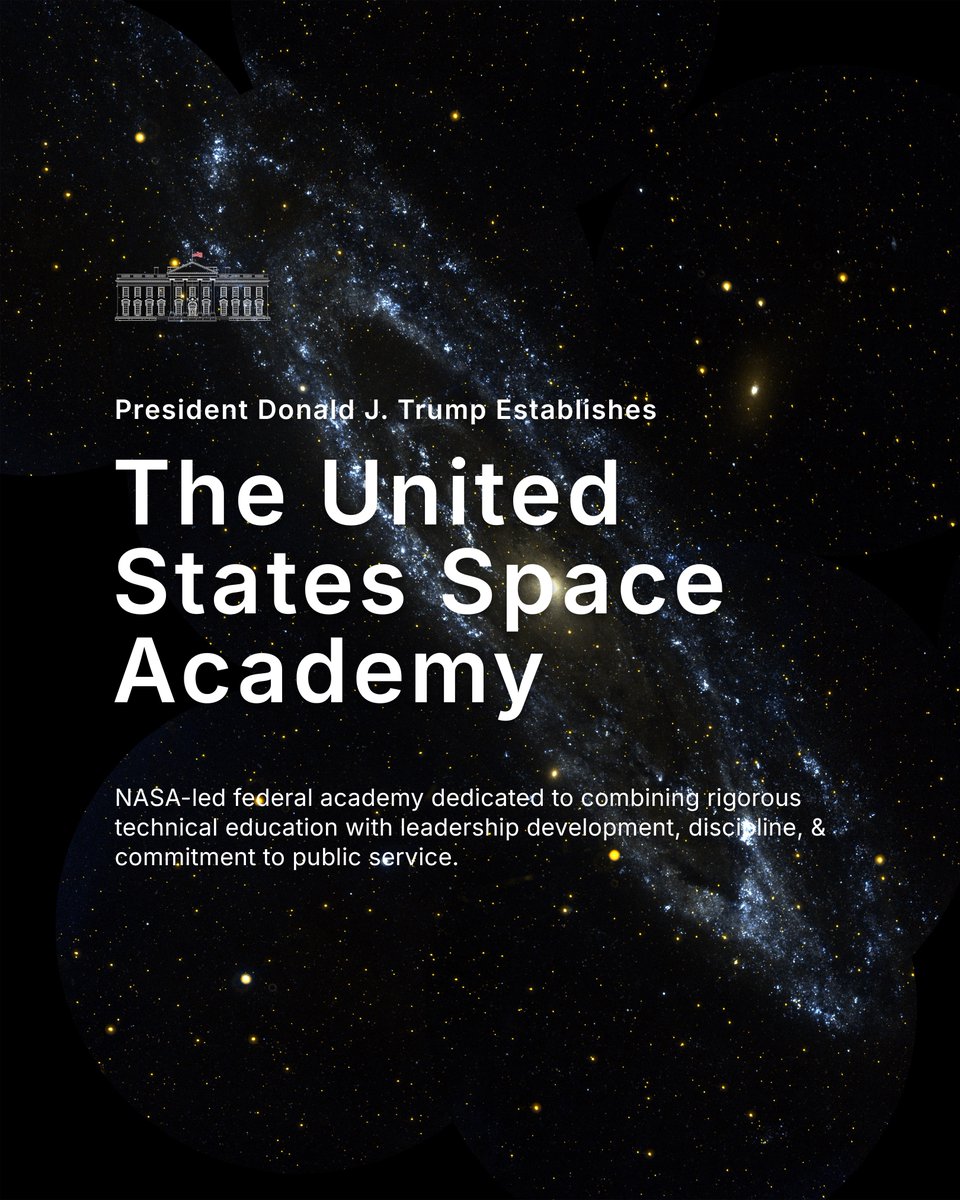
United States Space Academy announcement graphic supplied by Cosmic Match’s CEO. Source)
That means it is too early to describe the U.S. Space Academy as funded, accredited, enrolling, or permanently located anywhere. The order says implementation would follow presidential approval and any necessary legislation, consistent with applicable law and available appropriations. Funding is not appropriated by the order itself.
Is Houston now the permanent home of the United States Space Academy?
No. The signing ceremony took place at NASA’s Johnson Space Center in Houston, a meaningful setting for a national conversation about human spaceflight and technical talent. But the permanent location remains an item for the Commission’s recommendation, not a decision announced on August 28. NASA’s release on the signing confirms both the Houston venue and the 120-day report requirement.
For Houston’s space community, that is a reason to watch closely—not a campus announcement. The same is true for enthusiasts in Austin, Los Angeles, and everywhere else: no local program, admissions path, or permanent site was named in the order.
Who could a future Space Academy be designed to serve?
The order’s workforce language is broader than a single job title. It names astronauts, scientists, engineers, operators, entrepreneurs, civil servants, and warfighters as people the nation needs to prepare. The White House fact sheet also points to military, civil, and wider space-enterprise careers.
That broad intent does not settle the academy’s form. Existing federal service academies can be useful comparisons, but not blueprints. For example, the U.S. Air Force Academy already commissions some graduates into the Space Force; the new order, by contrast, asks the Commission to recommend what any obligations for Space Academy graduates should be. Nothing in this announcement establishes a particular service commitment.
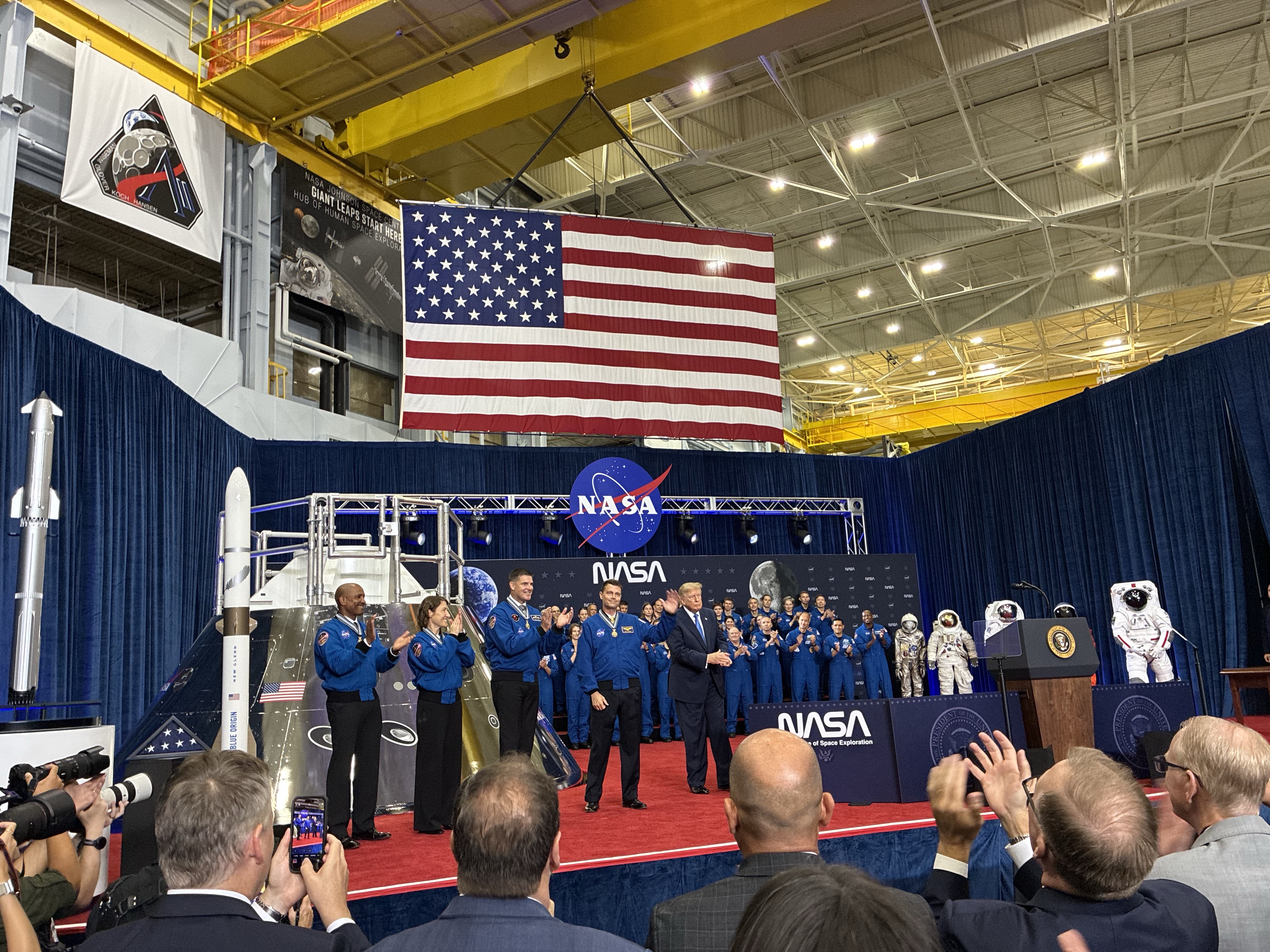
President Donald Trump with the Artemis II crew at a separate Congressional Space Medal of Honor ceremony at NASA’s Johnson Space Center; this photo does not depict the signing. Credit: NASA. Source)
For people curious about a space career now, the practical takeaway is simpler: keep building relevant skills and community while the policy process unfolds. Local astronomy clubs, maker groups, university outreach, observatories, internships, and public NASA learning resources remain real ways to meet peers and explore the field. For a nearby dose of shared sky curiosity, see our guide to your first visit to Houston’s Burke Baker Planetarium.
What happens next?
By late December, the Commission is due to submit its recommendations. Those recommendations could clarify whether a proposed academy would sit inside NASA or take another form, where it might be located, what it would teach, who could apply, what legal steps would be needed, and how it could be paid for and implemented. Until then, the most accurate description is also the least flashy: the United States has launched a formal design process for a proposed Space Academy.
Space policy is often built in stages—an announcement, a working group, a report, then administrative and sometimes legislative action. This order is the first of those stages, not the finish line.
FAQ
Is the United States Space Academy open for applications?
No. The August 28 order created a Commission to develop recommendations; it did not announce admissions, eligibility rules, or an opening date.
When is the Commission’s report due?
The order requires a report within 120 days of August 28, 2026—December 26, 2026. It does not specify a time of day or time zone.
Will the academy be in Houston?
Houston hosted the signing at Johnson Space Center, but the permanent-location selection process remains part of the Commission’s work. No permanent campus was selected in the order.
Will graduates have to serve in the military?
That has not been decided. The Commission must recommend possible Armed Forces and civilian federal-service obligations and their conditions.