NASA Picks Blue Origin to Build Mars’s Next Communications Network

NASA has selected Blue Origin to provide a Mars communications network—a move that is bigger than ordering a single spacecraft. The agency says the network is meant to carry science data, imagery, navigation information, and mission communications for spacecraft on and around Mars. Blue Origin must deliver by December 31, 2028; NASA expects the network to be operating at Mars by 2030.

NASA describes the award as a firm-fixed-price contract with a maximum potential value of about $700 million. That is a ceiling on the contract—not $700 million already paid to or earned by Blue Origin. The announcement also does not set a 2028 launch date. It sets a delivery deadline.
The news matters because Mars exploration increasingly depends on a dependable way to move information across enormous distances. A rover’s image, an orbiter’s science measurement, and a future crewed mission’s navigation data are only useful once they can get where they need to go.
What did NASA actually buy from Blue Origin?
NASA selected Blue Origin to design, develop, integrate, launch, and operate a high-performance Mars telecommunications network. In NASA’s words, its role is to transmit science data, imagery, navigation information, and mission communications for spacecraft at Mars and in Mars orbit.
That makes this a service-and-infrastructure award, not a contract for one narrowly defined science instrument. The practical goal is a commercial data and navigation layer that could support several missions over time. It fits NASA’s broader Moon-to-Mars approach: build capabilities that future missions can share rather than duplicating the same support hardware for every new visitor.
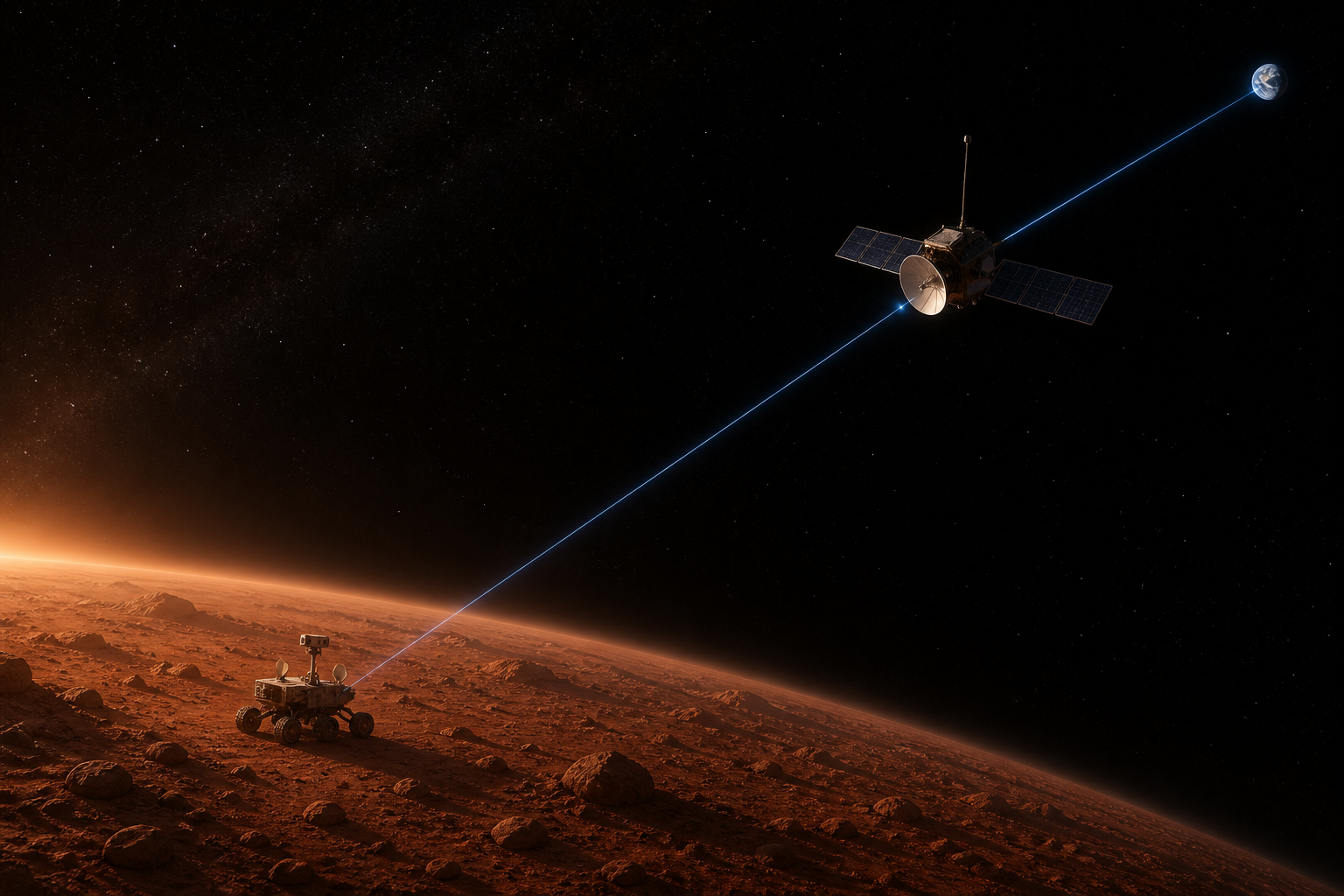
For space fans, the useful comparison is terrestrial infrastructure. A new road or cell network changes what many people can do; it is not just a vehicle for one trip. At Mars, communications links and navigation support can have the same multiplier effect for robotic—and eventually human—exploration.
Why is a Mars network different from a one-spacecraft contract?
Mars missions already use relay orbiters and deep-space ground networks, but a dedicated commercial network changes the procurement model. NASA is asking one provider to deliver and operate a network intended to serve current and future users. The agency is buying an outcome—Mars data and navigation service—rather than simply taking possession of a piece of hardware.
That distinction matters when we talk about the award’s price and schedule. The contract’s maximum potential value is approximately $700 million. Blue Origin’s delivery obligation is no later than the end of 2028. NASA’s anticipated operational date at Mars is 2030. Those are three different milestones, and collapsing them into “a $700 million Mars orbiter launches in 2028” would be inaccurate.
What has Blue Origin said about the proposed network?
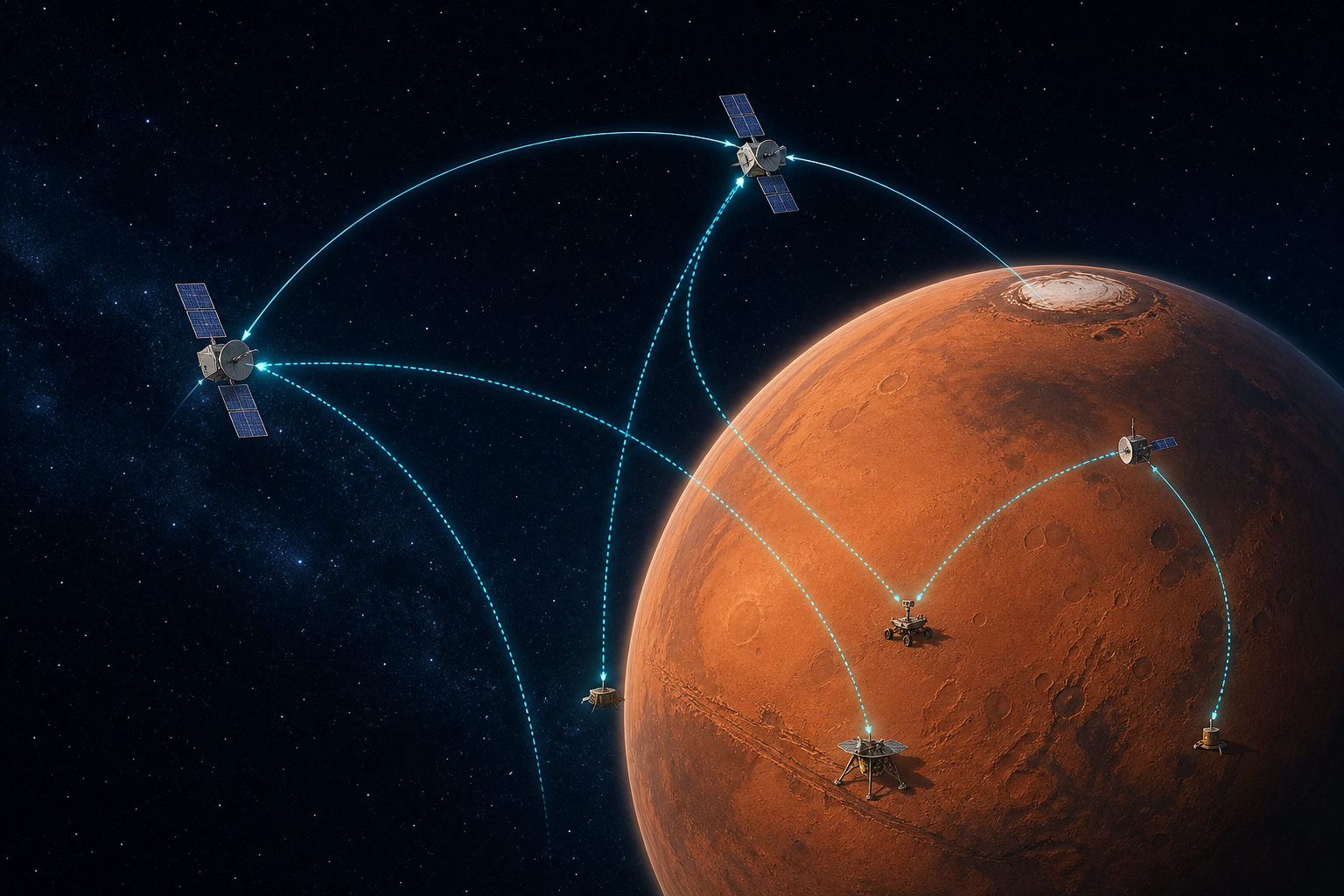
Blue Origin’s own Mars Telecommunications Orbiter overview says its proposed design is based on Blue Ring and would combine high-rate links with deployable UHF relay satellites, hybrid propulsion, and onboard processing. Those are Blue Origin provider claims about its proposed design, not NASA-confirmed capabilities already delivered or operating at Mars.
That caveat is worth keeping. The NASA award confirms the selected provider, contract structure, delivery deadline, and intended service. It does not mean every design detail on a provider page has become a demonstrated Mars capability overnight.
What could this enable for future Mars missions?
A shared network could give Mars missions more flexibility in how they return data and maintain their position. Science teams want imagery and measurements home reliably; mission operators need communications and navigation information; future explorers will need both at a much larger scale. The value is in the layer connecting those needs.
It is also a useful reminder that not every important space milestone is a launch. Our recent look at NASA’s cancelled Swift capture-and-boost plan showed how mission architecture can change before a spacecraft ever moves. Mars communications infrastructure is similarly behind the scenes—but it shapes what later spacecraft can attempt.
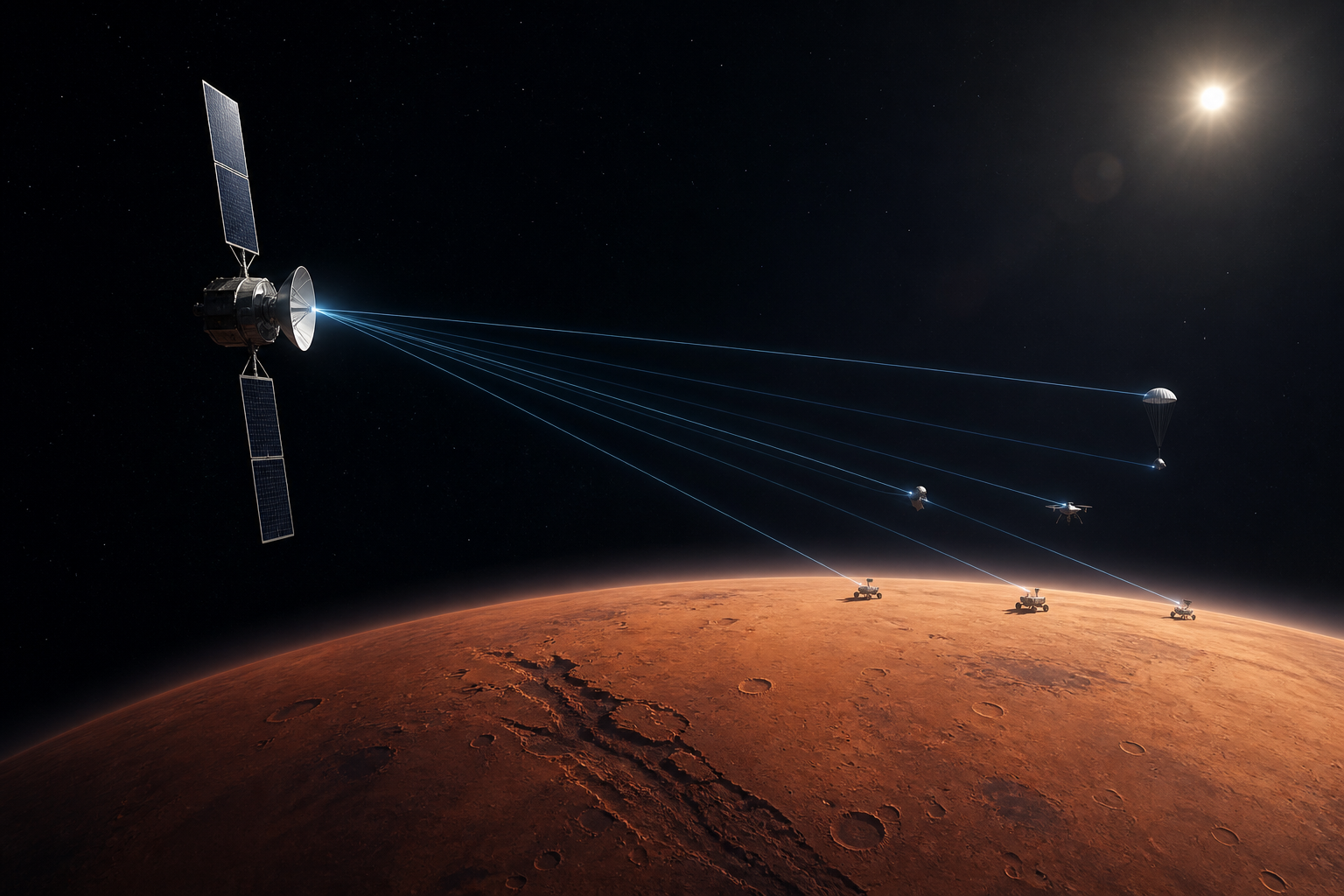
The story will now shift from selection to execution. Watch for concrete updates on the design, integration, delivery, launch arrangements, and the path to a network operating at Mars by 2030. Until then, the clean takeaway is simple: NASA has chosen Blue Origin for a multi-mission Mars communications and navigation service, with a capped contract value and a timeline that extends well beyond a single launch headline.
If this kind of mission architecture is your favorite kind of space news, join the Cosmic Match space community to compare notes with people who look past the launch countdown. You can also create your Cosmic Match profile and find your next great space conversation.