NASA and Katalyst Cancel Swift Capture and Boost—What LINK May Still Do
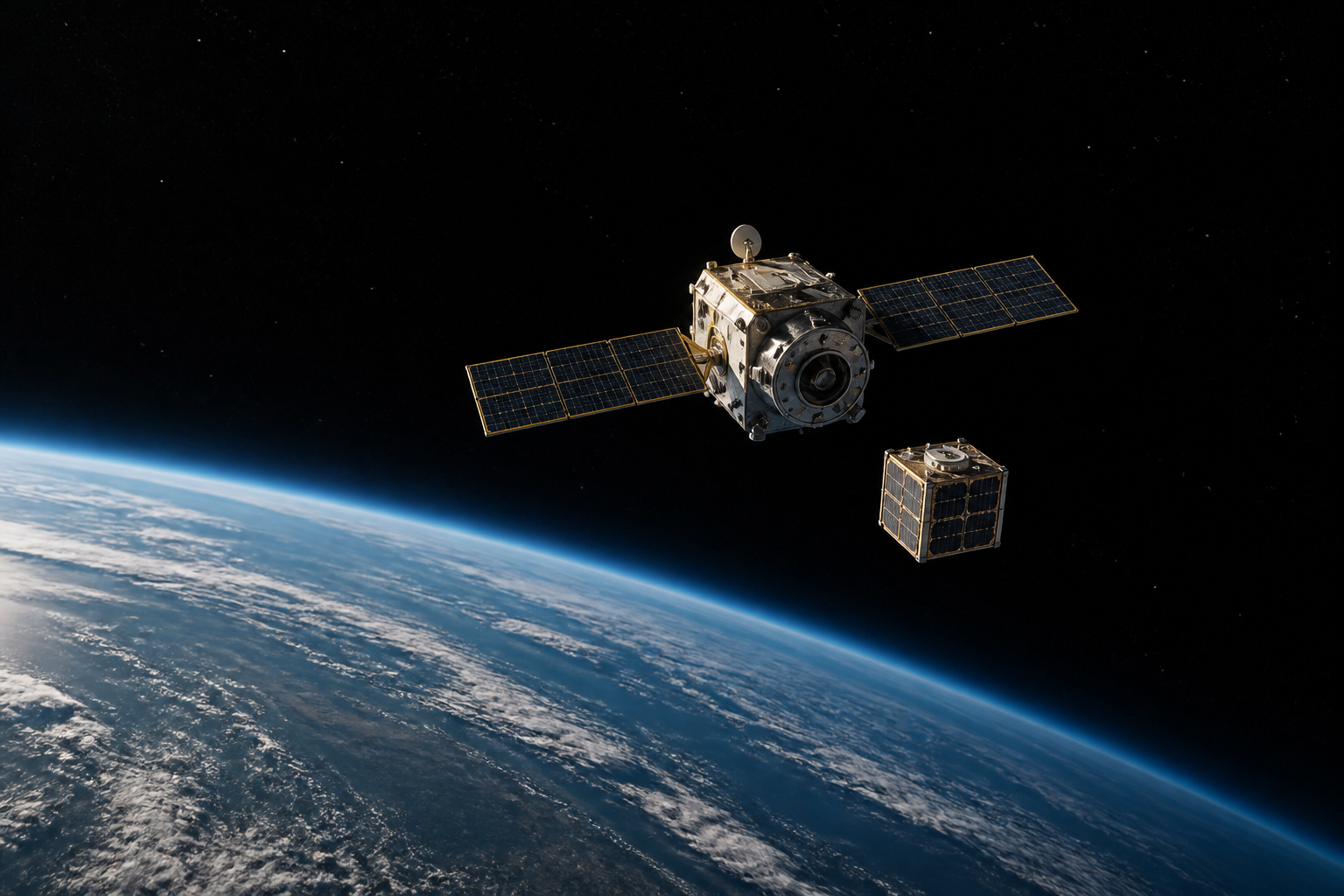
NASA and Katalyst Space have cancelled the planned capture and altitude boost of the Neil Gehrels Swift Observatory. The reason is LINK's continuing attitude-control issue. That rescue objective is over—but LINK itself may still attempt rendezvous and proximity operations with Swift, turning an ambitious rescue into a more limited on-orbit servicing technology demonstration.
Swift launched in 2004 and has delivered 21 years of science, far beyond its two-year prime mission. NASA says the observatory is likely to re-enter later in 2026 without intervention; no exact date, time, ground track, or local viewing opportunity has been announced.

What changed with the Swift boost mission?
The central change is unambiguous: LINK will not capture Swift, and it will not boost the observatory to a higher orbit. NASA and Katalyst made the joint decision after continued assessment of LINK's attitude-control problems.
That is a material reversal from the recovery update we covered in LINK's earlier effort to stabilize its attitude-control system. At that point, the team had uploaded updated controllers and was working toward orbit-adjustment maneuvers. The new decision ends the mission's science-life-extension goal.
For Swift fans, that means the observatory will not receive the lift intended to keep it operating longer. NASA says it will continue to look for ways to respond quickly to cosmic events with its current missions as Swift reaches the end of its orbital life.
Is LINK's mission completely over?
No. NASA says LINK will attempt rendezvous and proximity operations with Swift, while NASA and Katalyst assess the next steps. Katalyst similarly says it is focusing on rendezvous/proximity operations where possible and gathering data from the spacecraft.
In plain language, rendezvous and proximity operations are the careful work of approaching another spacecraft, holding a safe relative position, and using navigation and sensing systems to understand the geometry. They are foundational abilities for future inspection, servicing, and debris-management missions—but they are not the same thing as safely capturing a satellite.
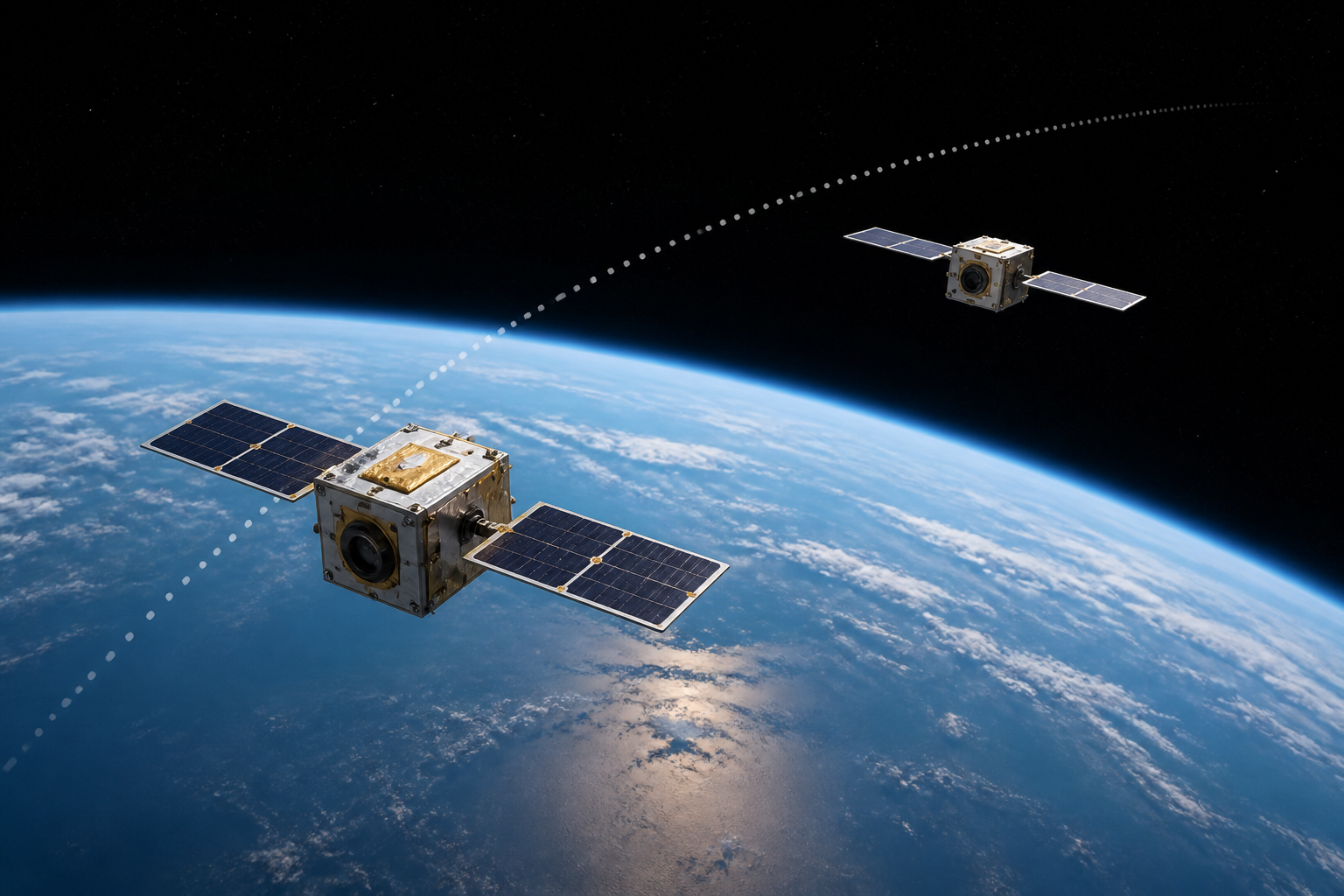
The distinction matters. A successful approach would not restore Swift's science mission or reverse its orbital decay. It could, however, produce technical and operational lessons from an unusually fast commercial-government effort—exactly the kind of evidence future satellite-servicing missions need.
Why was Swift worth trying to save?
Swift was built to study gamma-ray bursts and other changing cosmic phenomena. Its long life made it a valuable target for an experiment in rapid, commercial on-orbit servicing: NASA awarded Katalyst the contract in September 2025, and LINK launched on July 3, 2026.
The speed and difficulty are part of the story. NASA described the undertaking as high-risk and high-reward. The cancelled capture does not erase the mission's setbacks, but it also does not erase the operational knowledge gained from getting a new servicing spacecraft to orbit and working through an on-orbit control problem.
What should space fans watch next?
Watch for a NASA or Katalyst update about whether a rendezvous attempt goes ahead and what data it returns. That is the remaining meaningful milestone. It is not a local skywatching event for Austin, Houston, or Los Angeles: NASA has not issued an exact re-entry prediction or ground track, so social posts claiming a visible pass or a re-entry date would be speculation.
The better conversation is what this pivot teaches us. Satellite servicing will depend on missions that can navigate safely around uncooperative or aging spacecraft, even when an original plan has to change. If you want to follow space missions with people who enjoy the details as much as the headlines, join the Cosmic Match space community and compare notes on what LINK tries next. You can also explore more Cosmic Match spaceflight coverage as the story develops.
For another look at how NASA is shifting more Mars support into shared infrastructure, see NASA’s Blue Origin Mars telecommunications network award.
Sources
FAQ
Was the Swift rescue mission cancelled?
The planned capture and boost of Swift were cancelled. LINK's entire mission was not cancelled; NASA and Katalyst may still attempt rendezvous and proximity operations.
Will Swift be boosted into a higher orbit?
No. NASA and Katalyst say LINK will not capture or boost Swift.
When will Swift re-enter Earth's atmosphere?
NASA says Swift is likely to re-enter later in 2026 without intervention. It has not announced an exact date, time, ground track, or local observing opportunity.
What is LINK still expected to do?
NASA and Katalyst are assessing possible rendezvous and proximity operations to gather data that can inform future satellite-servicing missions.