NASA's Psyche Will Fly Past Mars on May 15. Here's Why That Detour Matters
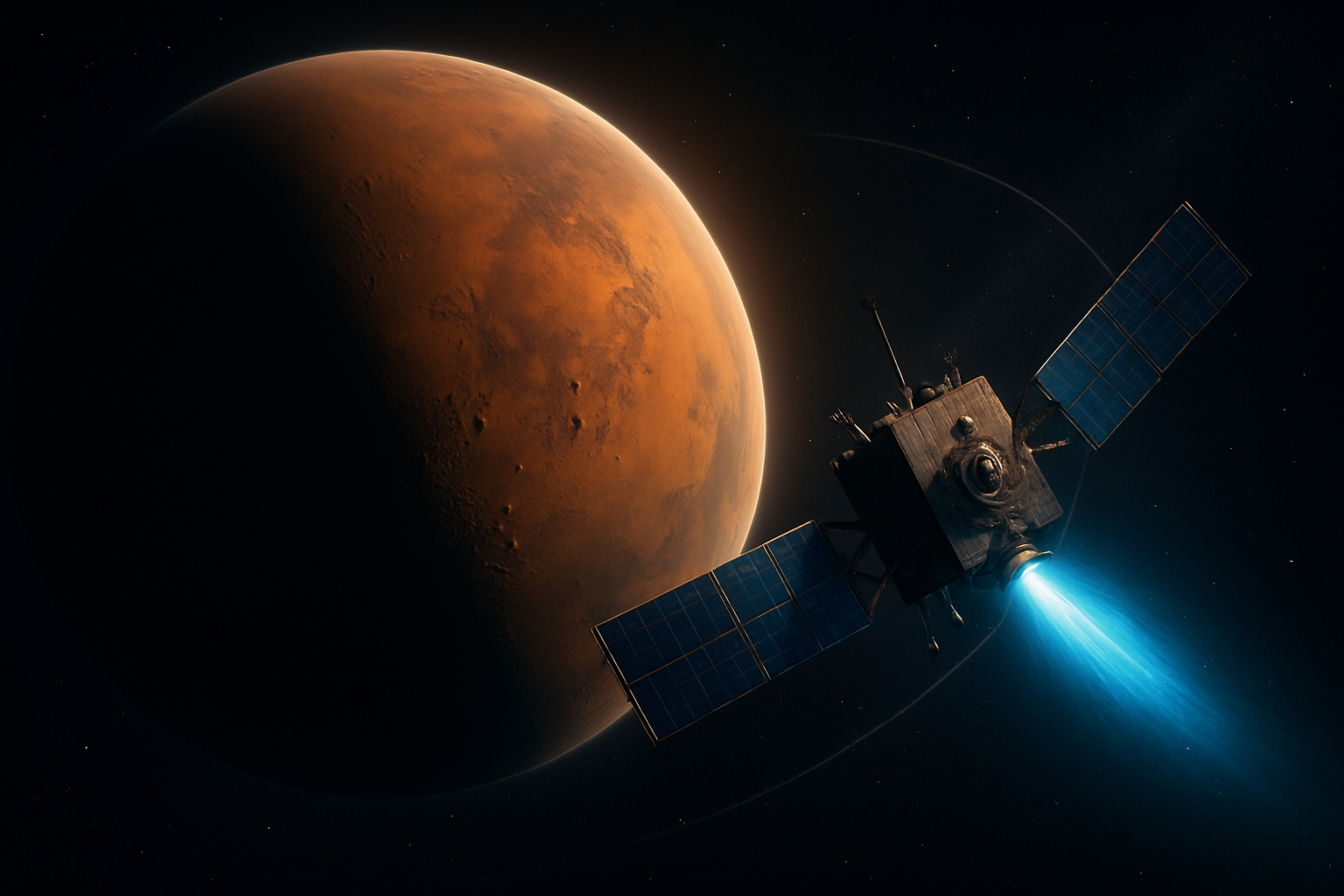
On Friday, May 15, 2026, NASA's Psyche spacecraft will skim just 2,800 miles above Mars. That sounds like the setup for a Mars mission update, but the real story is stranger and more interesting: Psyche is not going to Mars. It is using Mars like a perfectly timed cosmic slingshot. At roughly 12,333 mph, the spacecraft will borrow a bit of the planet's momentum, bend its path, and head onward toward asteroid Psyche, where science operations are planned for 2029.
That makes this one of those great space-mission moments where the headline seems simple, but the mechanics are the fun part. The May 15 flyby is less about sightseeing and more about precision navigation.

What actually happens on May 15
According to NASA's Jet Propulsion Laboratory, Psyche will pass Mars on May 15, 2026, at about 2,800 miles (4,500 kilometers) above the planet's surface. That's close in interplanetary terms, but not a landing, an orbital insertion, or a Mars science campaign. It's a flyby built into the route from Earth to the asteroid belt.
If you're in Austin, Houston, or Los Angeles, this is also not a local skywatching event to plan around. There is no naked-eye viewing window to promise here. The important action is the trajectory change happening millions of miles away, as mission controllers use Mars to fine-tune the spacecraft's path.
Why fly past Mars if the destination is an asteroid?
Because space missions almost never travel in straight lines when physics can do part of the work for free.
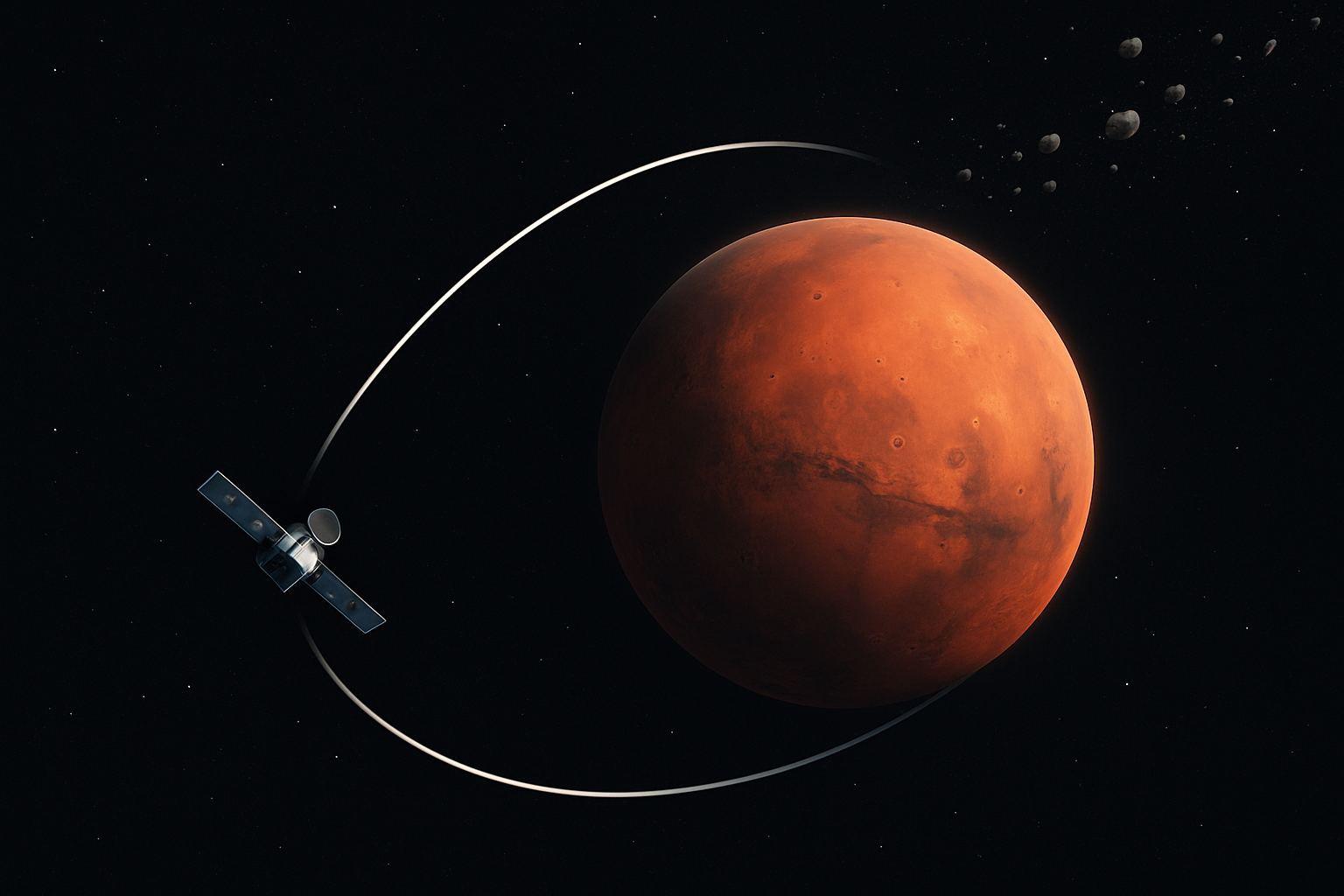
Psyche launched in October 2023 with a solar-electric propulsion system, which is efficient but gradual. Instead of burning extra propellant to reshape the spacecraft's orbit all by itself, the mission uses a gravity assist. Mars pulls on the spacecraft as it flies by, and that gravitational interaction changes Psyche's speed and direction relative to the Sun.
The easiest way to picture it is this: Mars is moving through space whether Psyche is there or not. By arriving at the right time and angle, the spacecraft can borrow a tiny amount of the planet's orbital energy. Mars barely notices. Psyche absolutely does.
What a gravity assist really does
“Slingshot” is the nickname, but it helps to be more precise. A gravity assist can do three useful things at once:
- increase a spacecraft's speed relative to the Sun
- redirect its course without a huge fuel penalty
- tilt its trajectory into a path that would otherwise take much more propellant to reach
That is why the Mars flyby matters so much to Psyche. The spacecraft isn't stopping for a side quest. It's using Mars as a route optimizer.
This is also part of what makes interplanetary mission design so elegant. Engineers are not just deciding where a spacecraft should go. They are deciding when every planet will be in the right place to help the mission get there efficiently.
Why mission planners chose this route
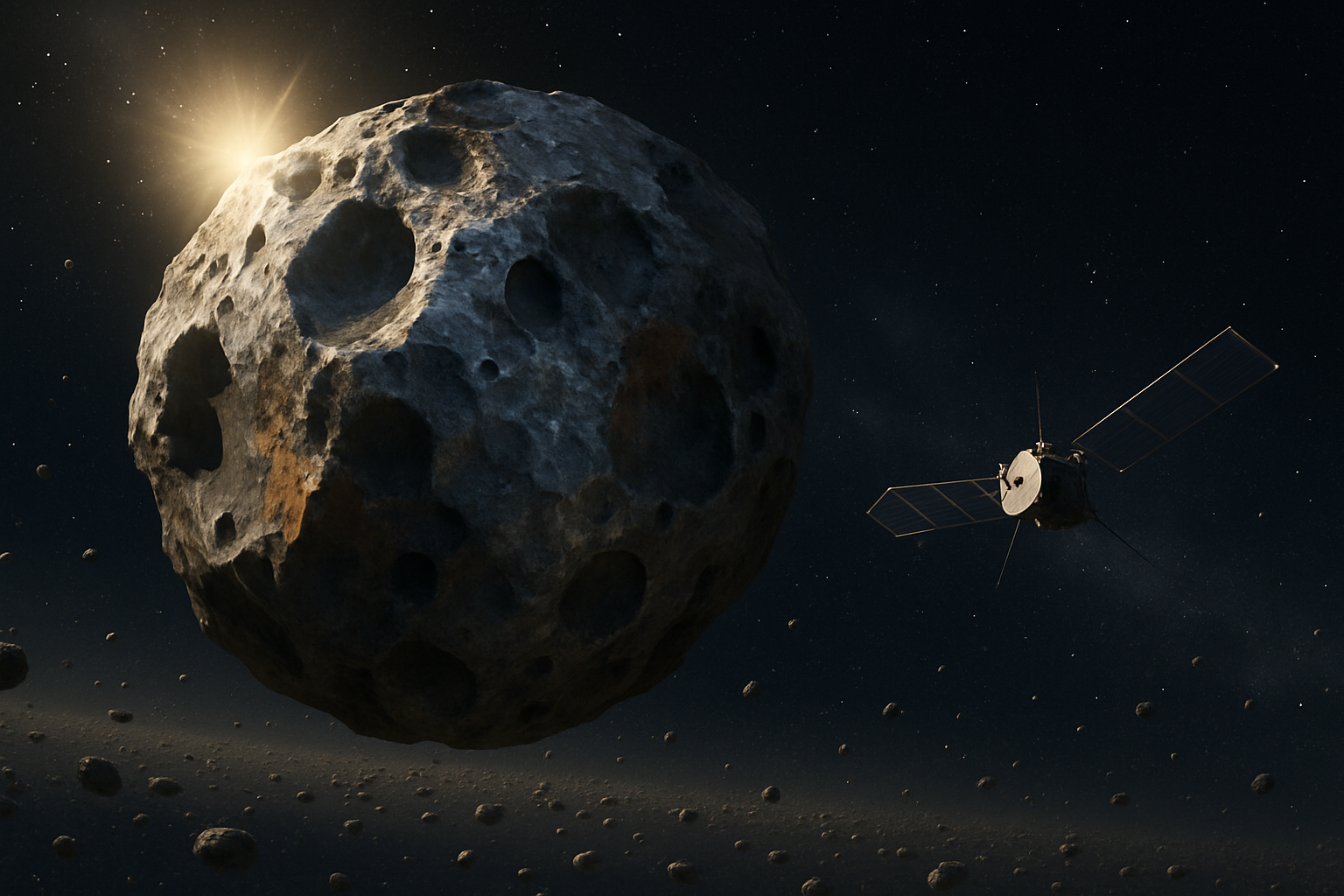
Psyche's main target is the metal-rich asteroid 16 Psyche, which orbits in the main asteroid belt between Mars and Jupiter. Scientists are interested in it because it may represent part of the exposed core of an early planetary building block, something we cannot directly study on Earth.
The Mars flyby helps the spacecraft reach that target without carrying a massive extra fuel burden. That's especially useful for a long mission that relies on solar-electric propulsion. The thrusters are efficient, but efficiency in space often means patience. Gravity assists let engineers trade some of that patience and propellant for smart orbital timing.
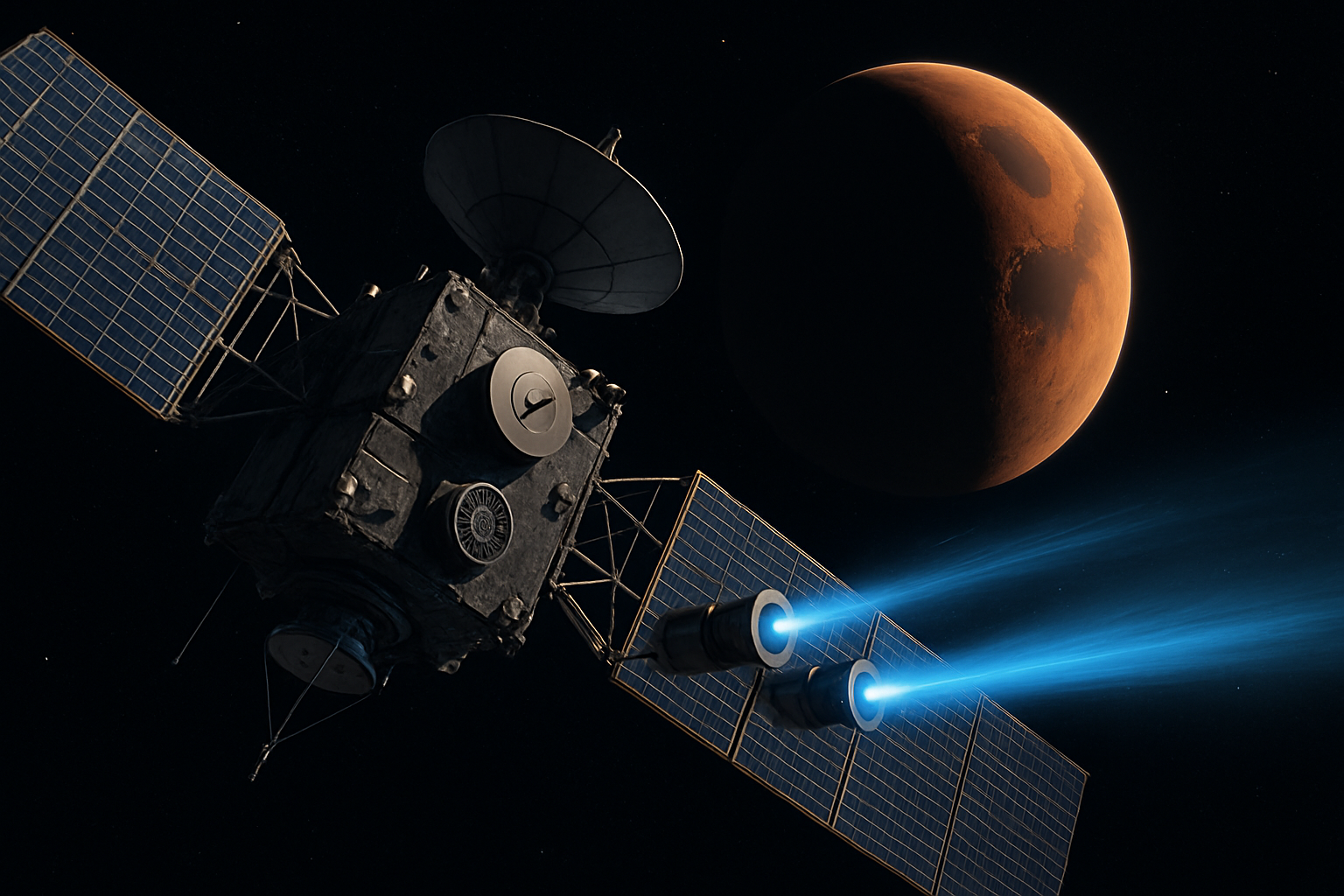
There's also a public-facing reason this flyby is worth following: it makes the mission easier to understand. People hear “mission to asteroid Psyche” and naturally imagine a direct cruise to a single destination. The reality is more like a carefully choreographed road trip, with Mars serving as the crucial interchange rather than the final stop.
Why space fans should care even if they can't see it
Mission milestones are not only rocket launches and dramatic landings. Sometimes the most important moment is a silent navigation maneuver that changes everything downstream.
If the flyby goes as planned, Psyche emerges on a better path toward its real goal, where NASA says the spacecraft will begin exploring asteroid Psyche in 2029. That makes May 15 the kind of date worth remembering if you like following how deep-space missions actually work, not just where they end up.
It also fits a bigger pattern in modern exploration: some of the boldest missions succeed because of clever orbital mechanics as much as raw hardware. The spectacle is subtle, but the payoff is huge.
For another recent orbital milestone, our recap of SpaceX CRS-34 launch night is a good companion read if you like the nuts-and-bolts side of spaceflight news.
The short version
- Psyche is not going to Mars as its destination.
- Mars is the gravity assist that helps the spacecraft speed up and redirect its route.
- Closest approach is about 2,800 miles (4,500 km) above Mars on Friday, May 15, 2026.
- The mission's real destination is asteroid Psyche, with science operations planned for 2029.
If following mission milestones is your kind of small talk, explore the Cosmic Match community for space lovers and browse more space mission updates on Cosmic Match.
If you want the next big launch-centered mission to watch after Psyche's Mars flyby, our explainer on Starship Flight 12 and why the Version 3 debut matters covers the current May 19 target and what Texas space fans should watch for.
If you want another mission window to watch this same night, our guide to ESA's SMILE launch livestream and the science behind it has the current launch and stream times.
Update after the flyby: NASA has now released the post-encounter images and confirmed what changed in the assist. Read our follow-up explainer, Psyche Flew Past Mars. What the New Images and Gravity Assist Changed.