SpaceX Sets Starship Flight 12 for May 19. Why Raptor 3 Matters Most

SpaceX's own schedule now points to Starship Flight 12 lifting off from Pad 2 at Starbase on Tuesday, May 19, 2026 at 5:30 p.m. CDT / 22:30 UTC, and that is what turns this from rumor into a real watch item. But the better reason to care is not the date. Flight 12 is the first public test of the Version 3 stack from the new pad, and the engine story around Raptor 3 is a big part of why launch watchers are treating it as more than a routine schedule update.
If you follow SpaceX, NASA, or Texas launch operations, this is a livestream-first event with real engineering weight. If you live in Austin, Houston, or Los Angeles, it is not a local skywatching plan. It is a chance to watch the next serious data point in Starship's push toward faster reuse, heavier Starlink deployment, and a cleaner path toward NASA-relevant milestones.
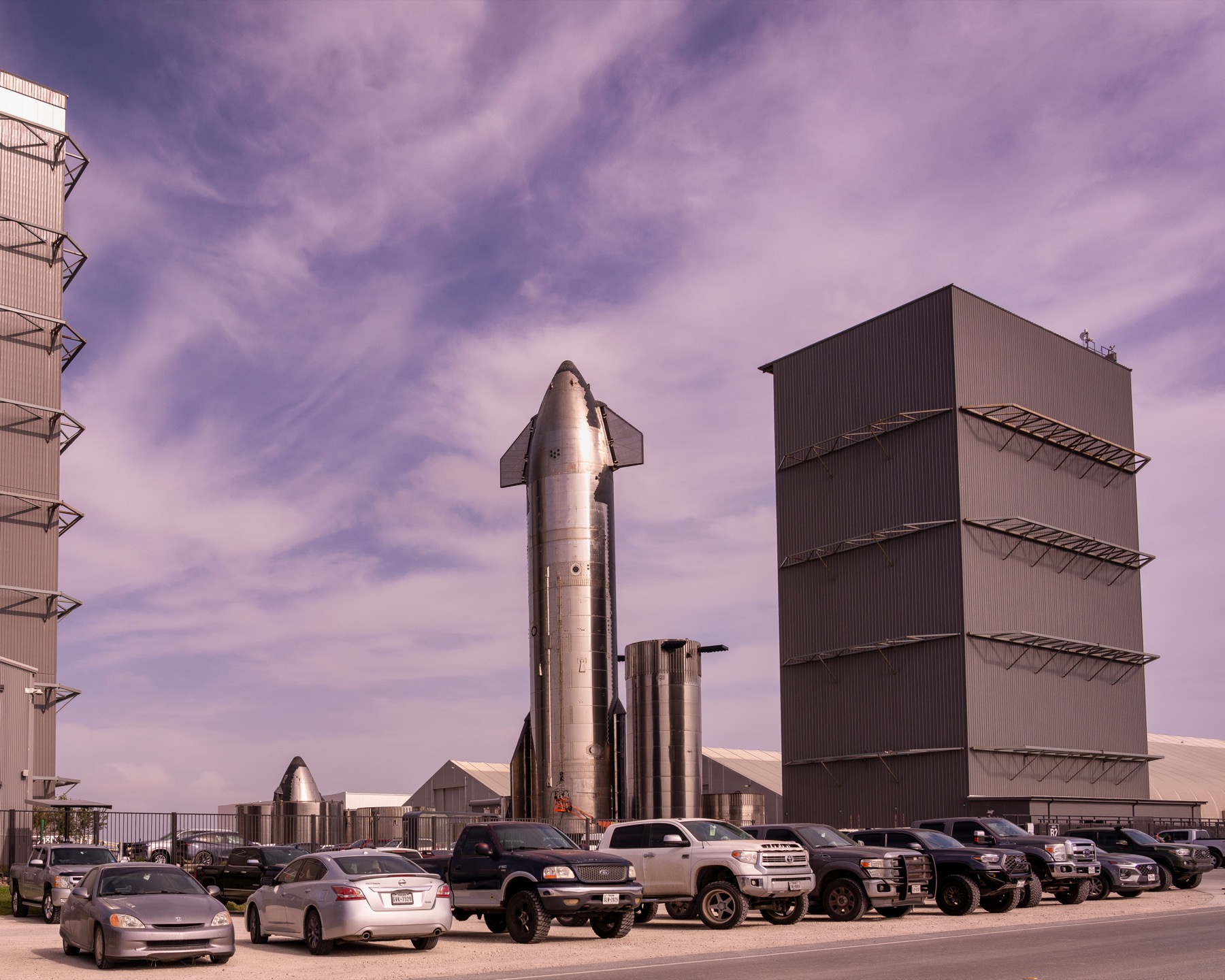
Real photo: Mobilus In Mobili via Wikimedia Commons, CC BY-SA 2.0.
If you are reading this after the mission timeline shifted from countdown coverage to regulator review, our newer FAA mishap investigation explainer walks through what changed between the FAA's May 22 anomaly language and its May 27 formal mishap determination.
What SpaceX is officially targeting now
SpaceX's public Flight 12 page is live, and the company's current upcoming-launch feed lists Starship's Twelfth Flight Test from Pad 2, Starbase with a 2026-05-19 launch date and 17:30:00 launch time. Independent tracking at Next Spaceflight still lines up with the same window, which is why it is reasonable to use the current clock time today instead of softening it further.
That said, launch timing is always the first detail that can move. The practical habit is to keep the official SpaceX page open on launch day instead of assuming a screenshot from earlier in the week will stay correct.
If you are looking for the latest timing-safe retarget on this mission, read our Starship Flight 12 May 21 watch-times update, which preserves the current SpaceX timing discrepancy instead of flattening it.
For readers who want the broader mission stream in one place, our Cosmic Match Space News & Launches archive tracks the larger sequence around Starship, NASA missions, and other near-term launch events.
Why the Raptor 3 angle matters more than another date reset
The sharper engineering hook is the engine story. In its Introducing Starship V3 update, SpaceX describes a clean-sheet propulsion redesign on Ship and a booster transfer system reworked so all 33 engines can start simultaneously. Current technical coverage from Space.com goes one step further and says both stages in Version 3 are outfitted with SpaceX's newer Raptor 3 engines. So even if SpaceX's public mission page emphasizes the broader V3 label more than the specific engine name, Flight 12 still functions as the clearest public test yet of the Raptor 3-era hardware SpaceX wants for more power, cleaner operations, and faster reuse.
That matters because Flight 12 is not just asking whether Starship can leave the pad. It is asking whether SpaceX's updated engine-and-propulsion package behaves the way the company needs once countdown pressure, hot staging, and in-flight objectives all stack on top of each other. If the vehicle gets through ascent cleanly and the propulsion system behaves the way SpaceX expects, that is meaningful signal for every future conversation about launch cadence, orbital refueling, and operational reliability.
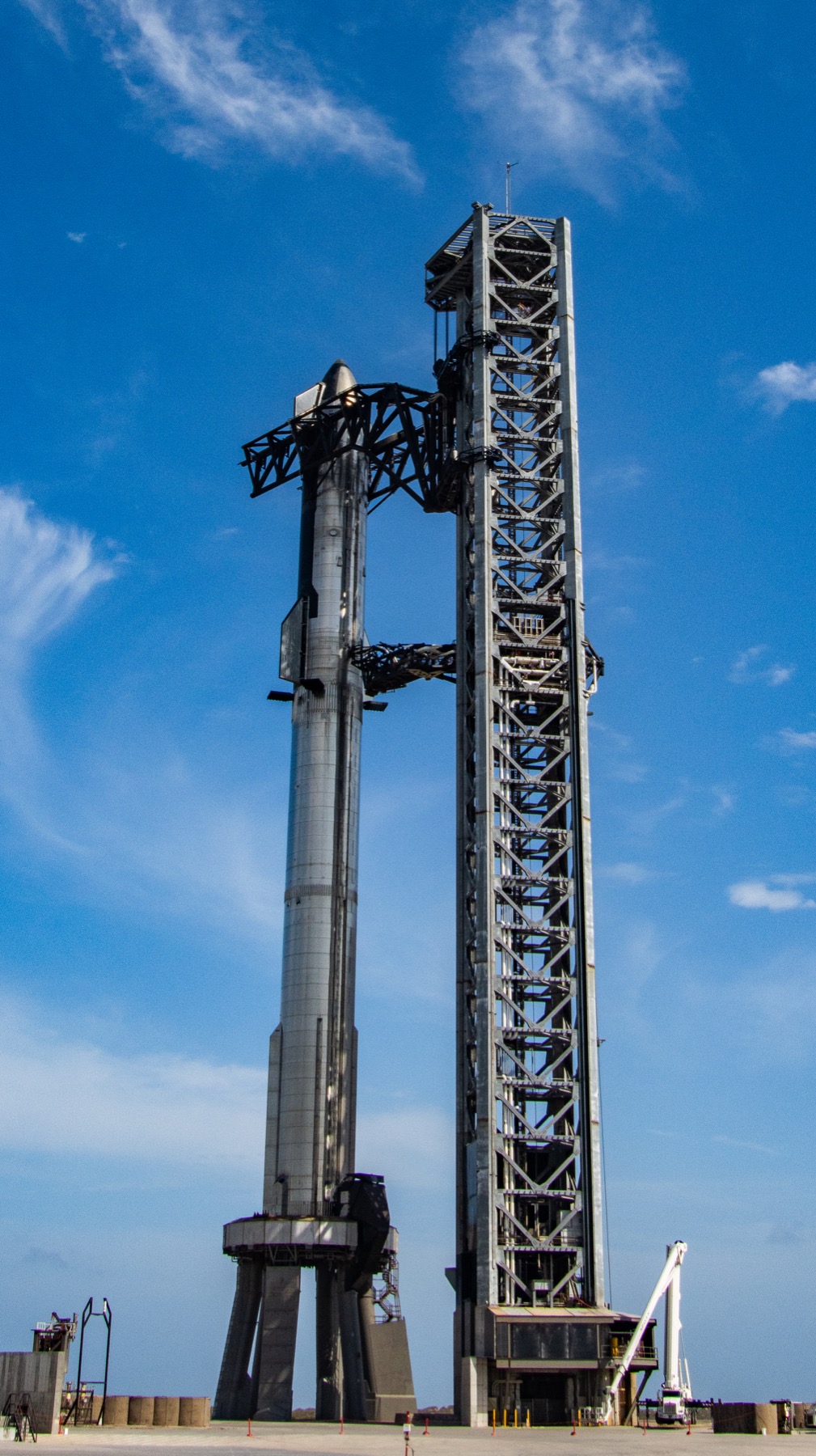
Real photo: Jenny Hautmann via Wikimedia Commons, CC BY-SA 4.0.
Pad 2 is part of the test, not background scenery
Pad 2 matters because new hardware on the ground can change the character of a flight as much as new hardware in the stack. A fresh launch site means new interfaces, new pad plumbing, new procedures, and new places for small problems to turn into holds.
That is why Flight 12 should be watched as a combined systems test. The vehicle is new. The propulsion setup is new. The pad is new. A clean countdown, liftoff, and staging sequence would tell launch watchers more than a generic "it flew" headline.
Why Houston readers should care
Houston is still the strongest local angle even though the launch happens at Starbase in South Texas, not at Johnson Space Center. Starship is deeply tied to NASA's lunar ambitions, on-orbit refueling work, and the wider human-spaceflight conversation that runs through Houston year-round. That does not mean Flight 12 solves Artemis. It means every serious improvement in Starship's flightworthiness matters to the NASA-adjacent ecosystem around it.
It is also a legitimately good watch-with-friends event. The stakes are easy to explain to non-specialists: new version, new pad, new engine generation, and a mission profile built to collect useful data. If your week has already included cargo-mission news, our recap of SpaceX CRS-34 and why cargo launches still matter is a helpful companion read.
And if you want more people in your orbit who think launch windows count as social plans, you can meet other space enthusiasts on Cosmic Match on the web.
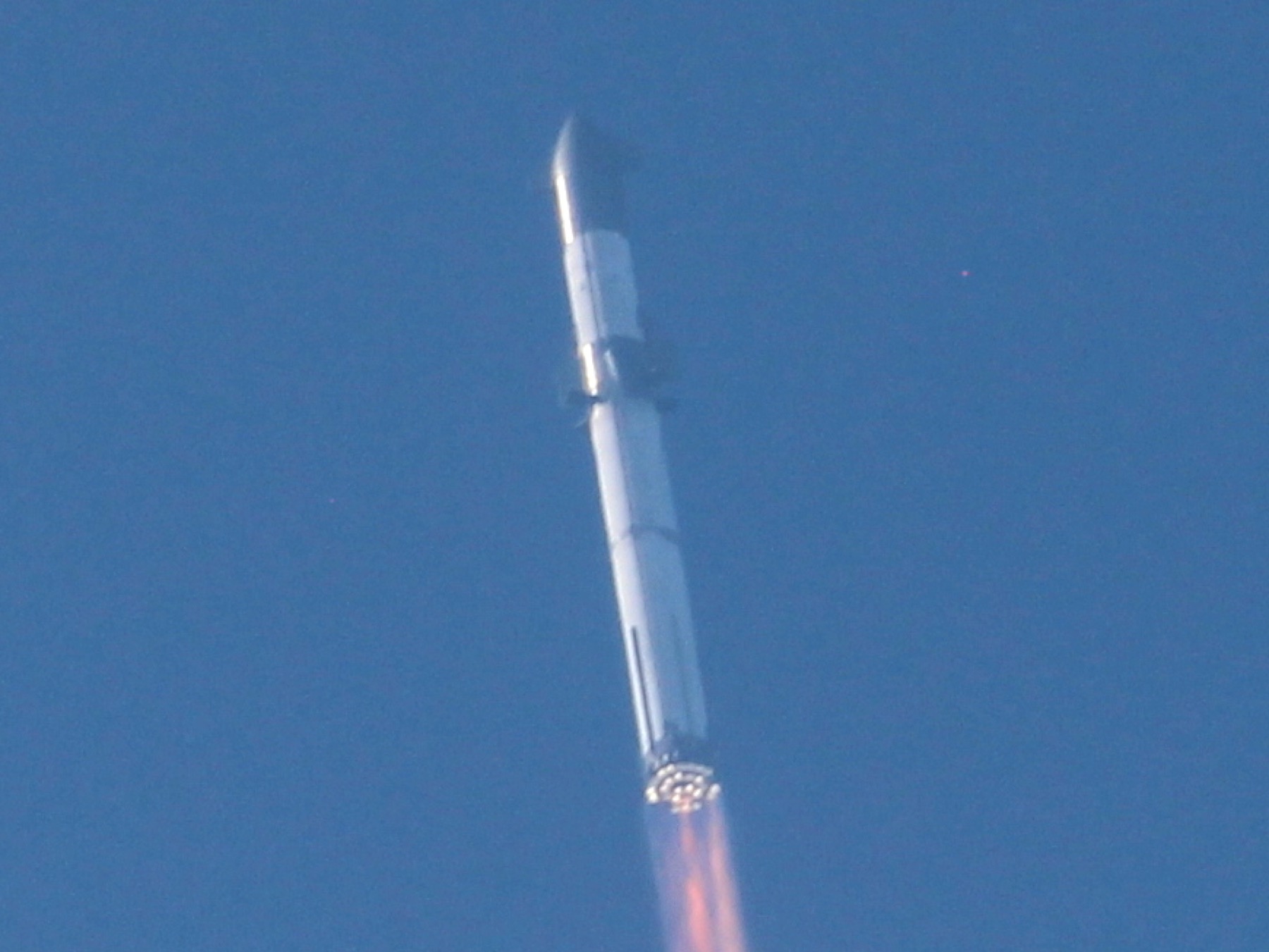
Real photo: Osunpokeh via Wikimedia Commons, CC BY-SA 4.0.
What to watch when Flight 12 gets underway
1. Engine startup behavior
If the Raptor 3 framing is the key editorial point, then the engine start sequence is the first place to look. SpaceX's V3 material emphasizes revised propulsion architecture and simultaneous startup behavior on the booster. That makes the opening moments more revealing than usual.
2. Pad 2 operations
A new pad is not just a prettier backdrop. Watch whether the ground systems look routine or stressed. A smooth operation at Pad 2 would be one of the strongest quiet wins of the day.
3. The in-flight data objectives
SpaceX says Ship 39 is set to deploy 22 Starlink simulators, with the last two intended to image Starship's heat shield in flight. That is exactly the kind of practical diagnostic work that matters more than social-media hype. It shows SpaceX is still gathering operational data, not pretending Starship is already a finished transportation system.
4. Language discipline around the result
A clean flight would matter. It would not mean Starship is suddenly operational in the airline sense, and it would not mean NASA's lunar plans are solved. Our recent piece on NASA's Psyche flyby of Mars is a useful reminder that space progress often comes through measured test objectives, not one giant cinematic breakthrough.
The short version
- SpaceX is currently targeting Tuesday, May 19, 2026 at 5:30 p.m. CDT / 22:30 UTC for Starship Flight 12 from Pad 2 at Starbase.
- The deeper story is not the calendar reset. It is the first public test window for the Version 3 stack and the propulsion changes around it.
- Current technical reporting explicitly ties V3 to SpaceX's newer Raptor 3 engines, while SpaceX's own update emphasizes the broader propulsion redesign that supports them.
- Houston readers should treat this as a Texas launch and NASA-adjacent livestream event, not a local naked-eye skywatching plan.
- The best launch-day habit is still the simplest one: refresh the official SpaceX page before the webcast and assume timing can move until countdown is well underway.
If the schedule holds, Flight 12 will be worth watching not because it puts a fresh date on a calendar, but because it gives the public its first real look at how SpaceX's V3-and-Raptor-3 direction performs under actual flight pressure.
If you are also tracking tonight's other mission window, our guide to ESA's SMILE launch livestream and why the space-weather mission matters has the current overnight Vega-C timing.
If you want a current example of how a prelaunch engine test can reshape a launch schedule before liftoff, our new explainer on Blue Origin's New Glenn hotfire explosion and what it means for the next launch walks through the latest Cape Canaveral setback.