SMILE Launch Tonight: When to Watch ESA's Space-Weather Mission Live
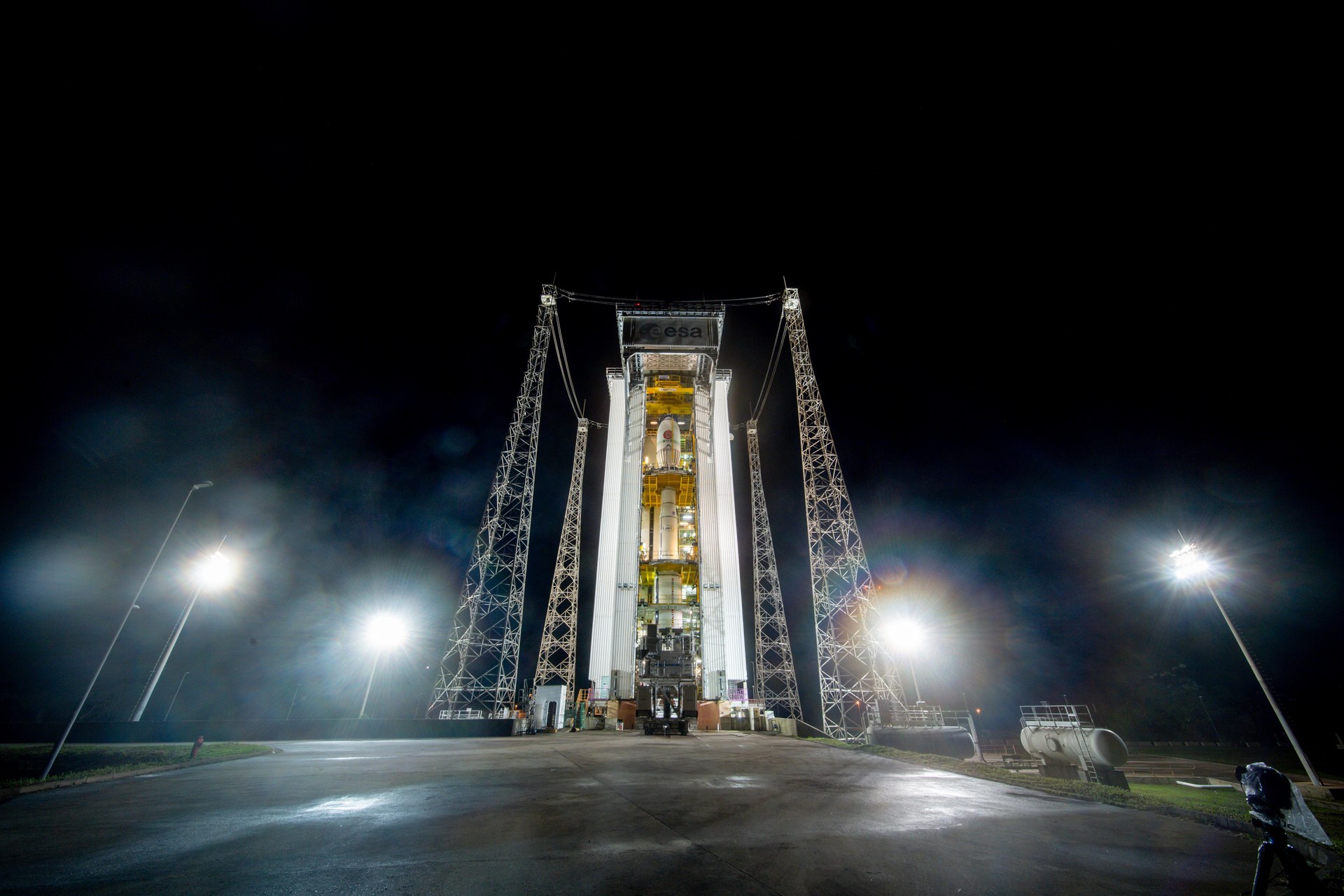
If you want the exact SMILE launch live stream May 2026 timing without digging through multiple time zones, here is the useful version. ESA says the European-Chinese SMILE mission is set to launch on Tuesday, May 19, 2026 at 05:52 CEST, which is Monday, May 18 at 10:52 p.m. CDT in Houston and Austin, 8:52 p.m. PDT in Los Angeles, and 12:52 a.m. BRT on Tuesday in Brazil. ESA also says its live coverage starts at 05:30 CEST, or 10:30 p.m. CDT / 8:30 p.m. PDT / 12:30 a.m. BRT.
That makes this a same-night watch event for Cosmic Match readers in Texas and California, but not a local skywatching event. You will not see the rocket from Houston, Austin, or Los Angeles. The play tonight is the stream. The reason it is worth your time is that SMILE is not just another schedule entry. It is a space-weather mission built to show how the solar wind crashes into Earth's magnetic shield, right down to the X-ray glow around the magnetosphere and the auroral response that follows.
Now that launch is complete, our follow-up on why SMILE spends 25 days raising its orbit picks up the story from separation to the science timeline.
SMILE launch time tonight, in plain English
According to ESA's current launch pages, the watch window looks like this:
- Live coverage starts: Tuesday, May 19, 2026 at 05:30 CEST
- Houston and Austin coverage start: Monday, May 18 at 10:30 p.m. CDT
- Los Angeles coverage start: Monday, May 18 at 8:30 p.m. PDT
- Liftoff target: Tuesday, May 19, 2026 at 05:52 CEST
- Houston and Austin liftoff target: Monday, May 18 at 10:52 p.m. CDT
- Los Angeles liftoff target: Monday, May 18 at 8:52 p.m. PDT
ESA explicitly says times are subject to change at short notice, so if you are opening the stream close to launch, refresh the official pages before you settle in.
If you like keeping a running list of near-term mission coverage, our Space News & Launches archive is the fastest way to follow what is live right now.
Where to watch the SMILE launch live
ESA says you can watch the mission on ESA Web TV or through the ESA YouTube livestream. The current ESA launch guide says the programme will run from 05:30 to 07:09 CEST and include live footage from the launchpad and control room, plus interviews around the mission and launch campaign.
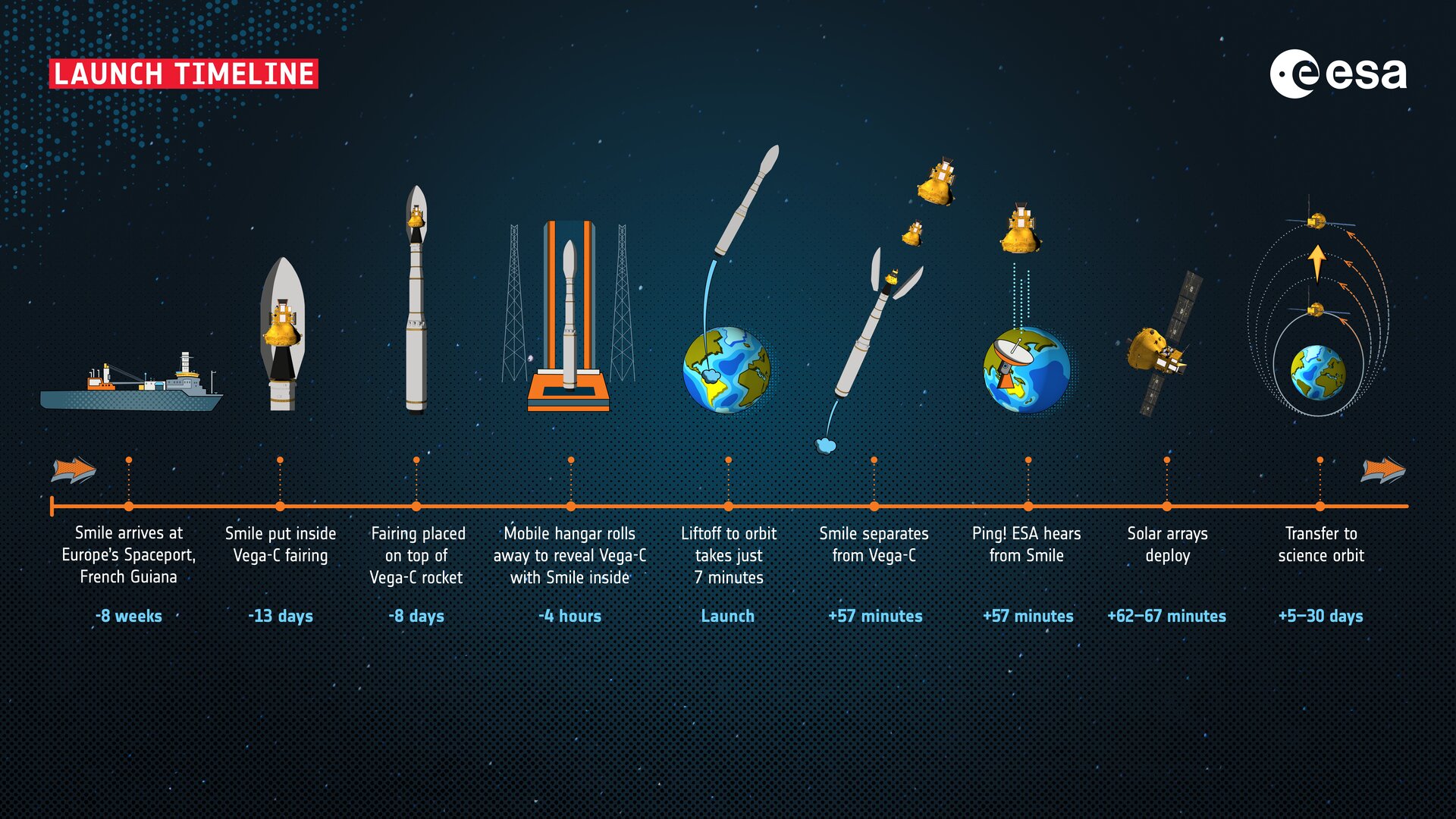
That timing matters because this is not a webcast where the interesting part is over in three minutes. ESA's published milestone rundown says the sequence continues well past liftoff. The spacecraft is expected to separate from Vega-C at 06:48 CEST, its first signal from space is expected at 06:49 CEST, and solar-array deployment is expected at 06:55 CEST. In Houston and Austin, that translates to 11:48 p.m. CDT, 11:49 p.m. CDT, and 11:55 p.m. CDT on Monday night.
That is a better reason to stay with the stream than the word "launch" alone. For SMILE, the emotional finish line is not the instant the rocket leaves the pad. It is the point where the spacecraft is free, talking, and unfolding the hardware that proves it survived ascent.
Why SMILE matters more than a routine launch note
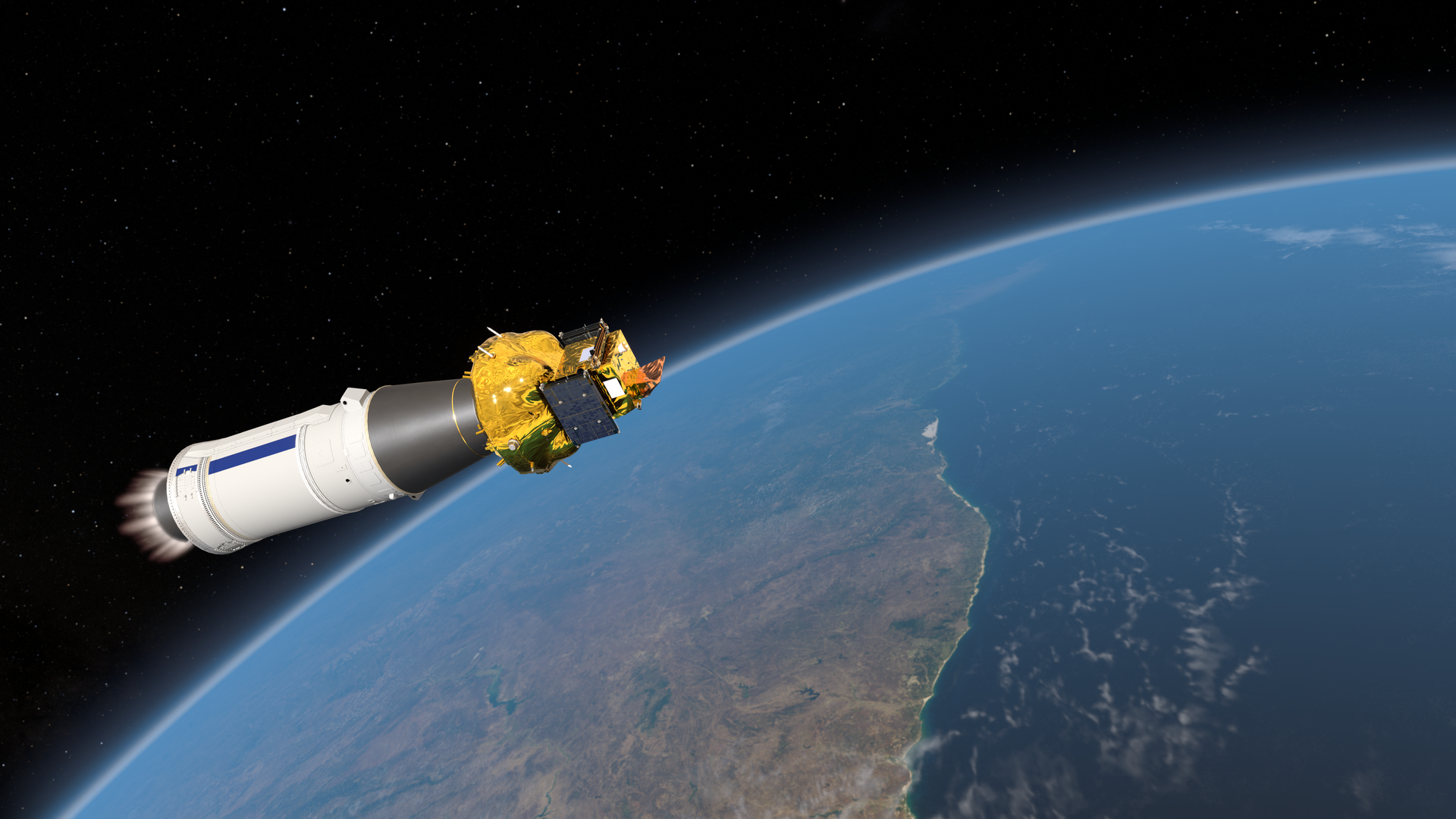
The bigger hook is the science. ESA says SMILE will use four instruments to study how Earth responds to the solar wind from the Sun. That sounds abstract until you remember how often space weather becomes practical news. Geomagnetic storms can affect satellites, communications, navigation systems, and power infrastructure. They also drive the auroral activity that gets everyone excited when the northern lights suddenly push farther south than usual.
SMILE is designed to connect those pieces in a more complete way. ESA says it will make the first X-ray observations of Earth's magnetic field and use an ultraviolet camera to watch the northern lights for 45 hours at a time. That gives the mission a cleaner public hook than a standard launcher update. It is a mission about seeing the Sun-Earth relationship in action, not just talking about it in theory.
If you followed our recent explainer on why NASA's Psyche spacecraft flies past Mars on May 15, the appeal here is similar: the headline looks simple, but the engineering and science underneath are the real story.
Why Houston readers have the strongest local reason to care
This is where Houston is the best audience hook of our three launch cities. Not because the rocket is visible there. It is not. Houston matters because the mission sits right in the overlap between space science, spacecraft operations, and the broader culture of paying attention to how near-Earth space affects life and technology back on the ground.
A mission built around magnetospheric response and space weather will always land harder with readers who already follow NASA operations, orbital systems, and the practical side of spaceflight. That makes SMILE a very good "watch with friends" mission even if it never becomes a mainstream household-name launch. The explanation is easy: the Sun throws charged particles at Earth, Earth pushes back with its magnetic shield, and SMILE is going to help scientists see that interaction more clearly than before.
If tonight's mission-watch energy puts you in the mood to find more people who think launch windows count as a real social plan, you can meet other space enthusiasts on Cosmic Match.
What to watch after liftoff
ESA's published milestone table gives the stream a built-in structure, which is useful if you are watching with someone who does not follow launch events every week.
1. The clock from liftoff to separation
ESA says SMILE separates from Vega-C 56 minutes after liftoff. That means tonight is not just about ignition and ascent. It is about whether the launcher delivers the spacecraft cleanly into the mission's planned path.
2. First signal and solar arrays
The mission's first signal is expected about 57 minutes after liftoff, and solar-array deployment is expected about 63 minutes after liftoff. Those are the milestones that turn a good-looking launch into an operational success story.
3. The longer mission arc
ESA says SMILE will first be dropped into a circular orbit about 700 km above Earth, then fire its engines 11 times in 25 days to stretch into its final highly elliptical science orbit. That eventual orbit reaches 121,000 km above the North Pole and comes back to about 5,000 km above the South Pole. So even tonight's live watch is really the opening move in a longer science campaign.
For another live mission window happening this same week, our breakdown of Starship Flight 12 and why the Version 3 debut matters is a useful companion read if your space-news brain prefers to keep multiple countdowns open at once.
The short version
- ESA still lists SMILE for Tuesday, May 19, 2026 at 05:52 CEST.
- For Houston and Austin, that is Monday, May 18 at 10:52 p.m. CDT.
- For Los Angeles, that is Monday, May 18 at 8:52 p.m. PDT.
- ESA says the live stream starts at 05:30 CEST, or 10:30 p.m. CDT / 8:30 p.m. PDT.
- The science hook is strong: SMILE is built to show how the solar wind interacts with Earth's magnetosphere and auroral systems.
- If the time moves, trust the official ESA launch pages first, because ESA says the schedule can change at short notice.
If you want more people in your orbit who care about launch windows, mission milestones, and the weirdly satisfying logic of orbital timing, browse more live space updates on Cosmic Match and join the community at cosmicmatch.io.