Psyche Flew Past Mars. What the New Images and Gravity Assist Changed
NASA's Psyche mission did not just brush past Mars on May 15, 2026 and keep going. NASA's post-flyby update on May 19 confirmed two concrete changes: Mars gave the spacecraft about a 1,000 mile-per-hour boost and nudged its orbital plane by about 1 degree relative to the Sun. The same update also delivered fresh Mars views from the spacecraft, including a nearly full-disk look at the south polar cap.
If you read our earlier explainer on why Psyche's Mars detour mattered before closest approach, this is the follow-up you were waiting for. The flyby is over, the navigation change is real, and the mission is now on its longer cruise toward asteroid Psyche.
What actually happened at Mars
Psyche passed within 2,864 miles (4,609 kilometers) of the Martian surface during the flyby. That is close enough to use Mars as a serious navigation tool, but not a stop, landing, or orbital science campaign. The mission used the planet's gravity to do two expensive things for free: add speed and reshape the spacecraft's path toward the main asteroid belt.
That distinction matters because gravity assists can sound abstract until a mission reaches one. In practice, this one was a route change with measurable payoff. NASA says the flyby added roughly 1,000 mph and shifted the spacecraft's orbital plane by about 1 degree without spending onboard propellant. For a long cruise powered by solar-electric propulsion, that is exactly the kind of efficiency you want.
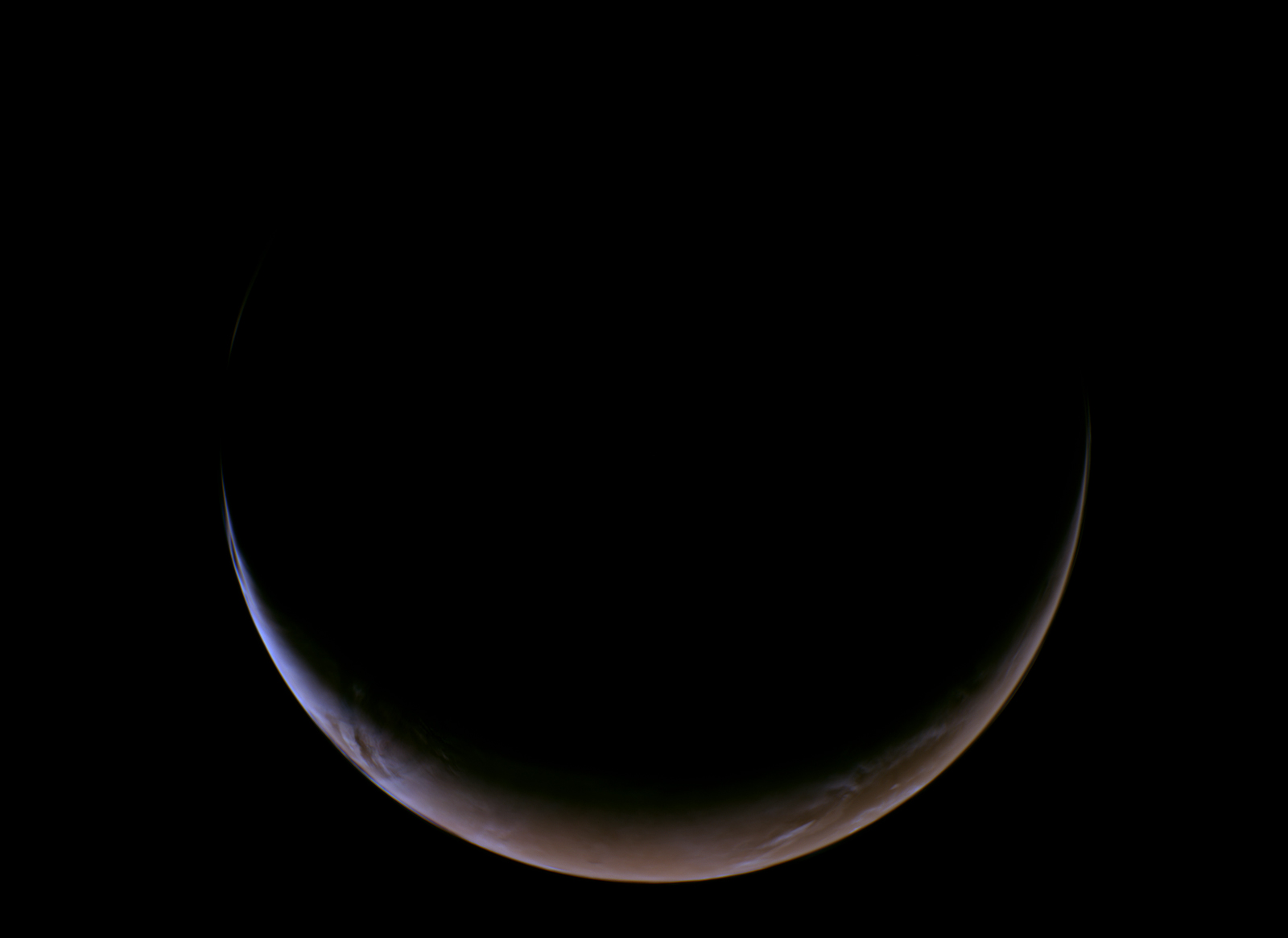
 NASA/JPL-Caltech/ASU. Psyche saw Mars as a thin crescent from about 3 million miles away on May 3, 2026 as it lined up the gravity assist.
Why Mars looked so strange in the lead-up images
Some of the most interesting post-flyby context is visual. In the approach images, Mars did not look like the bright round disk most people expect. It looked like a thin crescent. That was not a camera problem or an editing trick. Psyche approached from a high phase angle, so sunlight only illuminated a narrow slice of the planet from the spacecraft's point of view.
NASA also noted that the crescent appeared brighter and wrapped farther around the disk than the team expected because sunlight scattered strongly through Mars' dusty atmosphere. That is a small but useful reminder that the images were not just pretty outreach material. They also helped the team understand instrument performance before the spacecraft reaches its real science target in 2029.
In other words, Mars was both a slingshot and a practice field. The flyby improved the trajectory, and the imaging sequence gave the mission another real-world rehearsal before asteroid operations begin.
What the new images changed
The biggest change from the pre-flyby story is that we no longer have to talk about the assist as a plan. We can talk about outcomes.
First, the navigation result is now confirmed. Psyche is on course for an August 2029 arrival at asteroid Psyche. Second, the mission returned a more complete look at Mars after closest approach, including a view that stretches from the south polar cap north toward Valles Marineris. That matters because it turns an invisible mechanics story into something easier to follow: you can literally see the mission moving from approach geometry to departure geometry.
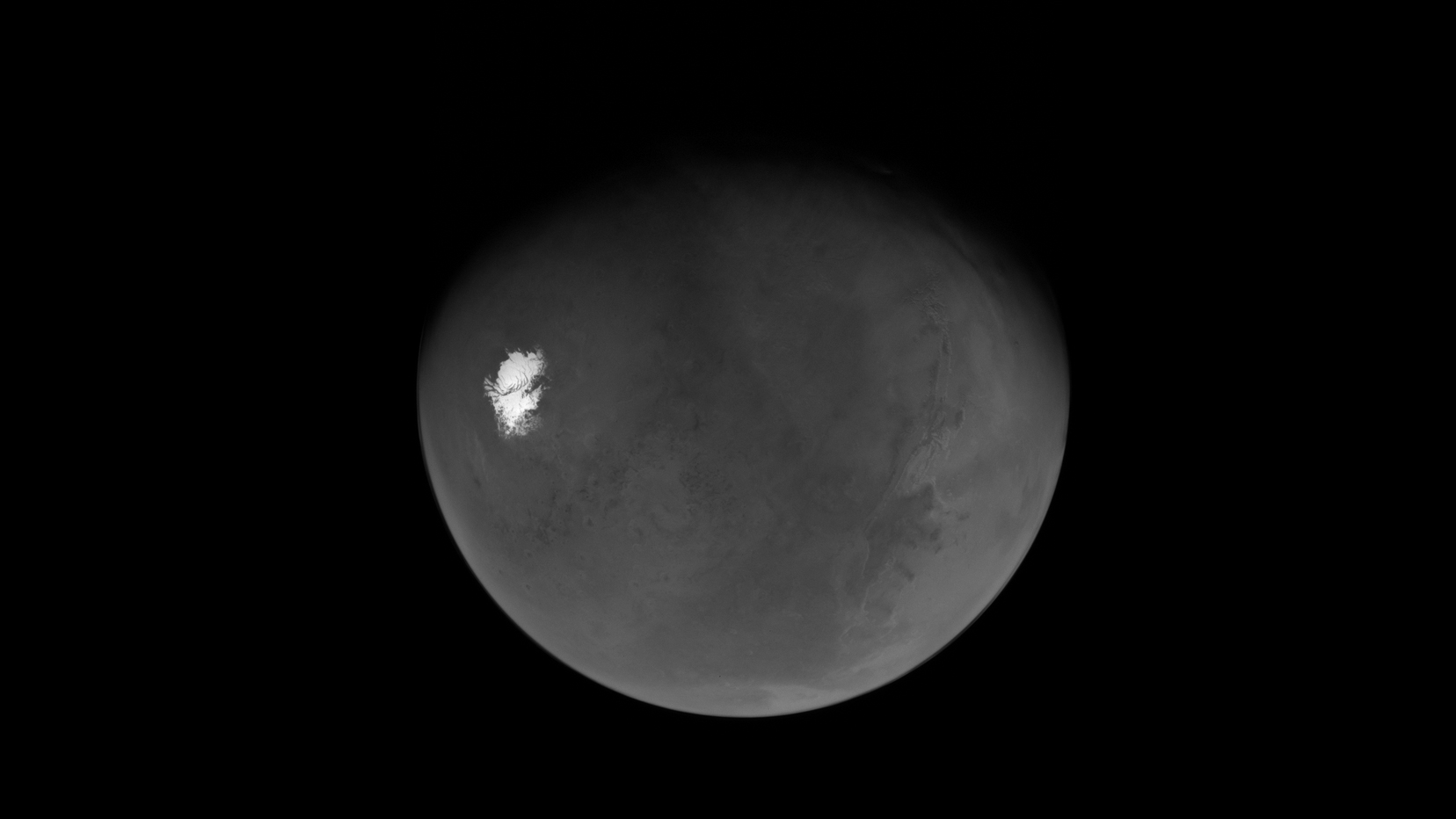 NASA/JPL-Caltech/ASU. Shortly after closest approach, Psyche captured a nearly full-disk Mars view extending from the south polar cap toward Valles Marineris.
It also sharpens the main takeaway for readers who do not spend their weekends thinking about orbital mechanics: this was not a sightseeing bonus attached to the mission. The images are evidence from a mission milestone that changed the rest of the route.
What the gravity assist really bought the mission
A good gravity assist does more than make a spacecraft go faster. It changes where that speed is useful.
For Psyche, Mars helped tilt the spacecraft into a better solar orbit for the next leg of the cruise. Doing that entirely with propulsion would have required more time or more propellant. By using Mars, the mission preserved resources and kept the long-term plan intact.
That is a big deal because asteroid Psyche is not a casual destination. The target sits in the main asteroid belt and may be the exposed or partially exposed core of an early planetary building block. When the spacecraft arrives, it is expected to map the asteroid, study its composition, and help answer a deeper question about how rocky planets formed and differentiated early in the solar system.
So the phrase “Mars flyby” can undersell what just happened. Mars was not a side quest. It was the hinge point between launch-and-cruise mode and the final, correctly shaped path to one of NASA's most unusual asteroid missions.
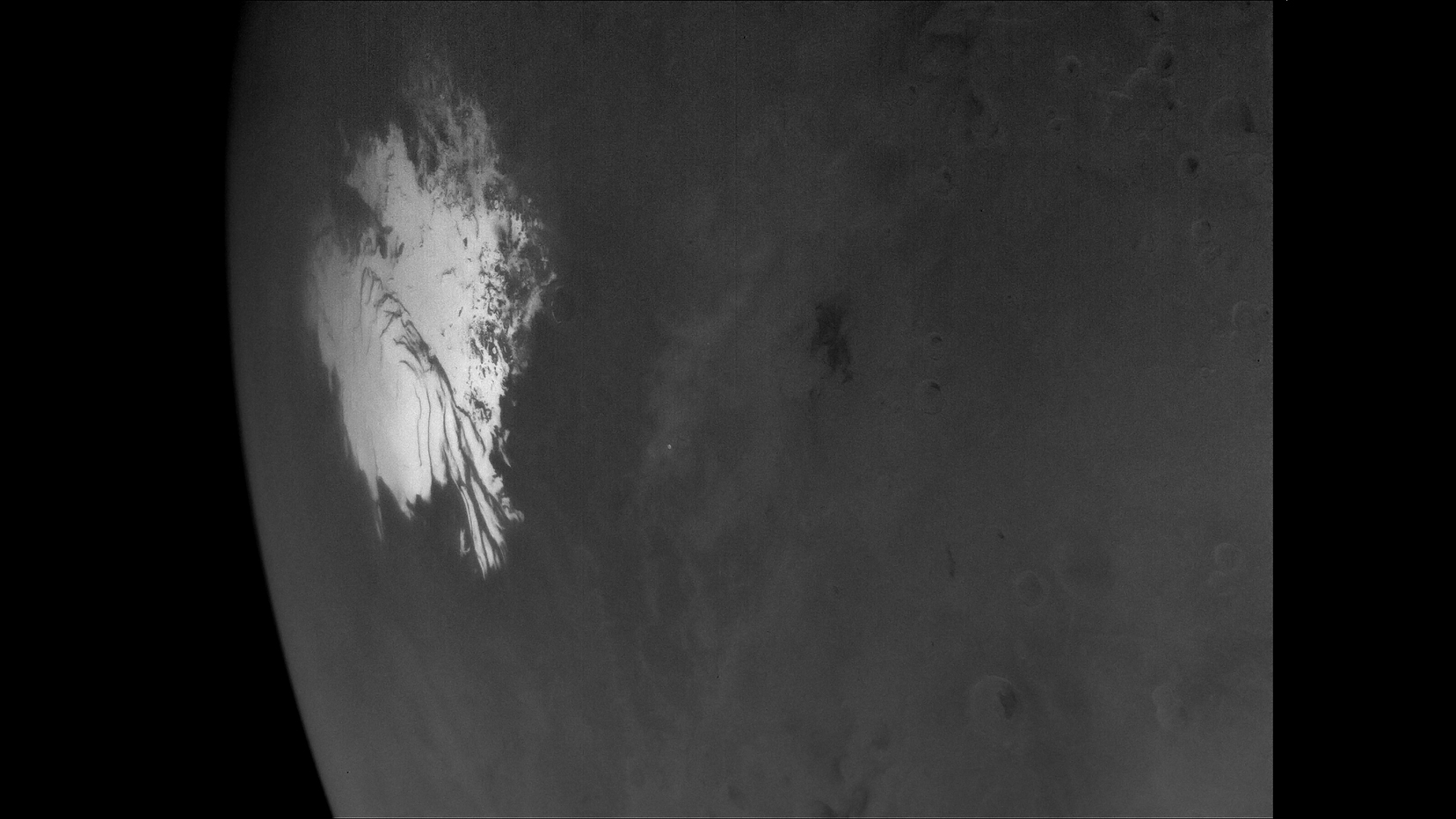 NASA/JPL-Caltech/ASU. Psyche's close-up post-flyby view of the Martian south polar cap shows the icy region spanning more than 430 miles across.
What happens next on the road to asteroid Psyche
With Mars behind it, Psyche will return to its longer, quieter cruise profile and resume using solar-electric propulsion on the way to the asteroid belt. That part of the mission is less dramatic than a close flyby, but it is where the benefit of the assist actually compounds. Every efficient course correction earlier in the journey makes the arrival geometry easier to hit later.
If you like following mission milestones that reward patience more than hype, this is a good one to keep on your radar. The launch happened back in 2023, the Mars assist was the key mid-course checkpoint in 2026, and the real science payoff waits in 2029. Space missions often move on that timescale.
For more mission tracking like this, browse the Cosmic Match space news archive or explore the wider Cosmic Match community for space enthusiasts. If your idea of chemistry starts with planetary dynamics, you are in the right corner of the internet.
The short version
- Psyche passed 2,864 miles above Mars on May 15, 2026.
- NASA says the flyby added about 1,000 mph and shifted the spacecraft's orbital plane by about 1 degree.
- The new images show Mars first as a thin crescent on approach, then as a nearly full disk with the south polar region in view after closest approach.
- The mission is now set up for an August 2029 arrival at asteroid Psyche.
The follow-up is cleaner than the preview: the assist worked, the images are in, and the mission's long road to asteroid Psyche is still on track.