SpaceX Launches 38 Minutes Apart: How the Dual-Launch Record Happened
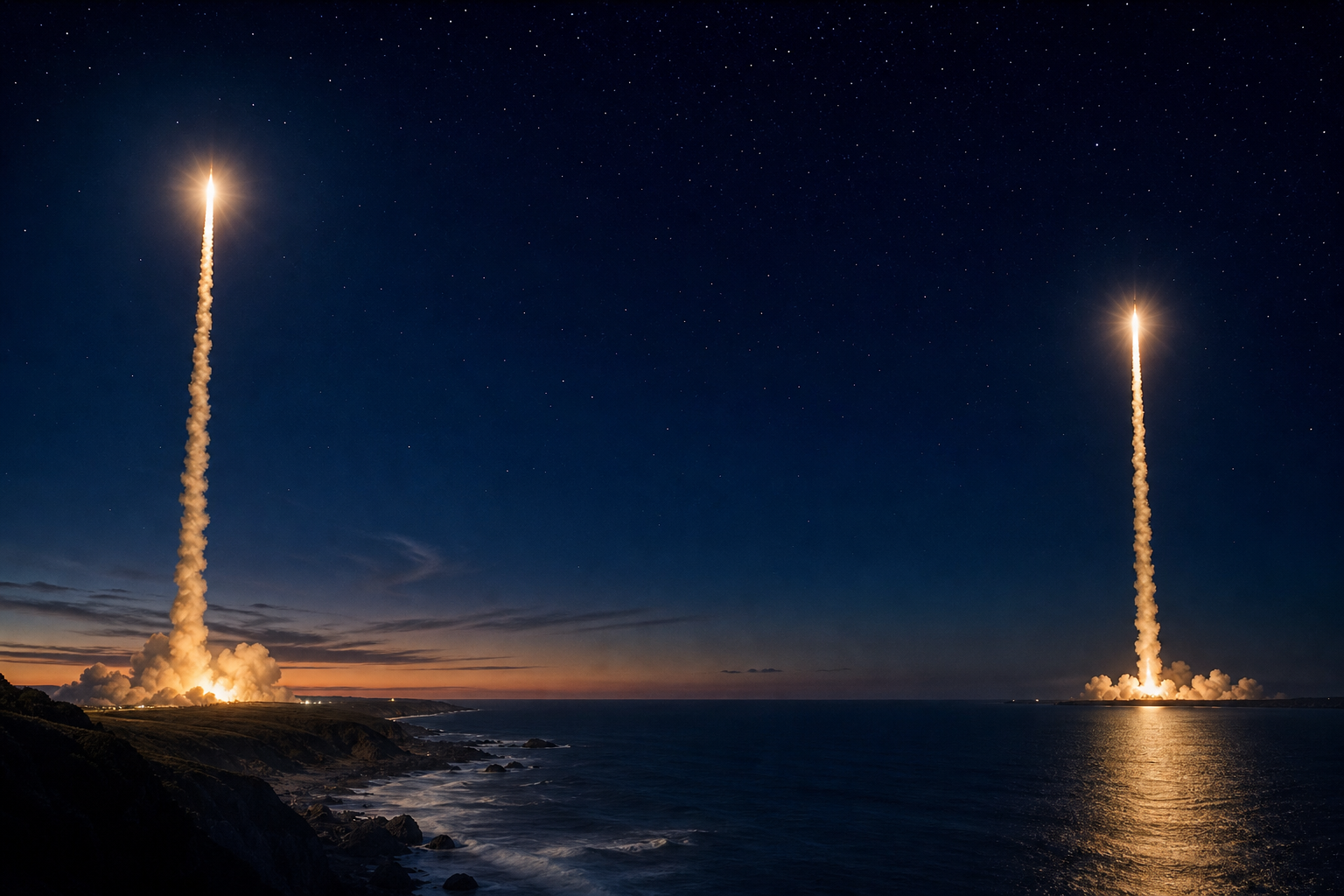
SpaceX launched two Falcon 9 missions from opposite US coasts just 38 minutes 31 seconds apart on August 16, 2026—a new company record for the shortest interval between its orbital launches. The Florida mission, Globalstar 2-R Mission 1, lifted off at 01:12:14 UTC; USSF-366 followed from California at 01:50:45 UTC. Both missions were successful, and the second liftoff began while the first was still in flight.
That is the headline worth pausing over: not one unusually fast pad turnaround, but two launch teams and two ranges running overlapping missions across the country. It is a neat reminder that spaceflight is a team sport on the ground as much as it is a spectacle in the sky.

What happened in SpaceX’s 38-minute launch doubleheader?
First up was Globalstar 2-R Mission 1 from Space Launch Complex 40 at Cape Canaveral Space Force Station in Florida. The Falcon 9 carried eight satellites for Globalstar’s second-generation refresh constellation; SpaceX confirmed the satellites were deployed. Next Spaceflight’s mission record lists the liftoff at 01:12:14 UTC and the outcome as a success.
At 01:50:45 UTC, another Falcon 9 lifted off from Space Launch Complex 4 East at Vandenberg Space Force Base in California on USSF-366. The Space Force mission was successful, according to Next Spaceflight’s launch record. Its payload details have not been publicly disclosed, so there is no need to guess at them.
Subtract the two liftoff times and you get 38 minutes 31 seconds. That beats SpaceX’s previous 65-minute record by 27 minutes, as Space.com reported.
Why does an overlap between two launches matter?
A “two launches in 38 minutes” stat sounds like a stopwatch challenge. The more interesting part is that the missions were not sequential copies of the same operation. They used different launch sites, supported different customers, and headed toward different mission goals.
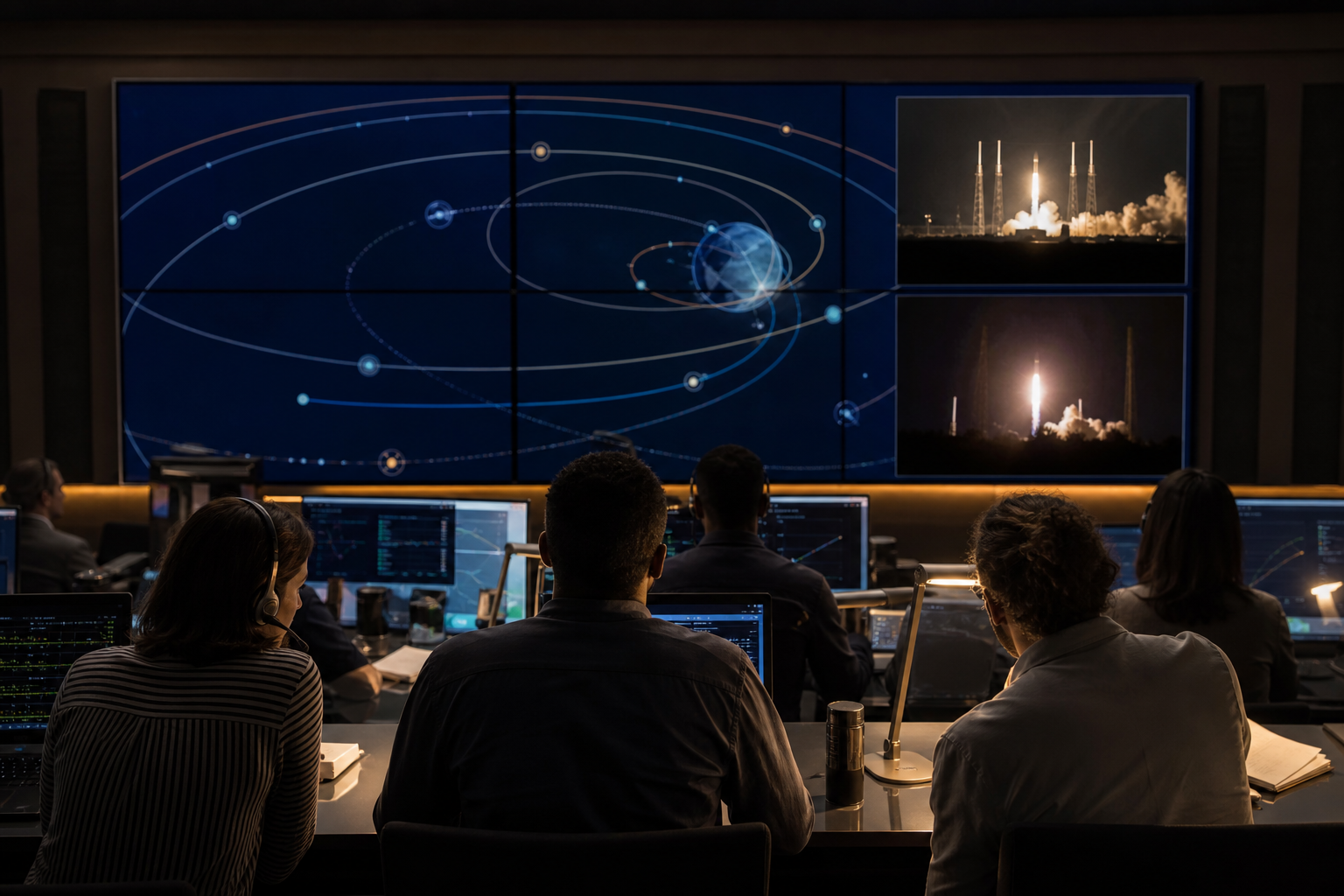
Each launch still requires range coordination, weather assessments, tracking, recovery planning, telemetry, ground crews, and a mission-control team that can make conservative calls when something is not right. The California rocket leaving the pad while the Florida mission was still in flight is a visible result of many separate systems working in parallel—not a shortcut around safety.
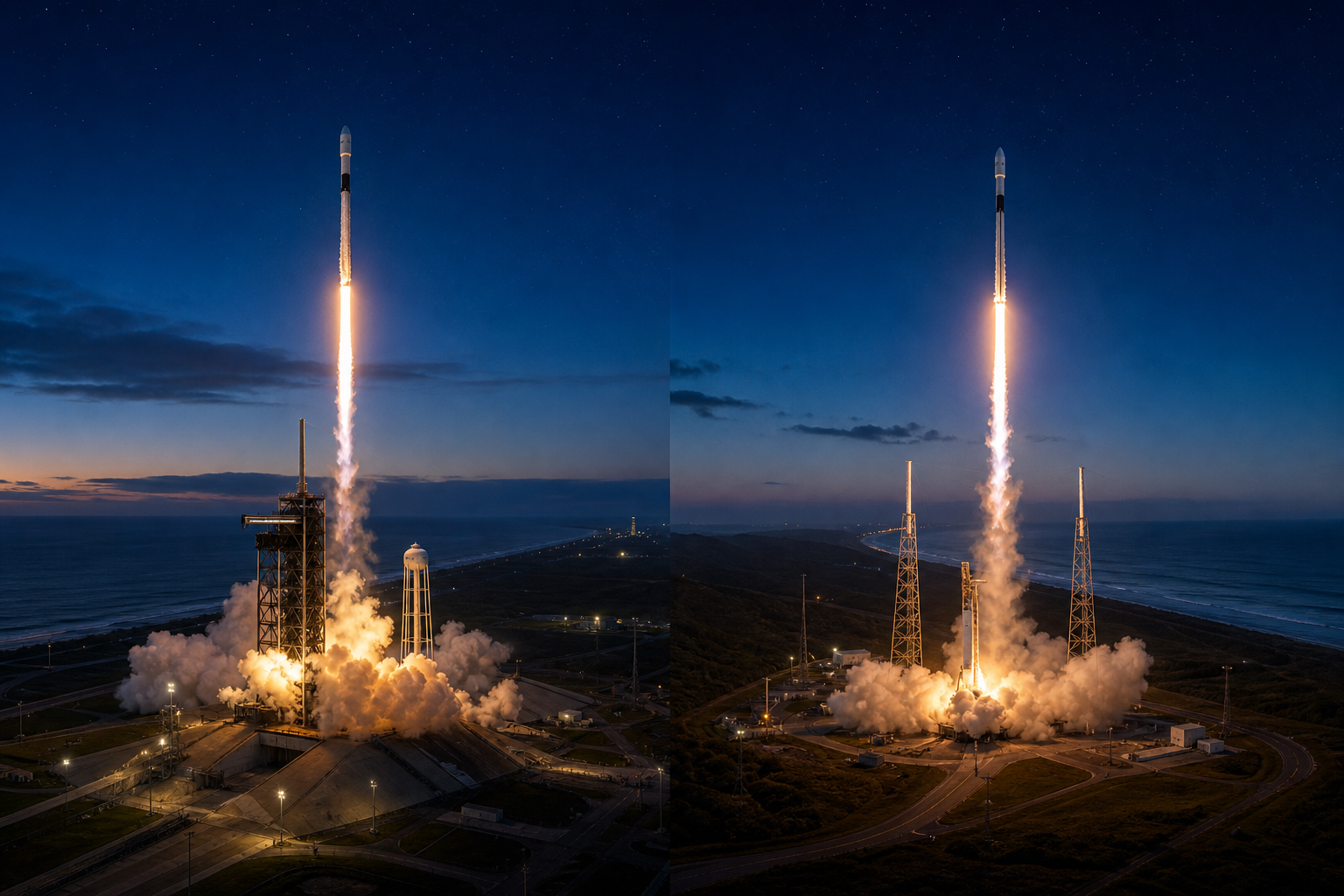
For people who follow launches, that distinction is part of the fun. Rockets make the bright line in the sky; the less-visible work is how many people and decisions have to line up before that line appears.
Was this a same-pad turnaround record?
No. This was a record for the shortest time between two SpaceX orbital launches, achieved with launches from two different coasts. It should not be confused with the time required to prepare one pad or reuse one booster between missions.
Globalstar 2-R Mission 1 was a commercial communications deployment from Cape Canaveral. USSF-366 was a national-security launch from Vandenberg. The shared record comes from operational overlap across SpaceX’s broader launch network.
That wider perspective is useful for newcomers, too. Spaceflight news can look like a stream of isolated countdowns, but the real story often lives in the network behind them: launch sites, teams, tracking, spacecraft operators, and a community of people comparing notes once the plume fades.
What should space fans take from the record?
For the Cosmic Match community, this is a great conversation starter even if you did not see either launch live. The Florida mission happened at 21:12:14 EDT on August 15; USSF-366 lifted off at 18:50:45 PDT from Vandenberg. The launches were over before this story reached us, so we are not going to pretend there was a local viewing opportunity in Austin, Houston, or Los Angeles.
Instead, share the part that caught your attention: the eight-satellite commercial mission, the cross-country timing, the California launch site, or simply the sheer logistics of two successful launches before many of us had finished a late-night observing session. You can join the Cosmic Match space community to meet people who light up over exactly these kinds of details.
Want another launch-news explainer after this rapid-fire weekend? Read our coverage of the Long March 7A / ChinaSat 4B launch failure, where separating confirmed information from unknowns matters just as much. Then bring your own launch takes to Cosmic Match: the best space stories get even better when somebody else is excited enough to talk them through.
Lunar follow-up: NASA’s LRO has now imaged the Falcon 9 lunar crater, showing what repeated observations under changing light can reveal about a new impact site.