NASA’s LRO Reveals What the Falcon 9 Impact Carved Into the Moon
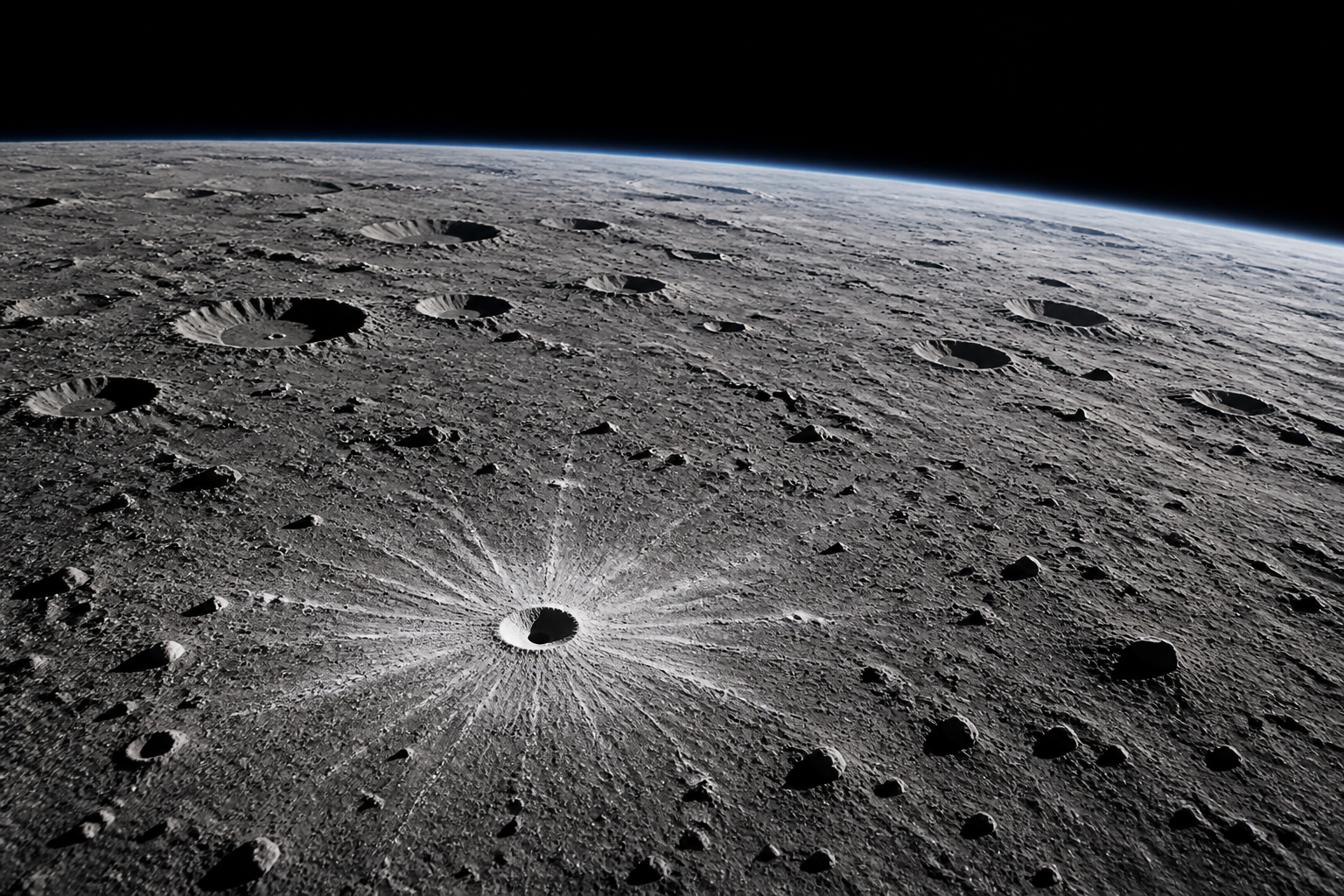
NASA’s Lunar Reconnaissance Orbiter (LRO) has now shown what the Falcon 9 impact actually left behind on the Moon: a fresh crater about 60 feet (18 meters) wide and less than 10 feet (3 meters) deep. The best part is not just the dramatic before-and-after view. By revisiting the site under changing light, scientists could read the layers of material thrown out by the impact.
The impact occurred on Aug. 5, and LRO collected the key image sequence on Aug. 11 and 12. For anyone following lunar exploration, this is a lovely reminder that the Moon is not a frozen museum piece: new marks can become compact, real-world geology lessons.
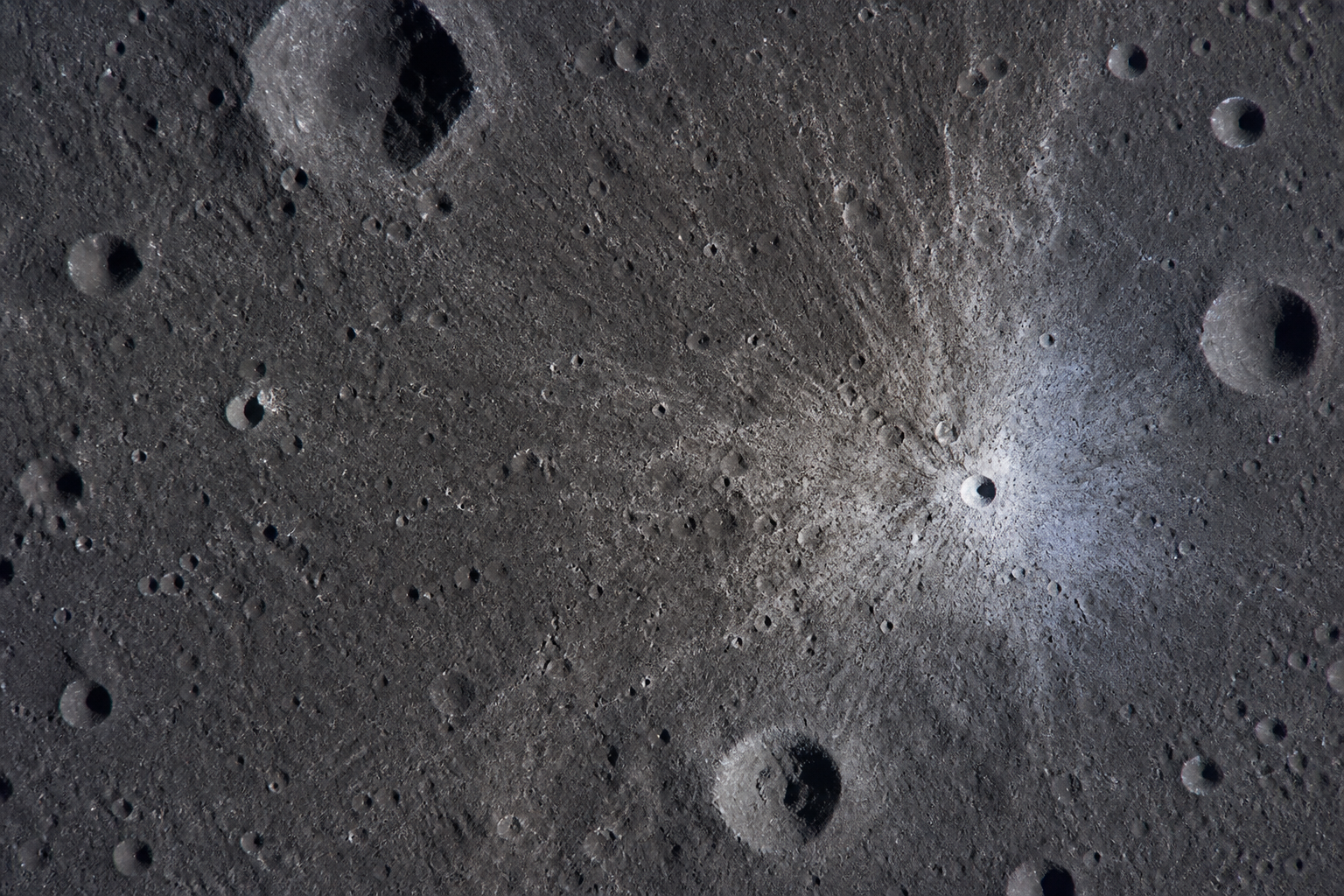
What did NASA’s LRO find at the Falcon 9 lunar crater?
NASA reports a crater approximately 60 feet across, with a depth under 10 feet. That is small on lunar-map scales, but large enough for LRO’s orbital cameras to study in detail. The bright, rough-looking material around it is ejecta: lunar soil and rock excavated by the collision and deposited around the new hole.
One image is a snapshot; a sequence is a measurement tool. Under one Sun angle, fresh excavated material can stand out. Under another, shadow and texture make the rim, slopes, and nearby regolith easier to interpret. NASA’s team used those differences to distinguish more weathered, shallow material from fresher material brought up from below.
That is the science payoff here. The crater is not merely a dot that confirms an impact happened. It is a small, newly made cross-section through the lunar surface.
Why did different lighting angles matter?
Lunar landscapes are unusually dependent on lighting. There is no atmosphere to soften the contrast, so a low Sun can turn tiny bumps into long shadows while a higher Sun can highlight brightness differences in the soil. Repeated LRO observations let researchers compare the ejecta rather than over-reading a single dramatic frame.
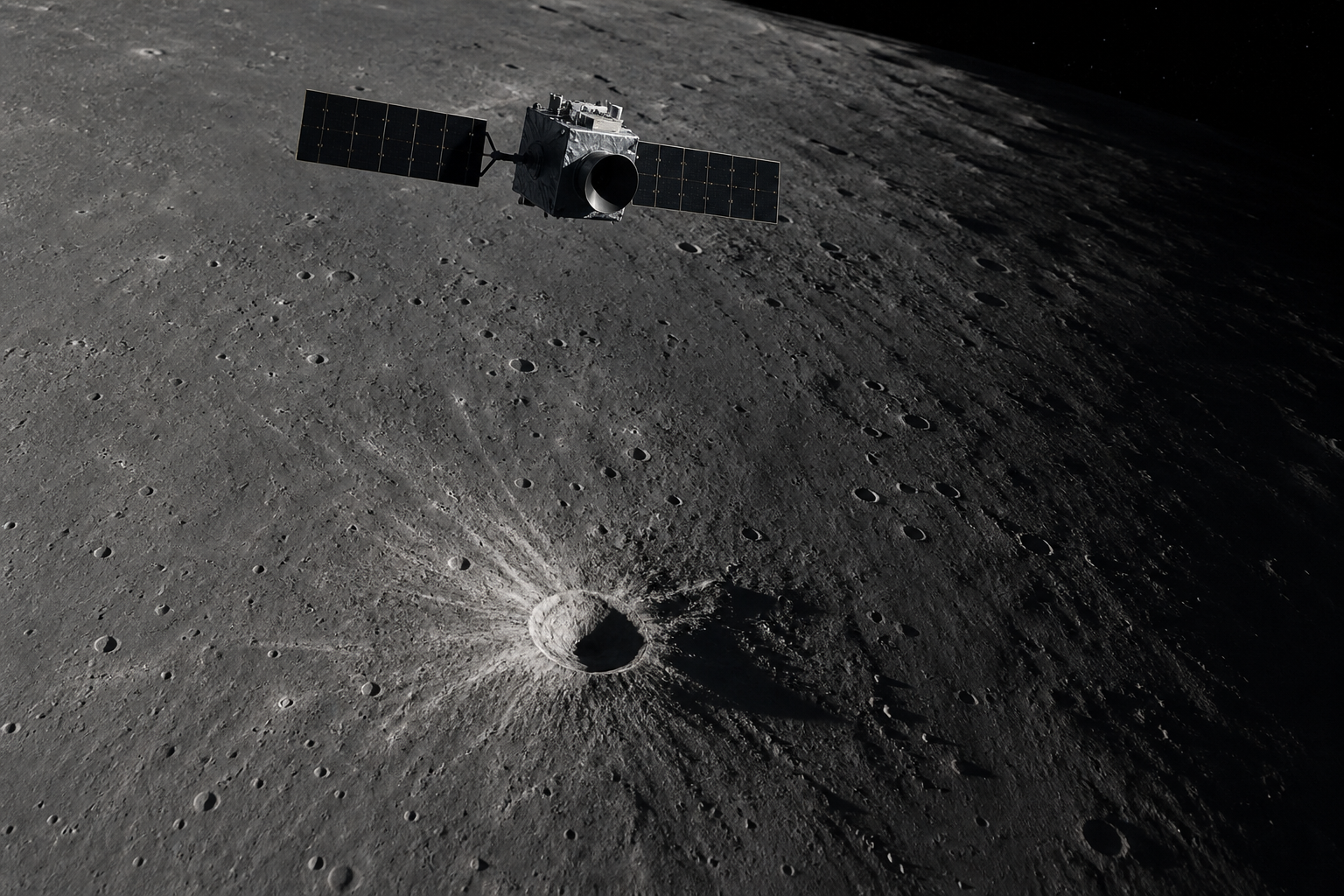
NASA describes distinct ejecta layers: material near the surface has spent longer exposed to space weathering, while material excavated from deeper down is fresher. That distinction is why the release belongs in the planetary-science column, not only the spaceflight-news column.
If you enjoy tracing how images turn into evidence, you may also like our guide to exploring a public map of nearly four billion cosmic objects. Different target, same satisfying leap from pixels to questions.
How was the impact location pinned down?
There was a useful international handoff before LRO’s close follow-up. Korea’s Danuri lunar orbiter imaged the crater just hours after impact. NASA says that observation put the actual site within about 0.6 miles (1 kilometer) of the terrain-adjusted prediction made by NASA’s Center for Near Earth Object Studies (CNEOS).
That is a remarkably tight result for an unplanned impact on another world. It also shows why sustained orbital coverage matters: different spacecraft, instruments, and observing times can turn a transient event into a much clearer record.
The impact was a separate story from the two Falcon 9 launches that happened only 38 minutes apart. This time, the enduring image is not a launch plume over Earth—it is a tiny, fresh scar on the Moon, examined patiently from orbit.
Can you see the Falcon 9 lunar crater with a telescope?
Not in any practical amateur-observing sense. A crater around 18 meters wide is far too small and too remote to pick out from Austin, Houston, Los Angeles, or anywhere else with a backyard telescope. Skip the impossible observing challenge and go straight to NASA’s released LRO imagery and explanation.
There is still a good community angle from home: share the NASA sequence with your observing crew, compare what changes as the shadows move, and talk through what you think is rim, ejecta, or older terrain. Then join the Cosmic Match space community to find people who will happily spend ten minutes discussing a 60-foot crater on the Moon. That is a very specific kind of fun—and exactly the point.
A tiny crater, a larger lesson
The Falcon 9 lunar crater is small, recent, and invisible to casual skywatching. But it is unusually valuable because scientists know when it formed and could quickly follow it with more than one spacecraft. LRO’s repeat views show how much planetary science lives in the details: illumination, texture, and the subtle difference between old surface soil and freshly exposed material.
For the rest of us, it is an excellent reason to look more closely at the Moon—not because we can spot this crater ourselves, but because orbiters can turn a fleeting event into a story written in shadow and dust.