Zhuque-3 Lands: China’s Orbital Booster Recovery Milestone
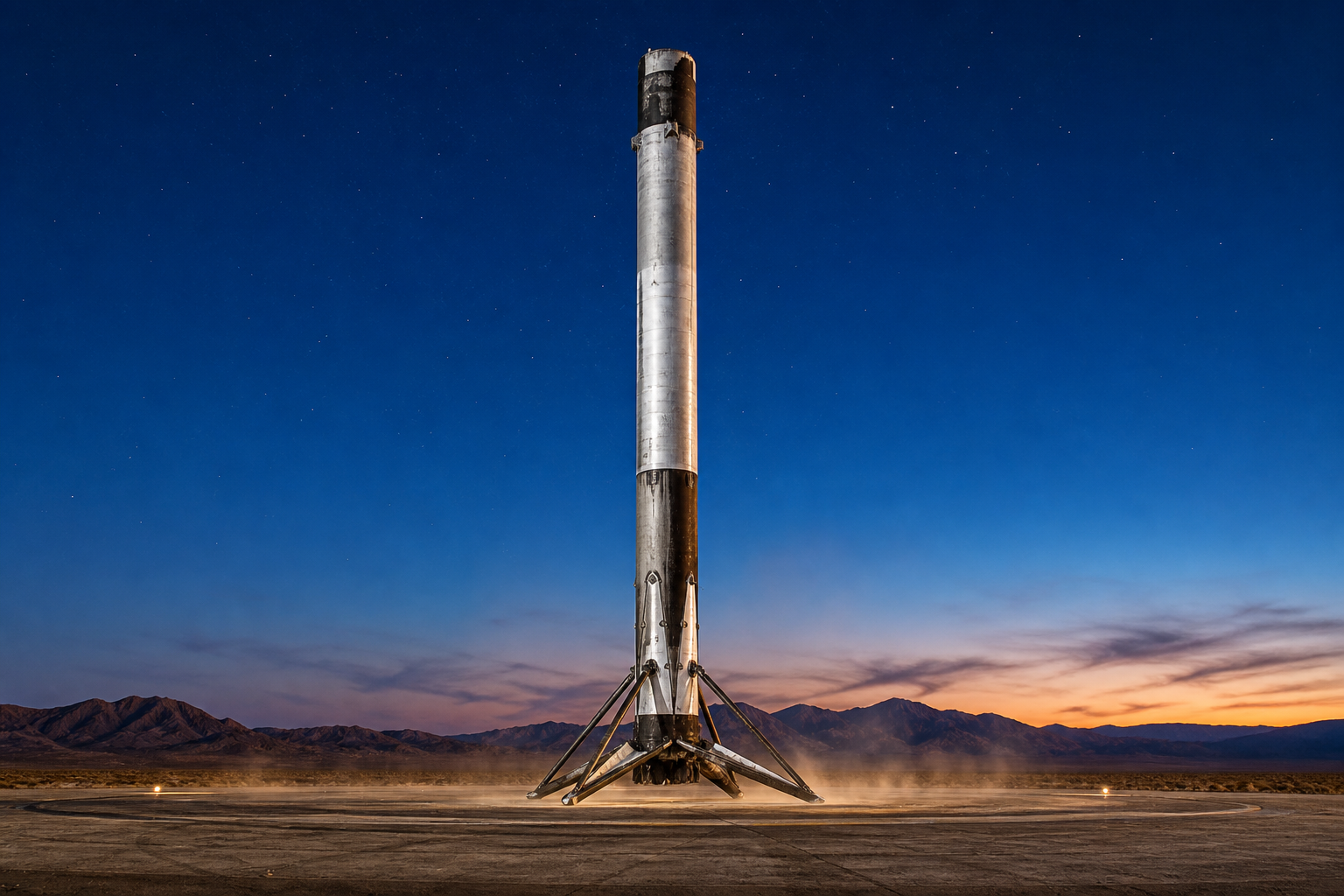
LandSpace’s Zhuque-3 Y2 has delivered the Honghu 03 satellite to its designated orbit—and its first stage then touched down upright about six minutes after liftoff. That makes this a major reusable-launch milestone: China’s first orbital-class booster recovery on land, and its first such recovery using landing legs. It is not, however, China’s first booster recovery overall: a Long March 10B stage was recovered at sea by net capture in July.

The distinction matters because reusable spaceflight is built from a series of difficult, specific capabilities. On August 19, Zhuque-3 Y2 lifted off at 07:35 UTC+8 from the Dongfeng commercial launch zone. LandSpace reported a soft touchdown at Landing Site No. 1 at about 07:41 UTC+8, while the upper stage continued its mission and placed Honghu 03 in orbit. Independent coverage from SpaceNews and Space.com corroborates the orbital delivery and recovery.
What did Zhuque-3 accomplish?
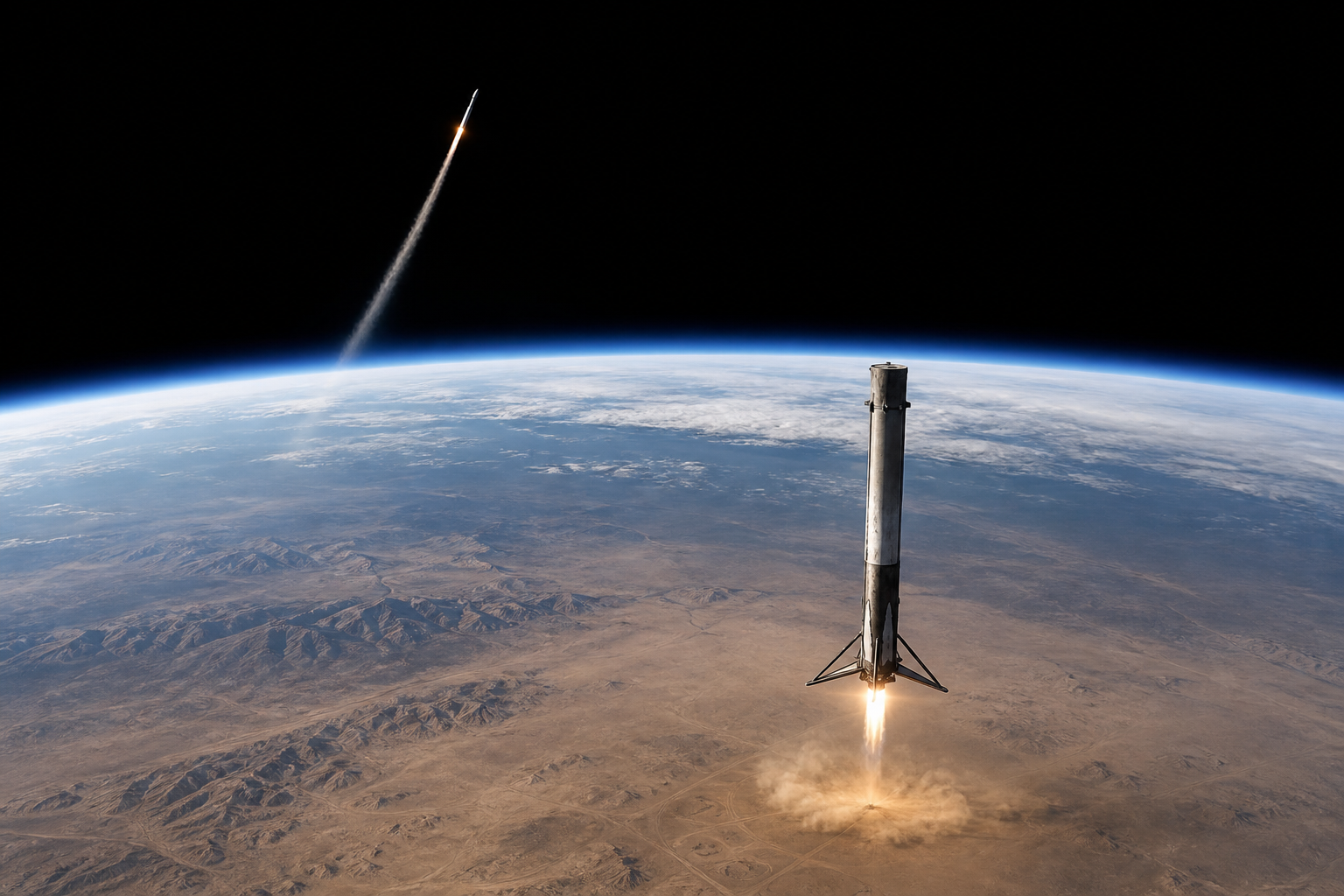
A rocket landing only becomes useful to a launch provider when it happens alongside a successful orbital mission. Zhuque-3 Y2 did both: it sent its payload toward the intended orbit and returned the large first stage to a defined land site under powered control.
That sequence calls for more than a dramatic final descent. The vehicle must reserve propellant, navigate through changing atmospheric conditions, relight or modulate engines at the right moments, and deploy landing legs that can absorb the touchdown. Each piece has to work within a mission that still has enough performance to send the upper stage and payload where they need to go.
Why is “first on land” the important wording?
China had already demonstrated a different recovery method in July, when a Long March 10B stage was retrieved at sea with net capture. That earlier result is why calling Zhuque-3 “China’s first rocket landing” or “China’s first booster recovery” would erase useful context.
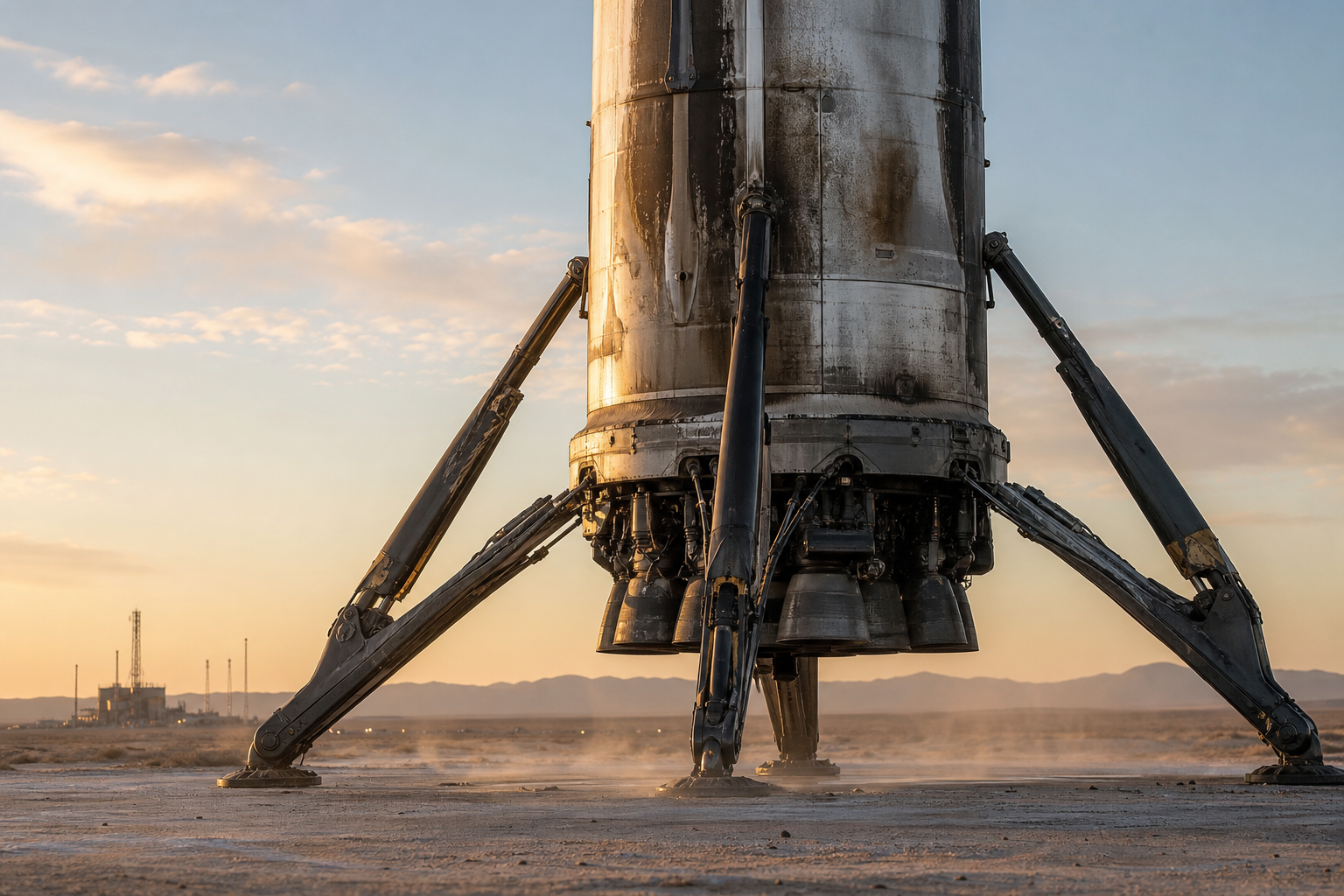
Zhuque-3’s achievement is its own meaningful first. A controlled, upright landing on land with landing legs is a different operational challenge from recovery at sea. It asks the booster to arrive at a fixed landing area with tight navigation, a stable final burn, and a landing-gear system that performs after the stresses of ascent and reentry.
The milestone also comes from LandSpace, a commercial Chinese launch company, rather than a state launch program. Reuters described it as a breakthrough for China’s private launch sector and its push toward reusable launch systems. That makes the result worth watching not as a one-off clip, but as evidence that reusable operations are becoming a more global engineering race.
How does a reusable booster change launch operations?
Recovering a stage does not automatically mean it is ready to fly again next week. Engineers still need to inspect engines, tanks, avionics, thermal protection, landing legs, and structures. The real proof of reusability will be the pace and reliability of refurbishment, followed by repeat flights.
Still, an intact booster is the prerequisite for that learning cycle. Hardware returned from a real orbital mission gives teams evidence that test stands and simulations cannot fully provide. It can reveal which components held up cleanly, which need work, and how much turnaround effort is actually required.
That is why the image of a stage standing on its own legs is more than a spectacle. It is a potential step toward a launch system in which expensive first stages are inspected, refurbished, and used again rather than discarded after a single ascent.
What does this mean for the global launch landscape?
Spaceflight followers have watched reusable first stages move from ambitious idea to regular practice in the United States. Zhuque-3’s land recovery shows that the capability is now taking root in another major launch ecosystem, with its own vehicles, suppliers, launch sites, and operational choices.
It does not erase the long lead established by companies with many recovered and reflown boosters. Nor does one successful recovery guarantee routine reuse. But it does widen the field of teams working through the same central challenge: making access to orbit more repeatable and, eventually, less costly.
For the Cosmic Match community, it is a good reminder that launch news has become a genuinely global shared experience. Whether you follow engines, orbital mechanics, satellite missions, or the latest landing footage, there is plenty to unpack with people who speak the same space-nerd language. Join the Cosmic Match space community to swap launch takes, and explore how rapid cadence is reshaping the field in our look at SpaceX’s 38-minute dual-launch record. If you are local, you can also meet astronomy and space enthusiasts in Austin for the next big mission conversation.
The next signal to watch
The next meaningful updates will be practical ones: post-landing inspection results, whether LandSpace names a recovered stage for another mission, and how quickly the company can turn a successful demonstration into repeatable operations. For now, the precise headline is already substantial: Zhuque-3 Y2 reached orbit with Honghu 03 and returned its first stage upright on land, using landing legs—a first for China’s orbital-class booster recovery efforts.