The August 12, 2026 Eclipse Is Not a Local Event for Austin, Houston, or Los Angeles—Here’s How to Experience It
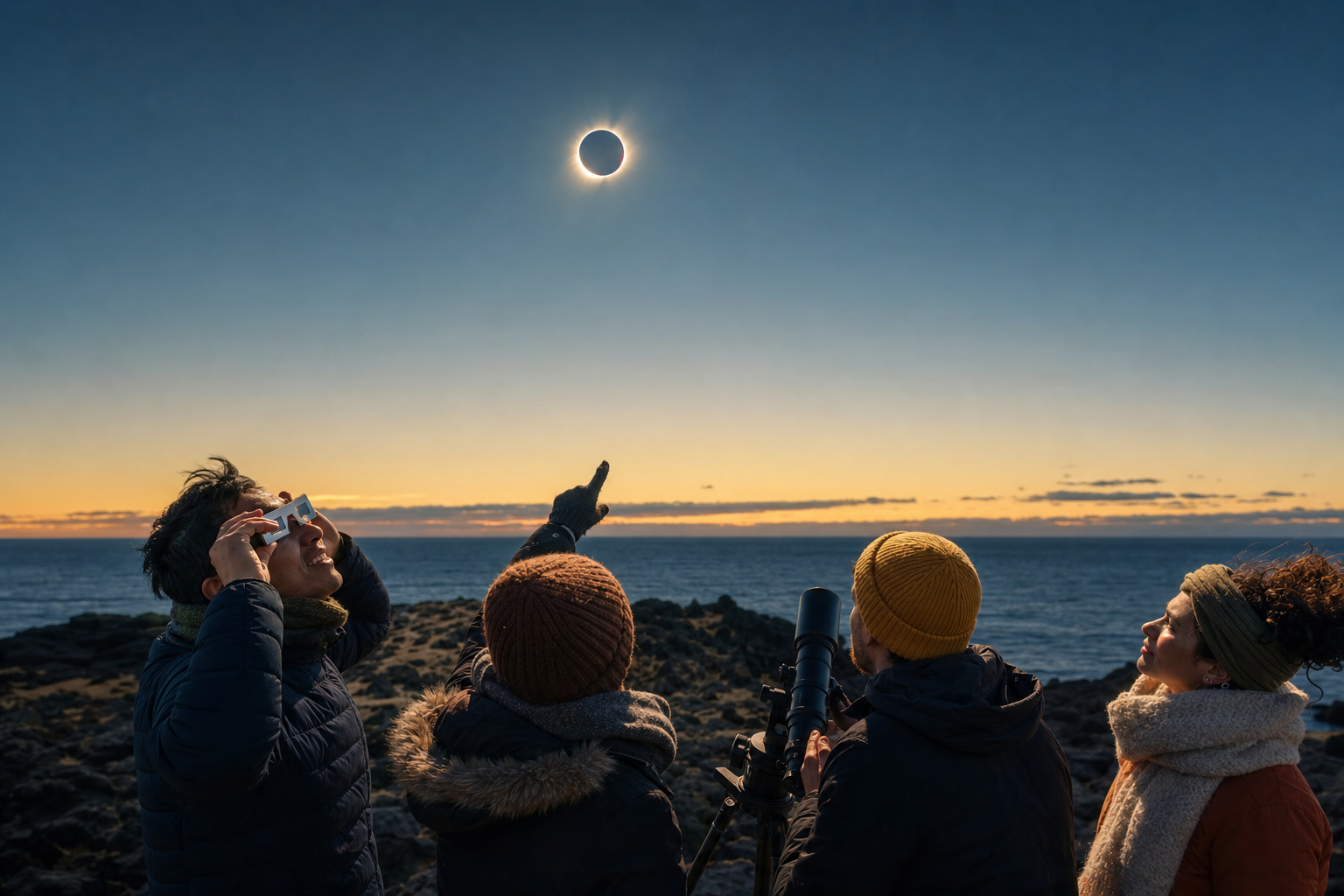
The August 12, 2026 Eclipse Is Not a Local Event for Austin, Houston, or Los Angeles—Here’s How to Experience It
If you live in Austin, Houston, or Los Angeles, put down the eclipse glasses for this one: the August 12, 2026 total solar eclipse will not be visible from your city. That is not a near-miss or a cloudy-weather caveat—it is simply outside the local viewing zone.
That can still be a terrific reason to gather with fellow sky people. This eclipse belongs to the North Atlantic, Greenland, Iceland, northern Russia, and parts of Spain and Portugal. You can follow it thoughtfully from home, make a real travel plan if that is already on your horizon, or save your local night-sky energy for the moonless Perseid window that follows. No inflated “everyone look up” alert required.

What will happen on August 12?
NASA says the total eclipse track crosses Greenland, Iceland, northern Russia, the Atlantic Ocean, Spain, and a small corner of Portugal. The event is especially atmospheric in western Europe: in some places, the Sun will be low and approaching sunset during the partial phases.
The U.S. is not one uniform yes-or-no answer. Parts of the northern United States—from Alaska toward North Carolina—are in the partial-eclipse footprint. But the local cities Cosmic Match serves are not: Austin, Houston, and Los Angeles are outside the eclipse viewing zone. Do not plan a midday observation session, buy solar filters for this event, or expect a visible dimming there.
For a useful reality check before making any plans, use NASA’s official August 12 visibility map. Its red band marks totality; the contour lines show partial coverage. It is much more reliable than a generic “visible in the U.S.” headline.
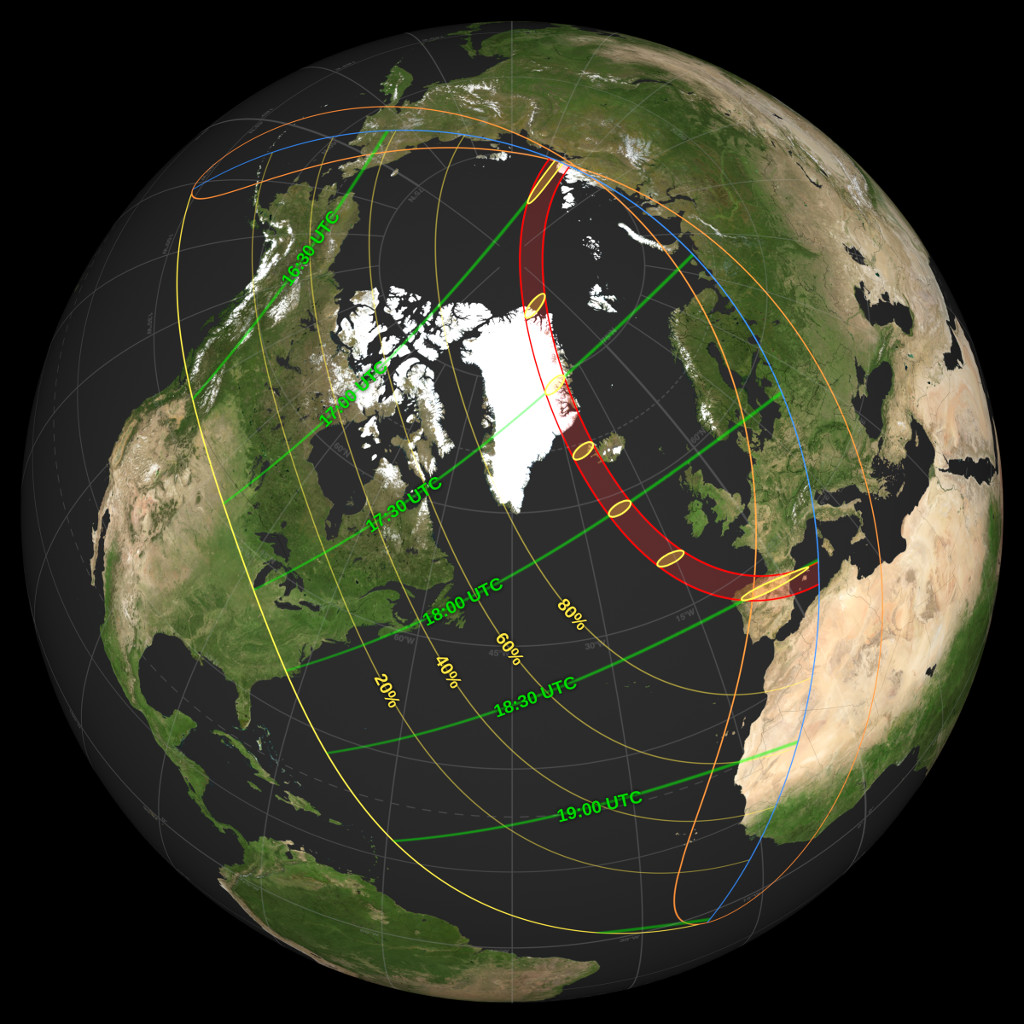
NASA Scientific Visualization Studio’s global map of the August 12, 2026 eclipse path. The map is reproduced from NASA’s public visualization; see the source and credits.
The best way to experience it from Texas or Southern California
Treat this as a shared remote event, not a local observing event. A few low-key ideas:
- Build a watch-along around NASA’s official broadcast. NASA will stream the eclipse at NASA Live; its coverage begins at 1:15 p.m. Eastern on August 12, with totality beginning in Iceland at 1:45 p.m. Eastern and in Spain at 2:28 p.m. Eastern. Invite a few friends to watch together, and check NASA’s coverage announcement for any updates.
- Make the map the conversation starter. Pick a place along the path and compare what observers there may experience: late-afternoon totality in Iceland, a sunset-adjacent eclipse in parts of Spain, or a partial view in the northern U.S. It turns a stream into an actual sky conversation.
- Plan a travel dream, not a rushed purchase. The path is real; availability, weather, road access, and local conditions are separate questions. If you are already traveling to Iceland or Spain, consult the NASA map, local authorities, and your own trip logistics. Do not book an expensive trip around an unverified meetup or predicted clear sky.
That last point is underrated. The memorable part of a sky event is often the people around you, whether you are standing under the shadow or trading “did you see that?” messages from a couch in Austin.
A safety note for anyone inside the visibility zone
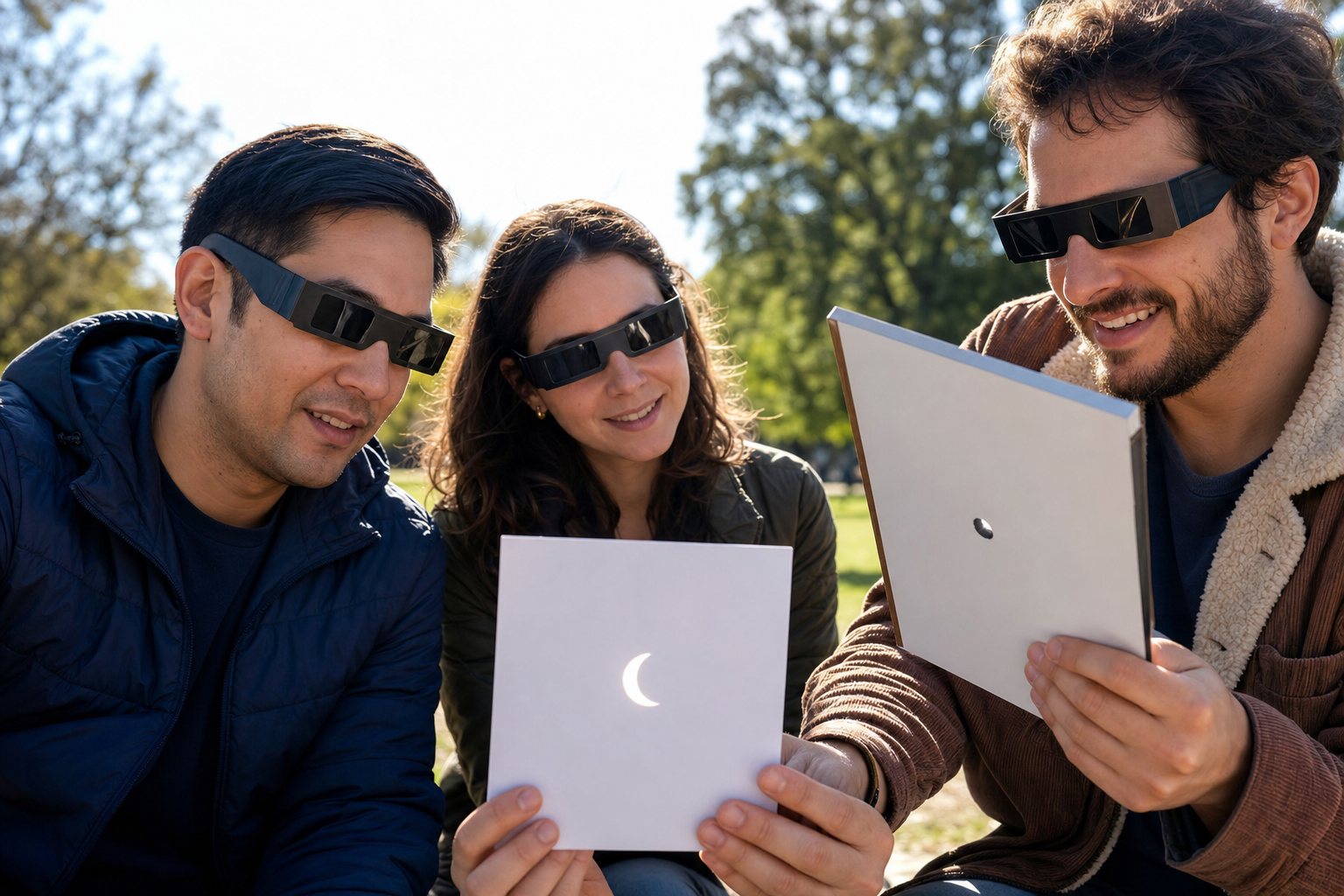
If you will be in a place where the eclipse is visible, safe viewing is non-negotiable. During the partial phases, use compliant eclipse glasses or a handheld solar viewer. Regular sunglasses are never enough. NASA also warns not to look at the Sun through a camera, binoculars, telescope, or camera lens while wearing eclipse glasses; optics need a proper solar filter fitted to the front.
A simple indirect option is a pinhole projector. With the Sun at your back, it projects the changing solar shape onto a surface. It is a nice group activity because everyone can see the projection without taking turns at the eyepiece.
Only people inside the narrow path of totality may look directly without eye protection—and only during the brief period when the Sun is completely covered. NASA notes that totality lasts less than two minutes for most of the path, and less than two and a half minutes even near the center. That is a powerful reason to read the full NASA safety guidance before you travel, rather than improvising on the day.
Your local August sky plan: make room for the Perseids
The eclipse and the Perseids are not one local double feature. For Austin, Houston, and Los Angeles, the eclipse is a remote experience; the Perseids are the local, look-up-outside opportunity. Keep the plans separate.
If you want a no-gear warm-up for a summer sky hangout, try finding the Summer Triangle from a city balcony. Vega is one of its three bright stars—and a useful anchor once the sky is properly dark.
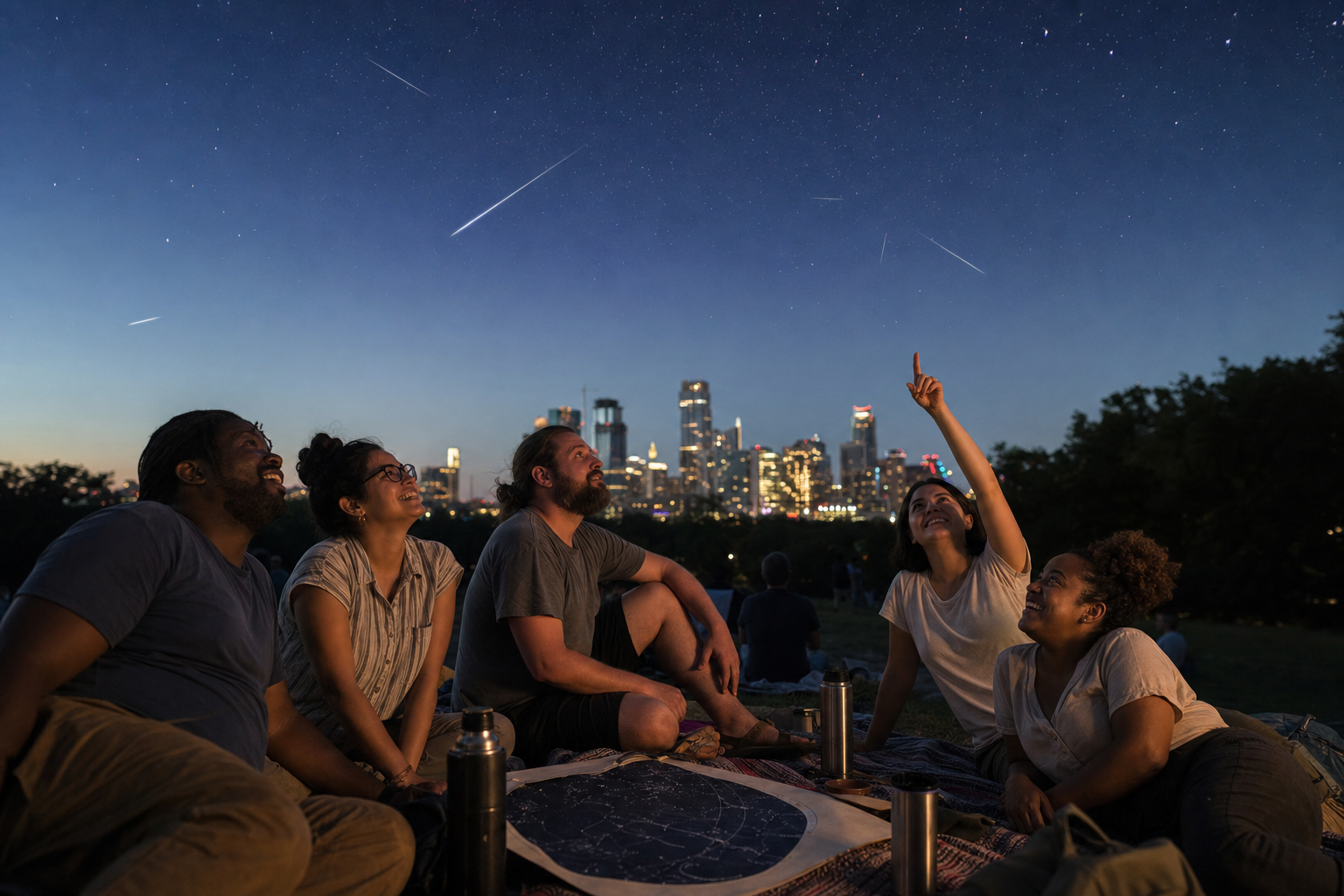
For now, make a simple plan: use August 12 to share the global eclipse with your astronomy crew, then choose a local dark-sky outing for the Perseids. You do not need a telescope to have a great night under the sky—just a clear plan and good company. Join the Cosmic Match community to meet people who would happily bring the snacks, the star chart, or the “wait, what is that?” question.
Quick recap
- Totality is in Greenland, Iceland, northern Russia, the Atlantic, Spain, and a small part of Portugal.
- Northern parts of the U.S. can see a partial eclipse; Austin, Houston, and Los Angeles cannot see this eclipse locally.
- Follow only verified NASA coverage for remote viewing, and do not trust unconfirmed livestream schedules.
- If you travel into the visibility area, use proper solar protection and check the official map.
- For a local August night out, keep an eye out for our separate Perseid guide.