IceCube Won the 2026 Physics Nobel: How Antarctic Ice Became a Cosmic Telescope
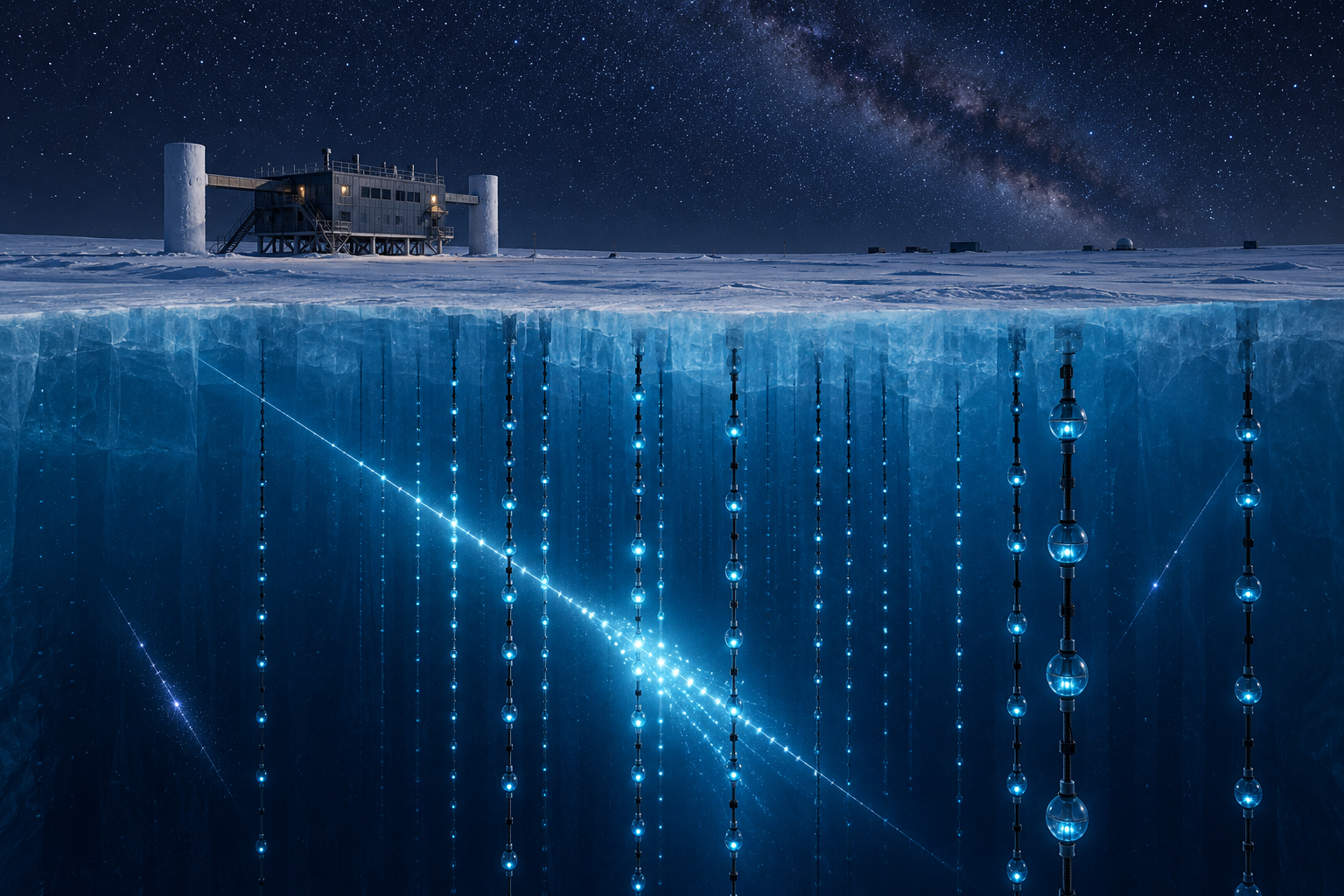
Francis Halzen has received the 2026 Nobel Prize in Physics for decisive contributions to the IceCube Neutrino Observatory and the discovery of high-energy neutrinos of astrophysical origin. The award matters to anyone who looks up because IceCube gave astronomy a new kind of messenger: not light, but tiny particles that can arrive from some of the universe's most violent places.
IceCube is not a camera, and it does not take ordinary pictures of the sky. It uses a cubic kilometer of clear Antarctic ice, threaded with thousands of deep detectors, to reconstruct rare particle interactions. That seemingly strange idea has helped turn neutrinos into a practical way to investigate the cosmos.

What did Francis Halzen win the Nobel Prize for?
The Royal Swedish Academy of Sciences awarded Halzen for decisive contributions to IceCube and for the discovery of high-energy neutrinos of astrophysical origin. The wording is important: it recognizes both the scientific result and the sustained work required to make a detector in Antarctic ice function as an observatory.
Halzen is IceCube's principal investigator, but this was never a one-person telescope. The IceCube collaboration says more than 450 scientists from 58 institutions in 14 countries operate the program, alongside engineers, field crews, and station teams. NSF supported the design, construction, and operations over more than two decades.
How can Antarctic ice become a telescope?
Neutrinos are often nicknamed ghost particles because they rarely interact with matter. Vast numbers pass through you, the ground, and even Earth without leaving a trace. That is useful for astronomy: unlike light, high-energy neutrinos can travel from extreme environments without being easily absorbed or bent by magnetic fields. It is difficult for a detector: you need an enormous target volume to catch enough of them.
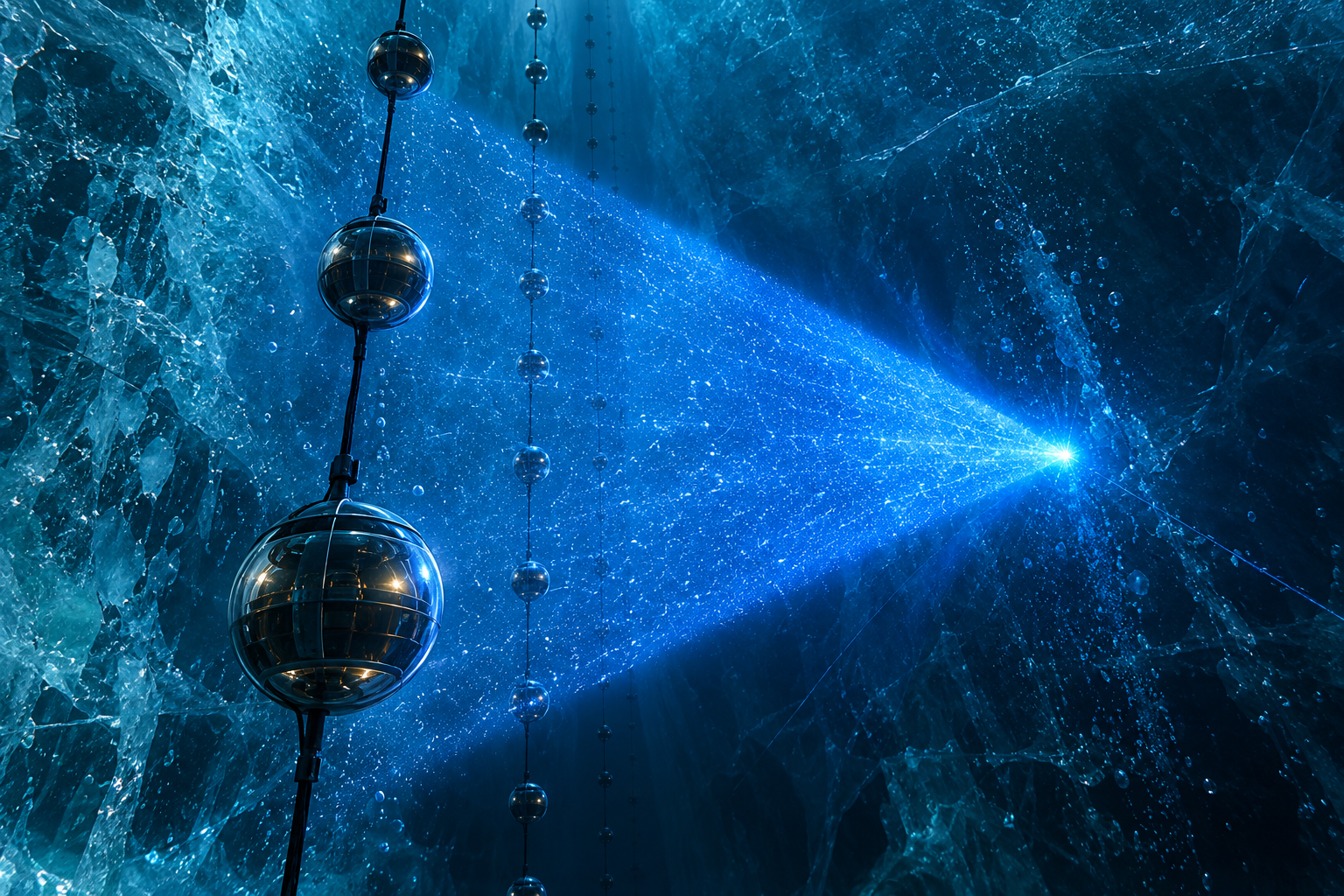
IceCube's answer is the deep, remarkably clear ice at the South Pole. More than two kilometers below the surface, strings of digital optical modules wait for the faint blue Cherenkov light made when a neutrino interaction creates a fast charged particle in the ice. From the timing and pattern of that light, researchers reconstruct an event's energy and likely incoming direction.
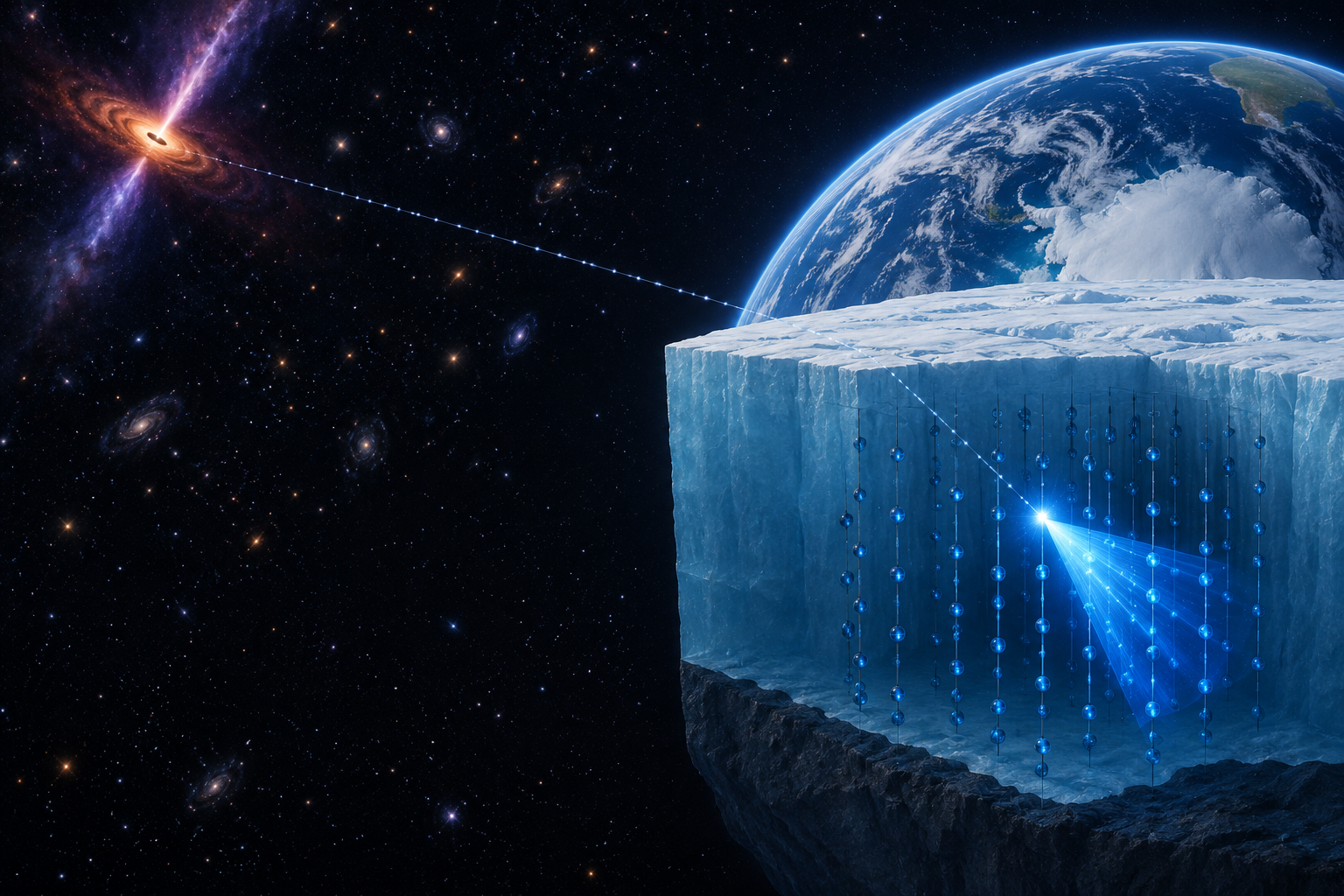
That is why “cosmic telescope” is a useful metaphor, with one caveat: IceCube does not make optical photographs. It builds a statistical, particle-based view of the high-energy universe. Its 2023 neutrino-based image of the Milky Way was a map inferred from many detections, not a snapshot taken with a lens.
What can neutrinos tell us that light cannot?
Astronomers already use radio, infrared, visible, ultraviolet, X-ray, and gamma-ray light. Neutrinos add another channel. They can help identify places where cosmic rays are accelerated to astonishing energies, including environments around black holes and other violent cosmic engines.
IceCube reported high-energy astrophysical neutrinos in 2013. Since then, it has reported evidence for neutrino emission from the galaxy TXS 0506+056 and from NGC 1068, also known as Messier 77. The observatory also announced neutrinos from our own Milky Way in 2023. Each result sharpens a bigger picture: the universe is not sending us just one kind of signal.
That perspective pairs naturally with our explainer on the Milky Way's first convincing microblazar, where jets and extreme particle accelerators are part of the story. Different observatories ask different questions; together, they make the answers sturdier.
Why should a beginner care about neutrino astronomy?
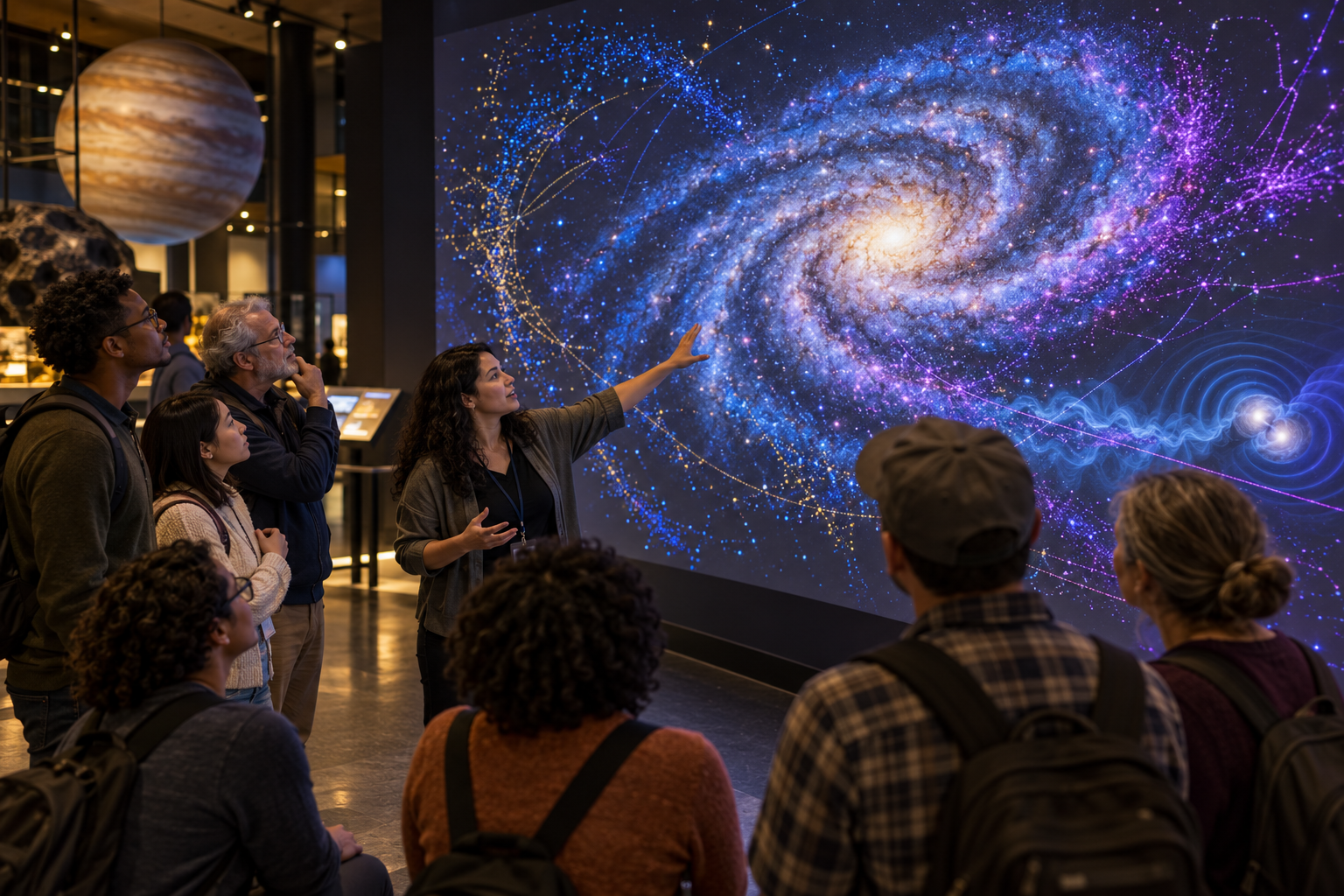
You cannot point binoculars at a neutrino source, and that is exactly the fun of this story. Astronomy is not only about what our eyes can see. It is about clever ways of learning from signals that nature sends us. A block of ice in Antarctica, sensitive electronics, patient analysis, and an international team can reveal something that a backyard telescope cannot.
The next time you are outside with friends watching the sky, try this conversation starter: “What else is arriving from that part of the sky besides light?” It turns a familiar view into a much larger question. You can join Cosmic Match free to find people who enjoy questions like that, whether your shared plan is a local observing night or a deep dive into a new space-science discovery.
What happens next for IceCube?
The collaboration says the 2025-26 IceCube Upgrade was installed to lower the energy threshold and improve calibration of the ice, helping scientists reconstruct neutrino directions more precisely. First science data from the upgrade are expected later this year. A proposed IceCube-Gen2 would expand the observatory's reach further.
The Nobel is a headline, but the lasting story is an observing method still getting better. For another look at how scientists use different wavelengths and messengers to study the universe, explore our space science and cosmology guides.
FAQ
Does IceCube take pictures of space?
No. IceCube detects patterns of faint Cherenkov light made inside Antarctic ice when rare neutrino interactions occur. Scientists use those patterns to reconstruct the particles' energy and direction.
Why is IceCube located at the South Pole?
The deep Antarctic ice is exceptionally clear and provides a huge, stable volume around the detector strings. That lets IceCube detect rare high-energy neutrino interactions.
Can I see neutrinos with a telescope?
No. Neutrinos do not make a visible object in a backyard telescope. Their astronomy depends on specialized particle detectors and careful reconstruction of many events.
Did Francis Halzen build IceCube alone?
No. Halzen is IceCube's principal investigator, but the observatory is an international collaboration involving hundreds of scientists, engineers, and support teams.