One Particle, 250 Scientists, Zero Discovery Claim: What LZ’s Dark-Matter Hint Really Means
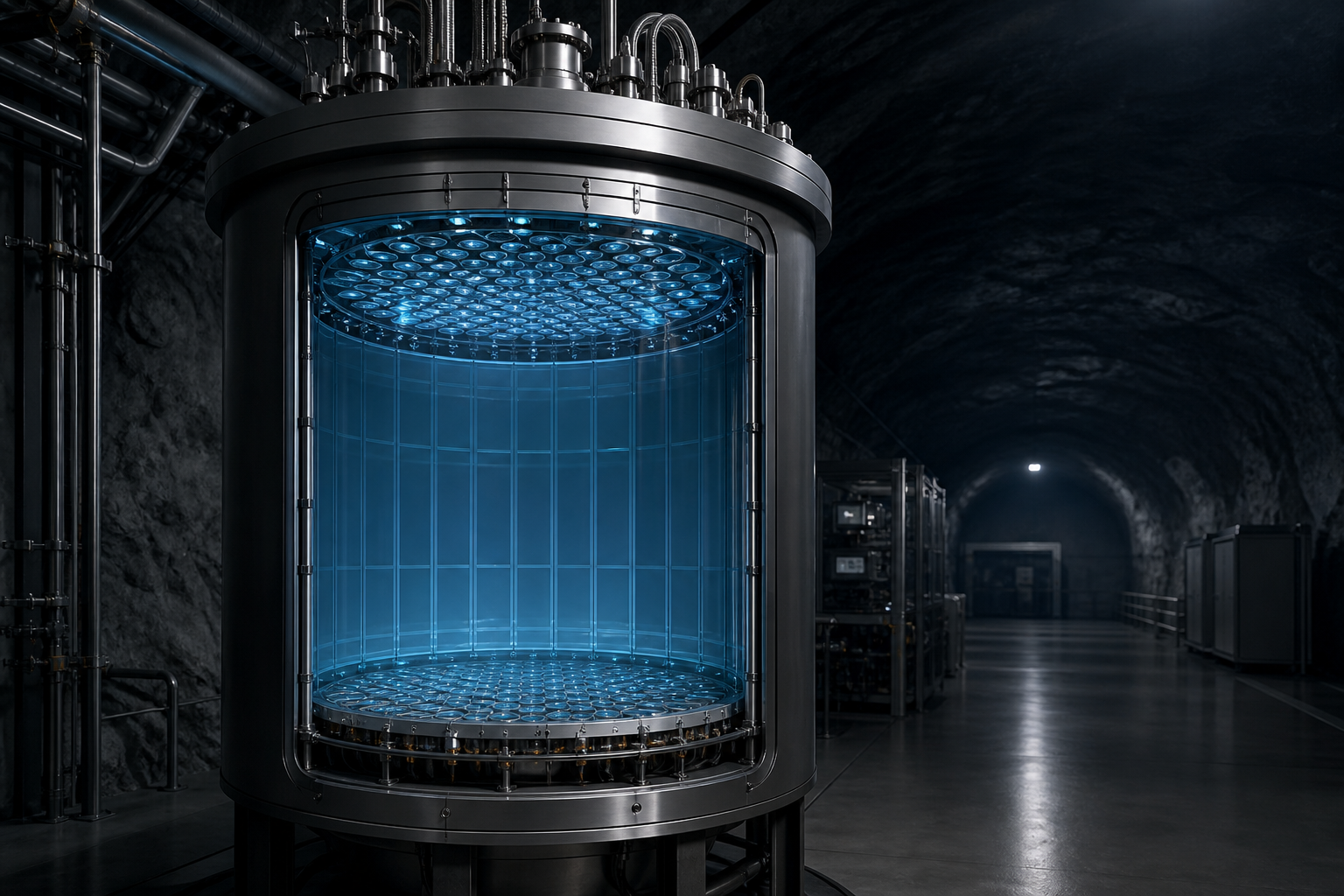
LUX-ZEPLIN (LZ) has reported one unexplained high-energy interaction in its dark-matter search—not a detection, not evidence that dark matter has been found, and not a discovery. In a dataset covering 220 live days collected from March 2023 through April 2024, the collaboration finds that the event has a local significance of 2.6 sigma under its background model. That makes it worth investigating. It is also far below particle physics’ usual 5-sigma discovery threshold.
That restraint is the story. LZ is a 250-scientist, 39-institution collaboration built to notice rare events and then try very hard to prove themselves wrong. Their result is exciting precisely because the team is not calling it a result that settles anything.

What did LZ actually see?
The LZ collaboration operates a 10-tonne ultra-pure liquid-xenon detector nearly a mile underground at the Sanford Underground Research Facility in South Dakota. The rock above it, a water shield and additional detectors help reduce ordinary particle interactions that can imitate the faint flashes a rare signal might make.
For this analysis, the team looked at a higher-energy region than the one used for its earlier search for the simplest WIMP interactions. It found one event that survived its checks and is difficult to explain with the background processes in its model. Brown University’s Sept. 1 report is careful about the distinction: the collaboration says it has seen something interesting, not dark matter.
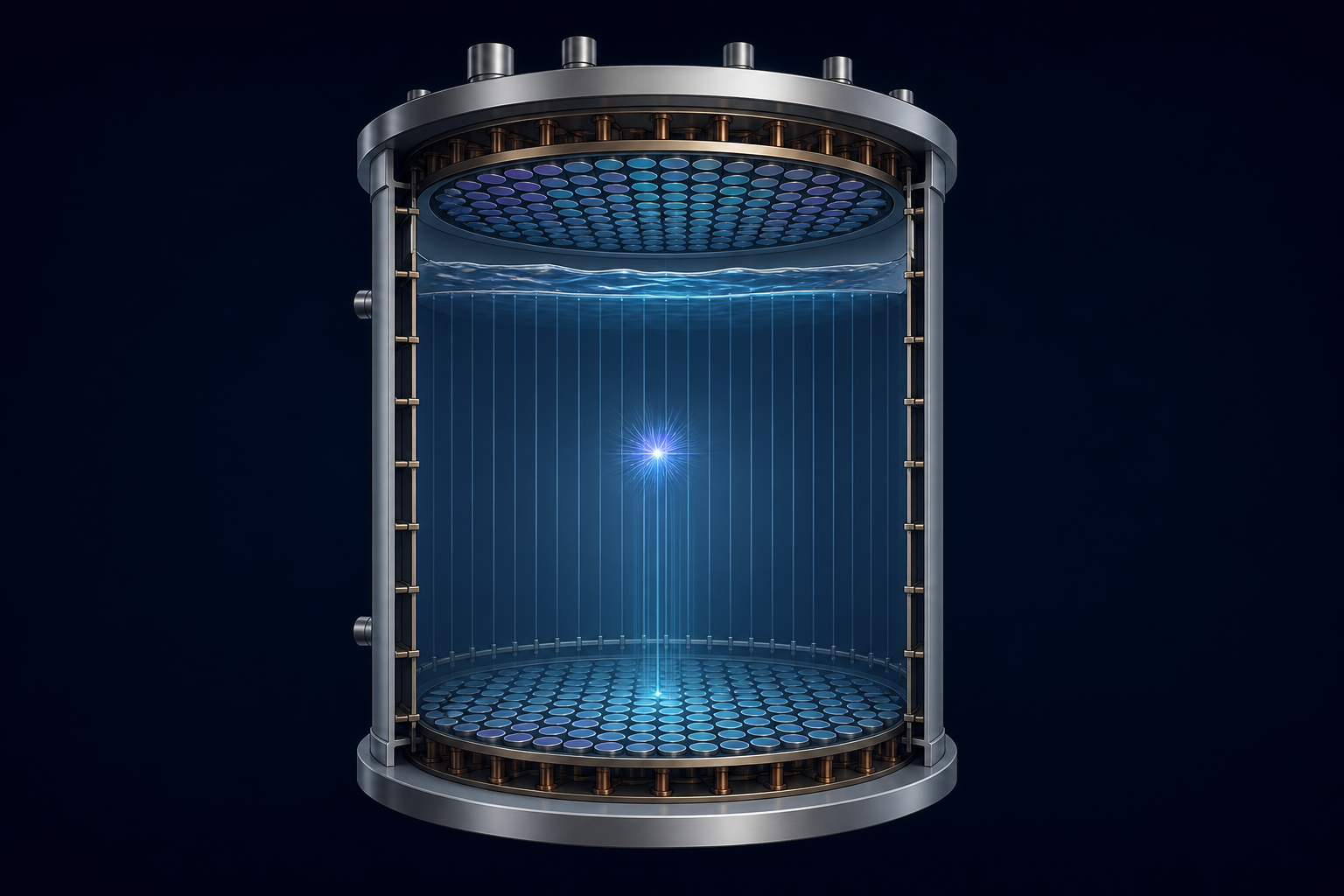
A xenon detector does not take a photograph of an invisible particle. It records tiny flashes of light and charge from a xenon atom recoiling after an interaction. Scientists compare that pattern with predictions for known backgrounds and for possible new physics.
What does “2.6 sigma” mean here?
A sigma value describes how unusual a result is under a specified statistical model. LZ reports a local significance of 2.6 sigma for this event under its background model. The collaboration says that corresponds to an approximately 0.5% chance that known backgrounds could explain it.
That is not a 99.5% probability that the event was dark matter. It does not compare every possible explanation, and it does not turn one event into a confirmed new particle. It says that, given the background model used in this search, the observed event is uncommon enough to deserve further scrutiny.
Particle physics uses a much tougher convention before calling something a discovery: 5 sigma. The gap matters. A 5-sigma threshold is designed to guard against statistical flukes, missed backgrounds and the many choices that come with complex searches. More events in future data could make the pattern stronger—or reveal that this event was a rare background after all.
Why are 250 scientists being so cautious?
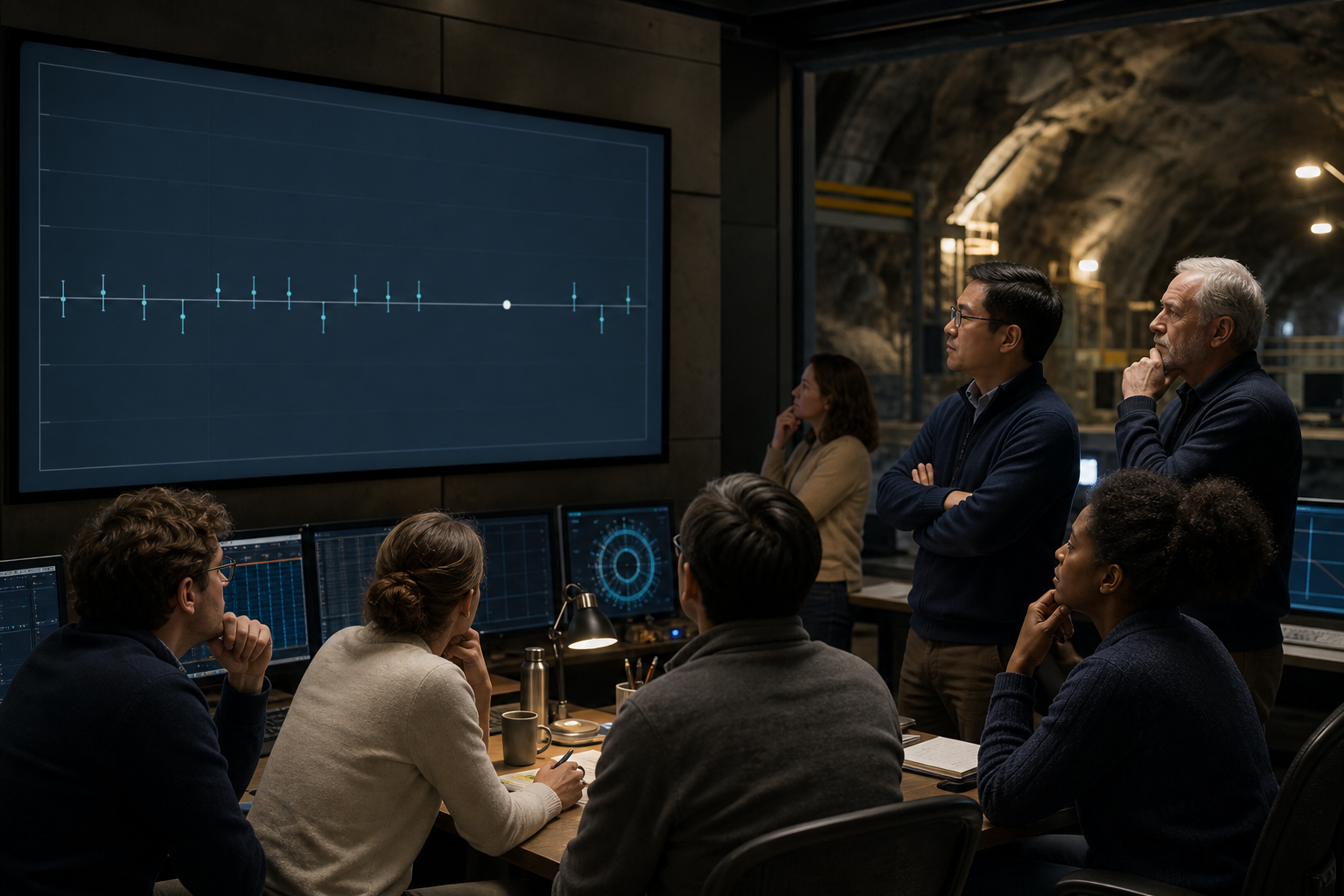
Because caution is not the opposite of curiosity; it is how a rare-signal experiment earns trust. LZ says its collaborators spent months examining possible background causes. In a search where the expected signal may be vanishingly rare, an outlier is an invitation to test the detector, the analysis and the assumptions from every angle.
That work belongs to people as much as hardware: detector operators, analysts, software builders and reviewers across the collaboration. The LZ team includes scientists and engineers from 39 institutions. Its public result names the anomaly but leaves the conclusion open—a good example of how science communicates uncertainty without burying the interesting part.
Could it still be a WIMP?
Possibly, but only with important qualifiers. The LZ preprint explores a broader set of interaction possibilities. If this event were interpreted as dark matter, LZ says it would point to a heavy WIMP of at least 200 GeV/c²—more than 200 times the proton’s mass.
It also would not fit the simplest WIMP interaction model. That matters because a simple high-energy WIMP interaction should have brought accompanying lower-energy recoils; LZ did not see that pattern. The result instead motivates tests of more complex possibilities, not a headline claiming that a familiar WIMP has arrived.
For a helpful neighboring piece of the dark-universe puzzle, read our explainer on Cloud-9, a possible starless galaxy candidate. And if a cautious science story is the kind of thing you want to unpack with fellow enthusiasts, join the Cosmic Match community or start your Cosmic Match profile and find people who enjoy following the evidence as much as the big cosmic questions.
What happens next?
LZ has already collected more data and will continue its WIMP search. The next test is straightforward in principle: does a consistent pattern appear as the exposure grows? Independent experiments and theoretical work also matter, especially if any future signal points beyond the simplest WIMP models.
For now, the most accurate takeaway is modest and fascinating: one carefully vetted event has given scientists a new question. The answer is still pending.
FAQ
Did LZ discover dark matter?
No. LZ reports one unexplained high-energy interaction with a local significance of 2.6 sigma under its background model. The collaboration explicitly says it is not claiming a dark-matter discovery.
Is a 0.5% background probability the chance that it is dark matter?
No. It is the modeled probability that known backgrounds could explain the event in this analysis. It is not the probability that the event itself is dark matter.
Why do physicists use 5 sigma for a discovery?
Rare-event searches need a high bar against random fluctuations and overlooked backgrounds. At 5 sigma, a result has passed a much stronger conventional threshold; LZ’s 2.6-sigma observation needs more data and scrutiny.
Can I see this event through a telescope?
No. This is a particle-physics result from an underground detector, not an object or event visible in the sky.