NASA’s Roman Launch Weekend: Watch a Telescope Bound for the Dark Universe
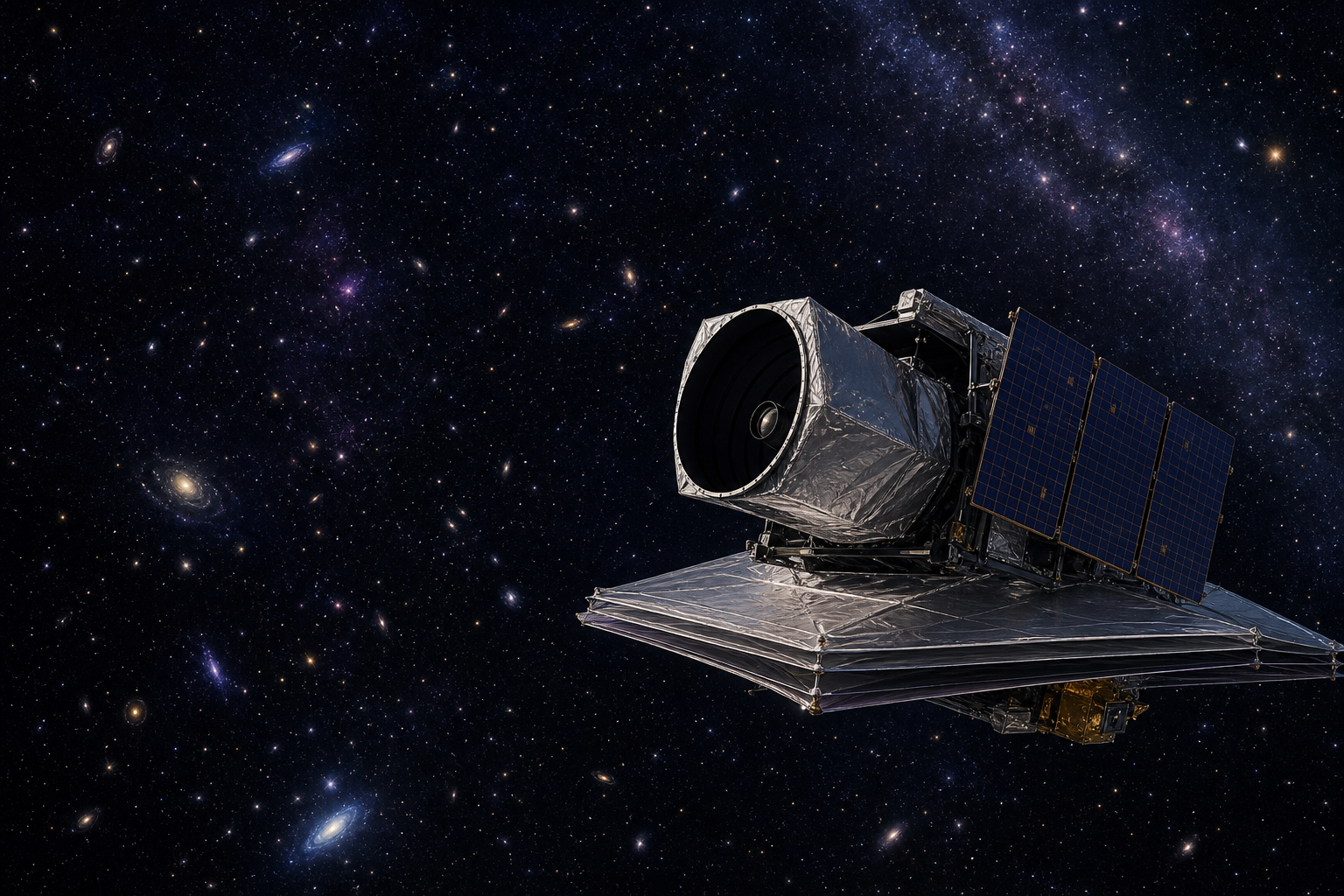
NASA’s Nancy Grace Roman Space Telescope is targeting Sunday, August 30, 2026, at 7:26 a.m. EDT for liftoff from Kennedy Space Center aboard a SpaceX Falcon Heavy. That is 6:26 a.m. in Austin and Houston, 4:26 a.m. in Los Angeles, and 8:26 a.m. BRT. The schedule is still a target—not a promise—so the simplest launch-weekend plan is a coffee, NASA’s official countdown page, and a few fellow space people ready to refresh together.
Roman is not a telescope you will see through an eyepiece. It is a new way of taking the universe’s wide-angle portrait: an infrared observatory built to investigate dark energy, map galaxies, and broaden the hunt for worlds beyond our solar system. Here is how to turn the launch into a good no-equipment weekend moment in Austin, Houston, or LA—and what to watch for after the rocket clears the pad.
Mission status, confirmed August 30: Roman launched successfully at 7:26 a.m. EDT, and NASA acquired telemetry seven minutes later. About 1 hour 23 minutes after launch, its solar panels and lower instrument sun shade deployed. Roman is powered and communicating, but it is not fully deployed, commissioned, at L2, or producing science images: the high-gain antenna, deployable aperture cover, two mid-course corrections, instrument activation, calibration, and testing are still ahead. NASA anticipates first images in early 2027. Read NASA’s official launch release and replay coverage.
What is Roman launching to study?
Roman will work from a quasi-halo orbit around the Sun–Earth L2 point, a distant perch that lets its instruments keep a stable view of the cold infrared sky. Its 2.4-meter mirror matches Hubble’s diameter, but its Wide Field Instrument can see at least 100 times more sky at once. That is the heart of the mission: Roman can make sharp, broad surveys rather than staring at only one tiny patch at a time.
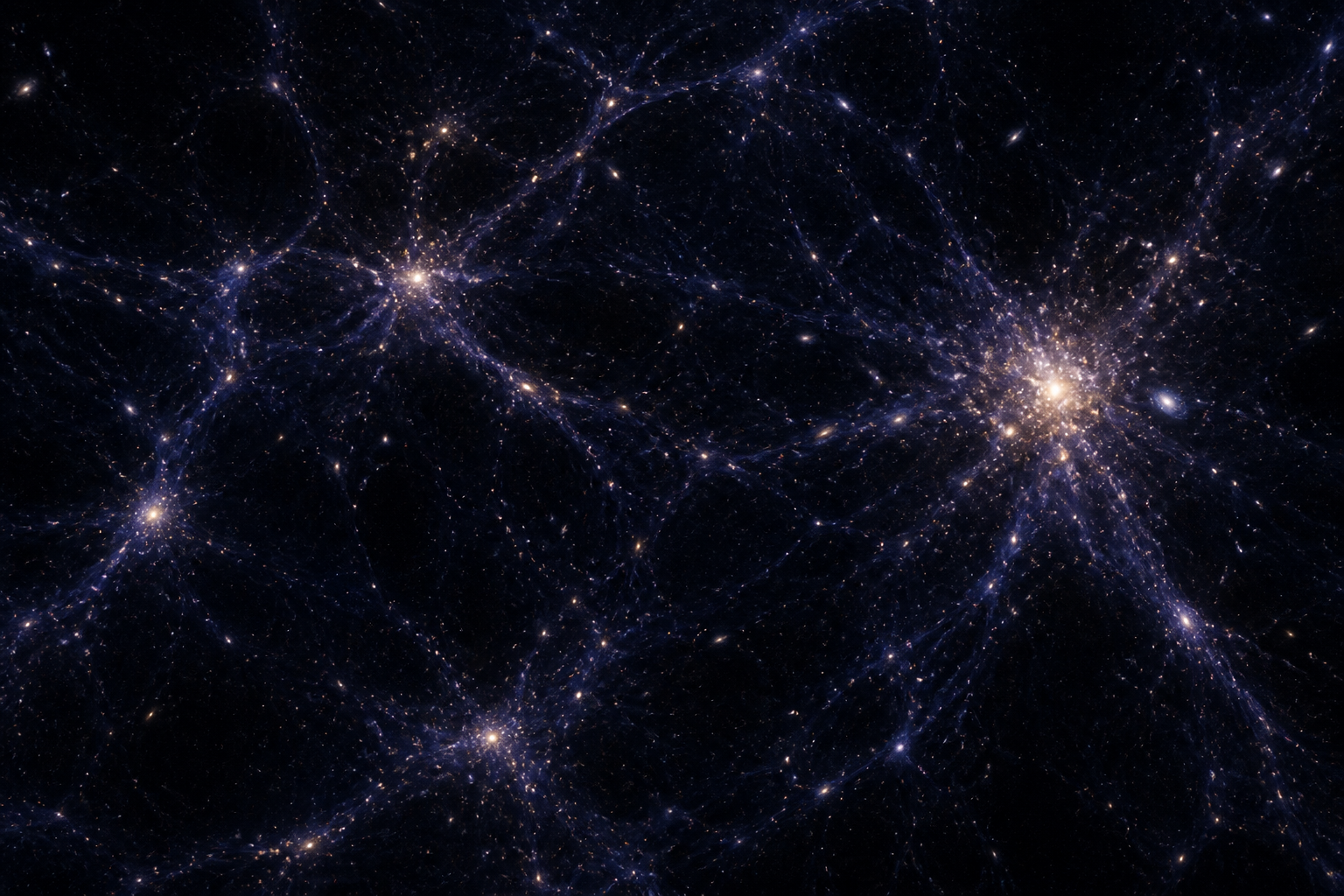
That reach matters because dark energy is not a thing anyone can photograph directly. It is the name scientists give to whatever is associated with the universe’s accelerating expansion. Roman will compare how galaxies and galaxy clusters are distributed, measure distant supernovae, and use weak gravitational lensing—the slight warping of background galaxy shapes by intervening matter—to test how cosmic structure and expansion changed over time. NASA expects Roman to observe more than a billion galaxies during its mission.
Roman also has an exoplanet story. Its surveys will use gravitational microlensing to catch the rare moments when a foreground star and its planets magnify a more distant star. The mission’s coronagraph is a technology demonstration designed to suppress a star’s glare enough to study faint planets and dusty disks nearby. You do not need to choose between “galaxy person” and “planet person” for this launch; Roman is designed to bring both communities new data.
For the human story behind the mission’s name, start with the women leading NASA’s Roman Telescope into launch month. Nancy Grace Roman was NASA’s first chief astronomer and helped lay the groundwork for Hubble; the team carrying her name into space is broad, current, and deeply collaborative.
How can you watch the Roman launch from Austin, Houston, or Los Angeles?
The launch is in Florida, so a local watch party is about shared anticipation—not pretending there is a rocket visible above Texas or California. NASA’s listed time falls before sunrise in all three Cosmic Match launch markets, which makes a living-room, rooftop, or early café plan much more realistic than a big formal event.

Austin — 6:26 a.m. CDT target. Pick a home, apartment common room, or permitted rooftop with reliable Wi-Fi. Set the official NASA stream on a TV or laptop, then take ten minutes after the broadcast to step outside and notice the changing morning sky. If you want more people around the screen, find your Austin space community and make it a low-pressure “coffee and countdown” invitation.
Houston — 6:26 a.m. CDT target. Keep it simple: arrive 20–30 minutes early, bring headphones for the prelaunch audio, and have one person monitor NASA’s status page rather than a stack of rumor accounts. Connect with Houston stargazers and space fans who understand that a hold is still part of the story.
Los Angeles — 4:26 a.m. PDT target. This is the committed-friend version of a watch party. A cozy indoor stream, a pre-ordered breakfast plan, and permission to call it a morning after launch coverage beats an elaborate setup. Meet fellow LA sky-watchers and decide together whether the early alarm is your kind of adventure.
For every city, use the NASA Roman mission page as your source of truth. NASA may adjust the window, coverage time, or viewing links as launch approaches. If the date moves, reschedule the hang—not your excitement.
Do I need a telescope or special gear for a launch watch?
No. A stable internet connection, a screen, and a backup plan are enough. Roman will leave Earth on a rocket, but its purpose is to collect light that has been traveling for billions of years; a launch stream is the most direct way to participate on the day.
A useful setup is almost hilariously modest: charge your phone, turn on launch notifications from NASA, make coffee, and agree that anyone can ask the basic questions out loud. “What is dark energy?” and “Why does a telescope need L2?” are exactly the right questions. The best watch party is one where nobody has to perform expertise.
What happens after Roman launches?
A clean liftoff is the opening chapter, not the moment the telescope begins taking science images. After separation, teams must communicate with the spacecraft, deploy and check major systems, and send Roman toward its working orbit around L2. NASA’s Roman FAQ explains that the observatory is designed for a five-year primary mission, with a five-year extended mission as a design goal.
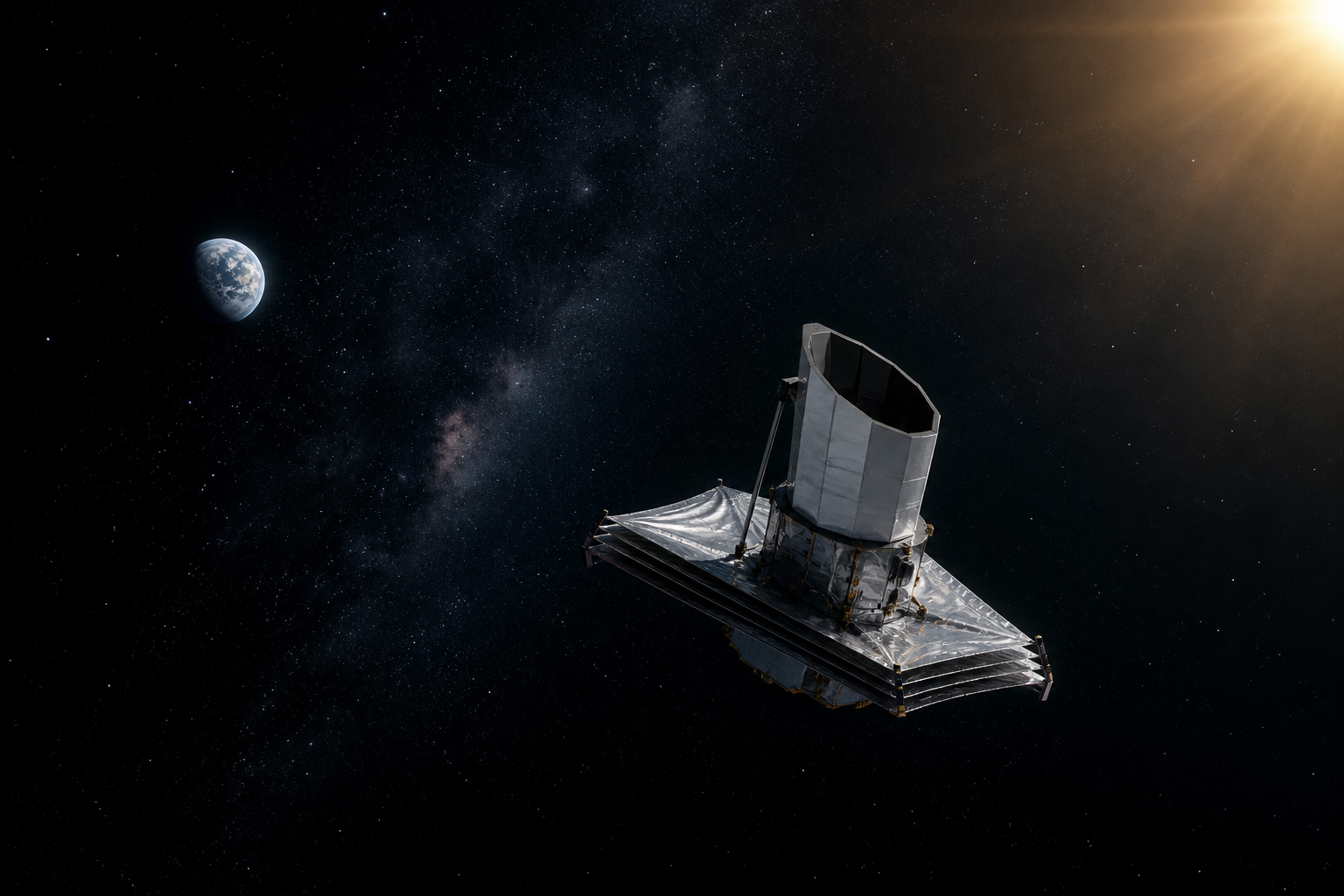
The exact commissioning timeline and first public releases will come from NASA after launch. The safe expectation is a sequence of engineering checkouts, instrument commissioning, and survey preparation—not an instant flood of discoveries. That wait is part of what makes launch weekend fun: you are joining a story whose best images and measurements are still ahead.
Roman’s data are planned to be public without a proprietary period after processing and delivery to the archive. In other words, the future payoff is not just a headline. It is a shared, growing record that scientists, students, citizen explorers, and curious late-night readers can encounter together.
Make launch weekend a shared sky moment
Pick a city plan, share the official link, and make room for the inevitable countdown changes. Post the time in your group chat, invite someone who loves space but has never watched a mission live, and keep the conversation going after the webcast: what question would you want Roman to help answer?
Whether you are in Austin, Houston, LA, or watching elsewhere, join Cosmic Match free to find people who will happily spend a Sunday morning talking about galaxies, exoplanets, and a telescope headed for the dark universe.
FAQ
When is the Nancy Grace Roman Space Telescope launch?
NASA currently lists Roman for August 30, 2026, at 7:26 a.m. EDT, from Launch Complex 39A at Kennedy Space Center on a SpaceX Falcon Heavy. Launch schedules can change, so check NASA’s official Roman page on the morning of coverage.
What time is the Roman launch in Austin, Houston, and Los Angeles?
The current target converts to 6:26 a.m. CDT in Austin and Houston and 4:26 a.m. PDT in Los Angeles. Those times change if NASA changes the launch target.
Can I watch Roman without a telescope?
Absolutely. This is a livestream-first event: a screen, internet connection, and NASA’s official updates are all you need. Roman itself will observe the universe in infrared after it reaches its distant operating orbit.
Will Roman take pictures like Hubble?
Roman will make sharp infrared observations and has Hubble-like resolution, but it is designed to cover a much wider field of view. Its flagship value is surveying huge areas of sky to study dark energy, galaxies, and exoplanets.