A Two-Morning Sky Trail: Moon, Pleiades, Then Mars
A Two-Morning Sky Trail: Moon, Pleiades, Then Mars
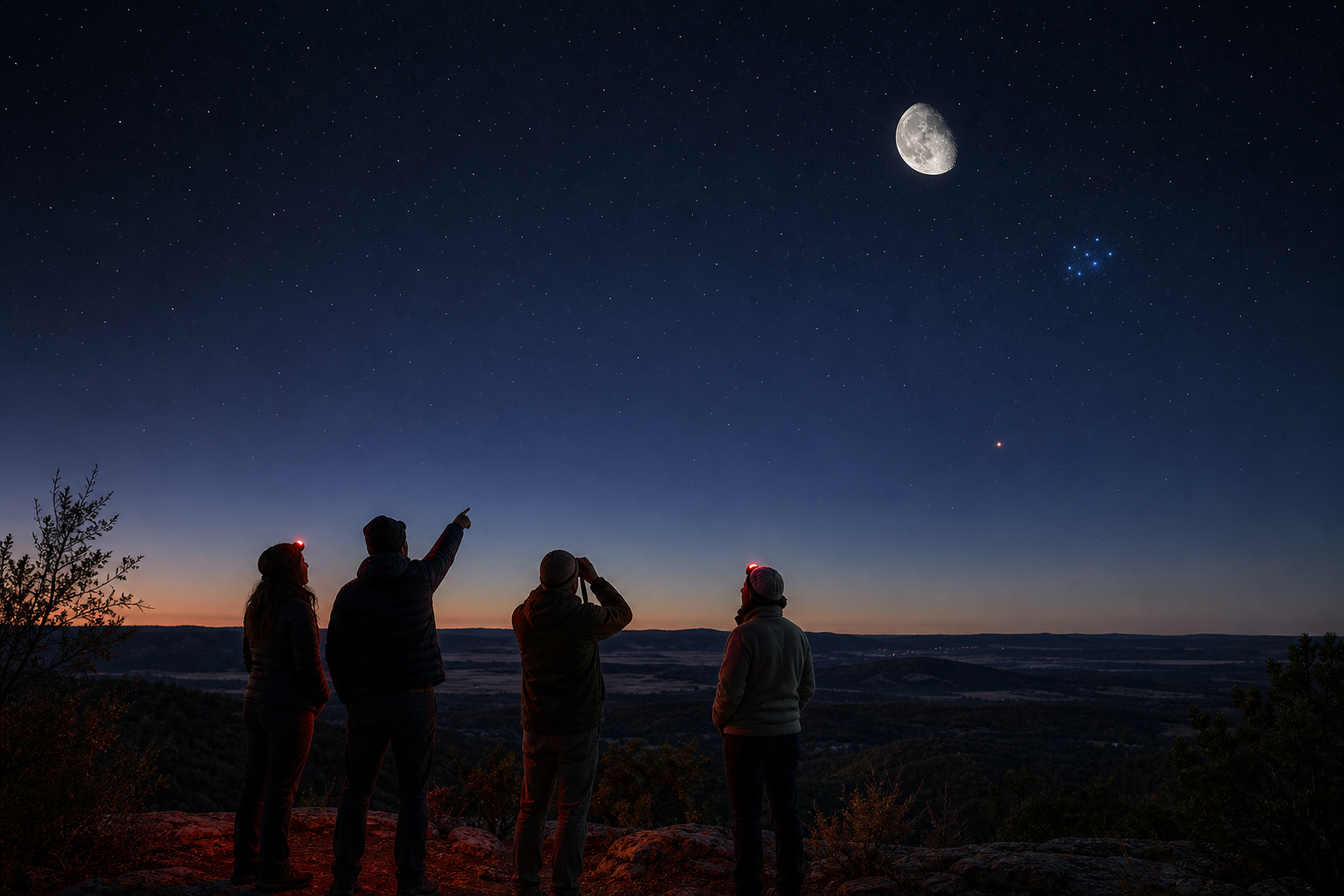
Before dawn on Friday, August 7, the Moon will pass close to the Pleiades—the tiny blue-white star cluster many people know as the Seven Sisters. Two mornings later, on Sunday, August 9, the Moon will be near Mars. It is a small, easy reason to set an alarm, step outside, and give the east-northeast horizon a few quiet minutes.
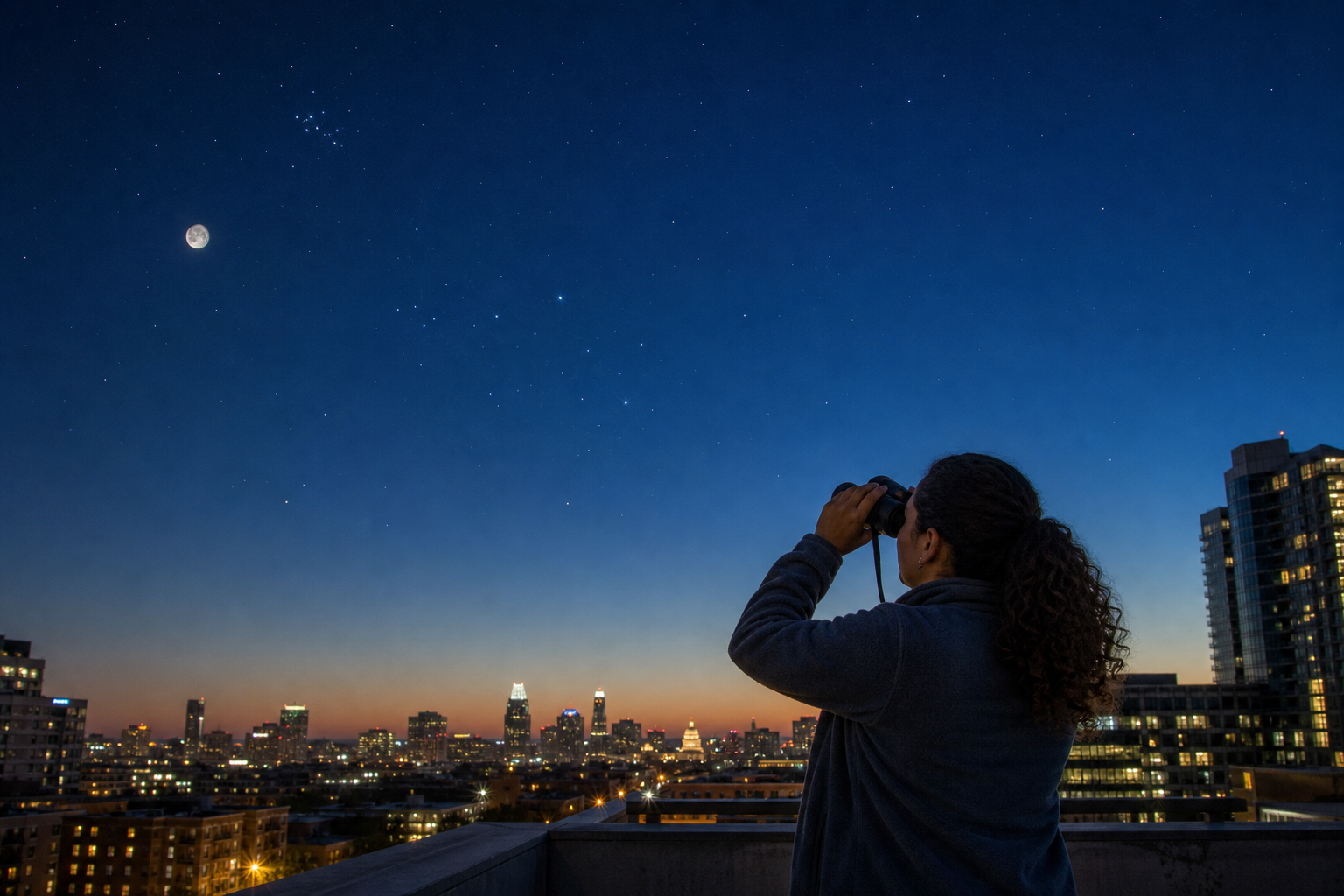
This is a naked-eye plan for Austin, Houston, and Los Angeles. You do not need a telescope. A clear, low horizon matters far more than equipment, and binoculars are optional. The timing shifts slightly by neighborhood and by your view, so use it as a window rather than a stopwatch: aim to be outside about 90 minutes before local sunrise, then keep looking until the brightening sky or low clouds call time.
What can you see with the Moon and Pleiades on August 7?
The August 7 Moon–Pleiades conjunction occurs with the Pleiades about 1.2° south of the Moon in geocentric sky-event listings—just over two full-Moon widths. The Moon will be bright enough that the cluster’s fainter members may be washed out, especially from a city, but the compact little dipper-shaped patch is still a satisfying target in a clear sky.
Your simple setup
- Pick an east-northeast view with as few trees and buildings as possible. A park edge, open balcony, driveway, or hilltop works.
- Start around 90 minutes before sunrise. For a rough planning cue, sunrise is around 6:56 a.m. in Austin, 6:34 a.m. in Houston, and 6:11 a.m. in Los Angeles on August 7; arrive earlier if your eastern horizon is obstructed.
- Find the bright Moon first. Then scan the nearby sky for a small, tight knot of stars rather than a single bright point. That knot is the Pleiades.
- If the cluster looks like one fuzzy speck, try binoculars—briefly and only after the Moon is well outside the field. Never point optics near the rising Sun.
No need to count exactly seven stars. The Pleiades are an open cluster hundreds of light-years away, and eyesight, haze, and moonlight determine how many members you see. The win is recognizing a familiar little group rather than trying to make the view perfect.
Where should you look for Mars on August 9?
By the next useful pre-dawn window, the Moon has moved eastward along its orbit and will be close to Mars. NASA’s 2026 sky calendar lists the Moon–Mars event on August 9; the closest geometry is not necessarily the instant that makes the prettiest view from your street. In the hours before dawn, look low toward the east-northeast for a steady, warm orange point: that is Mars.
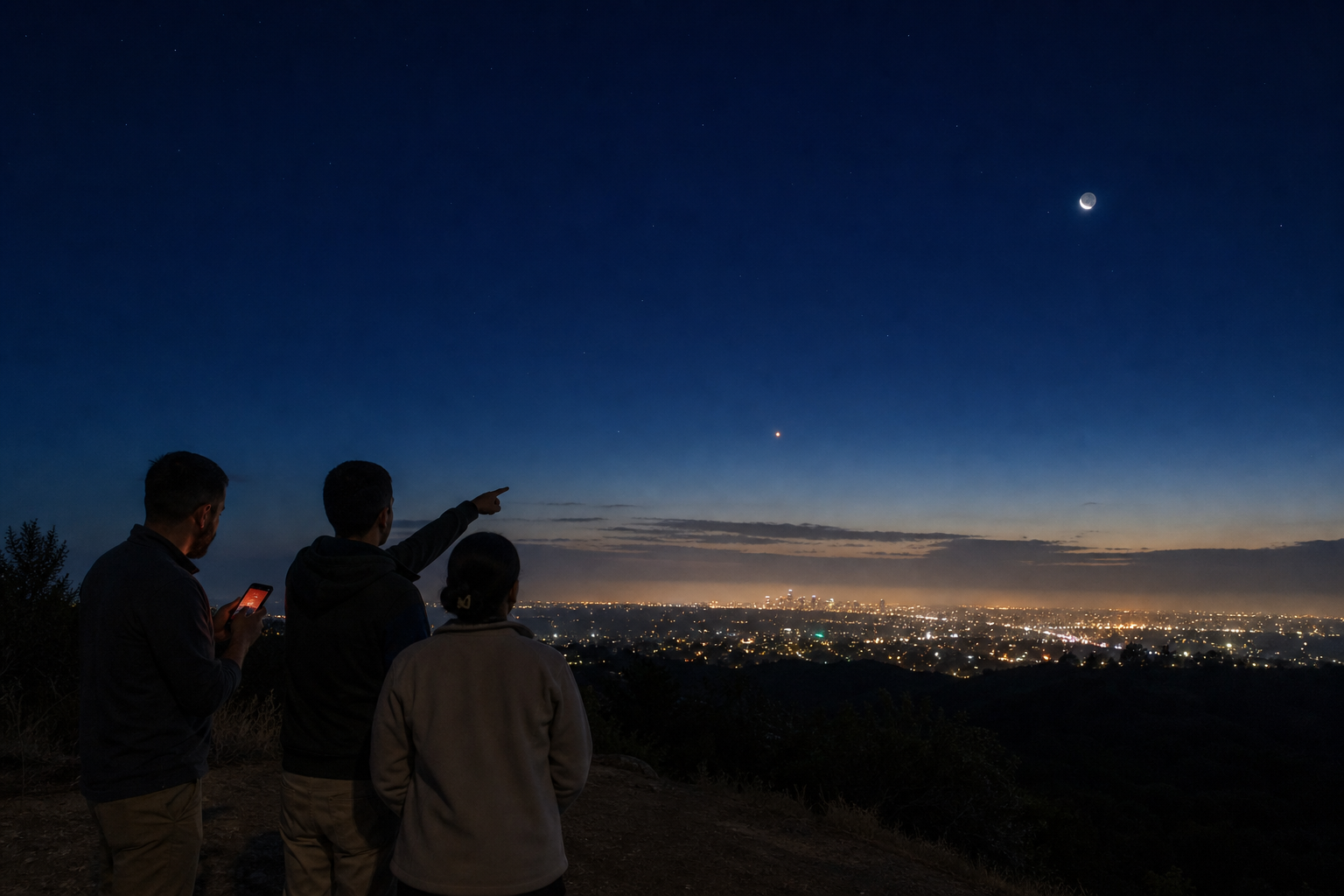
Mars is not dramatically bright in August 2026, so set expectations kindly. It may look more like a small orange-tinted star than a postcard planet, and low haze can mute its color. The Moon is your guidepost: locate it first, then sweep the nearby horizon slowly. If you are not sure whether a point is Mars or an aircraft, wait a minute. Planes move; Mars holds still against the star pattern.
What do you need for this two-morning skywatch?
- Check the forecast the evening before. High cloud and humid haze near the horizon are the main spoilers.
- Use your phone only to confirm direction, then dim it or switch to a red screen. Your dark adaptation is worth more than scrolling.
- Give your eyes five minutes outside before deciding there is nothing there.
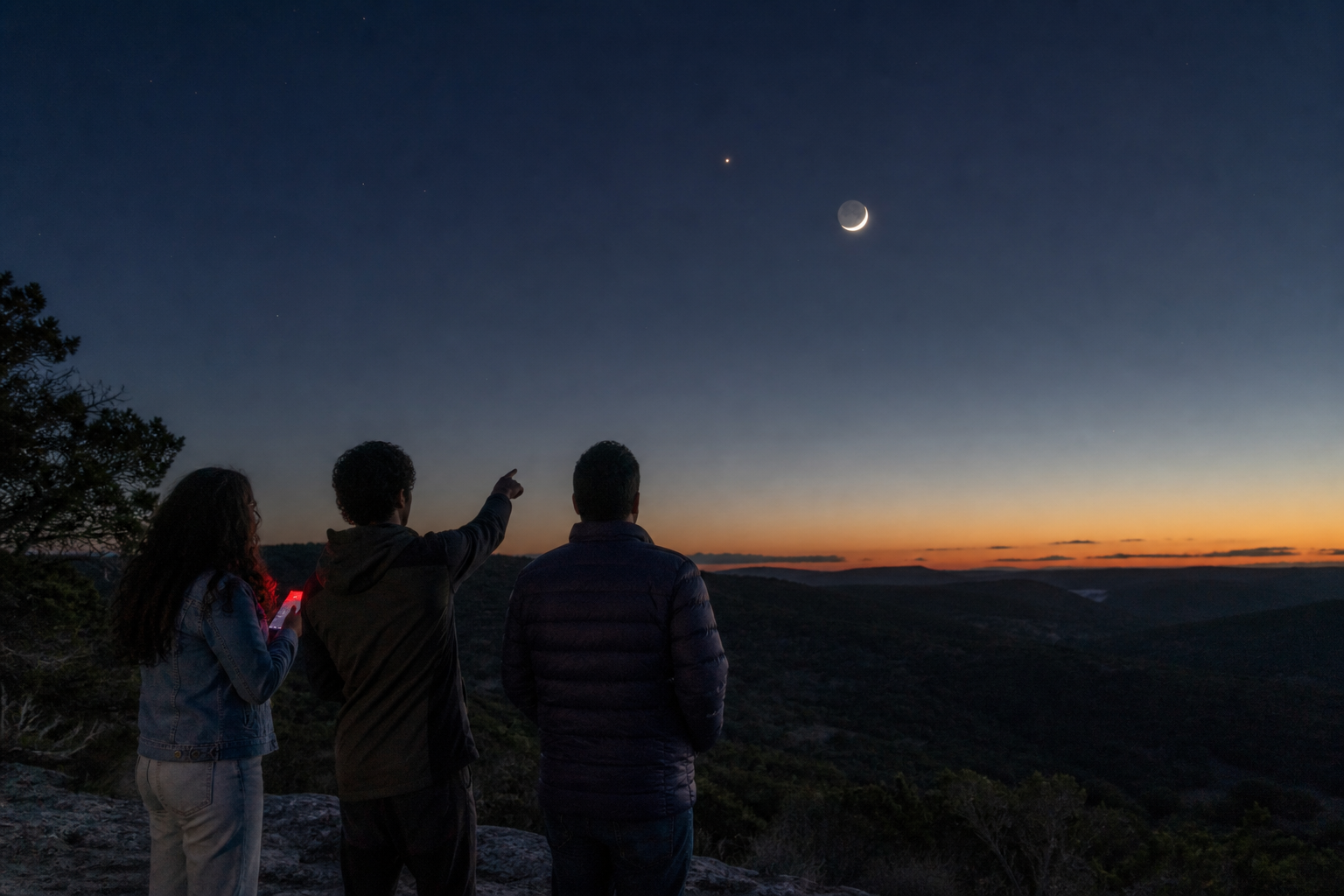
- Bring a friend, neighbor, or observing buddy. One person finds the Moon; another can scan for the Pleiades or Mars. It makes the early alarm feel less heroic and more like a tiny shared expedition.
What the geometry means—and what it does not
“Conjunction” means objects appear close together from our line of sight. The Moon, the Pleiades, and Mars are not close to one another in space: the Moon is our nearby companion, the Pleiades are a star cluster, and Mars is another planet. The pairing is still useful because the Moon is an easy landmark that points your eyes toward objects you might otherwise skip on an ordinary morning.
Your view will differ among Austin, Houston, and Los Angeles because sunrise, terrain, haze, and local horizon height differ. Houston observers should give themselves extra margin for low humidity haze; Angelenos may need a hill or rooftop with a clean eastern gap; Austin observers can trade city glare for a short drive to a Hill Country overlook. In every city, a clear low horizon wins.
If August 7 is cloudy, do not write off the plan. Look again the next clear pre-dawn morning—the Moon shifts noticeably from day to day, which is the whole story here. You can also warm up with our Moon and Venus twilight guide, which uses the same beginner-friendly habit: choose a horizon, give yourself time, and let the bright object lead.
Make it a small shared sky ritual
The best part of a short sky event is that it leaves room for the rest of your morning. Make coffee, trade a photo, or compare what you could see from different neighborhoods. If you are looking for fellow skywatchers who understand why a two-degree gap can be exciting, join the Cosmic Match community and introduce yourself with your city and favorite pre-dawn target. You can also read the Cosmic Match FAQ before planning a clear-sky meetup.
The August 7 Moon–Pleiades pairing and August 9 Moon–Mars meetup are simple, brief, and very human: step out, look up, and have a shared thing to talk about before the day gets loud.
Quick plan at a glance
| Date | What to look for | Direction | Best approach |
|---|---|---|---|
| Fri, Aug 7 | Moon with the compact Pleiades cluster nearby | East-northeast before dawn | Find the Moon, then scan its nearby sky; binoculars optional |
| Sun, Aug 9 | Moon near orange Mars | East-northeast before dawn | Use the Moon as a landmark; look low and wait for haze to clear |
Sources and planning notes
- NASA’s 2026 Sky Events Calendar lists the August Moon–Pleiades and Moon–Mars events.
- JPL’s Horizons system provides observer ephemerides; local horizon and weather can change practical visibility.
- For a real-time check, consult your preferred planetarium app immediately before heading out.
FAQ
Do I need a telescope to see the Moon, Pleiades, or Mars?
No. The Moon is easy to find naked-eye, and it works as your landmark for both mornings. Binoculars can help tease out more Pleiades stars, but they are optional.
What if clouds hide the sky on August 7 or August 9?
Try the next clear pre-dawn morning. The Moon changes position quickly, so the exact pairing will be different, but it is still a useful way to learn the east-northeast sky.
Why can’t I see all seven Pleiades stars?
Moonlight, haze, city glow, and your eyesight all affect the view. Seeing even a compact, sparkling cluster is a successful observation.
Which direction should I face?
Face east-northeast before dawn, with the clearest and lowest horizon you can find. A hilltop, open balcony, driveway, or park edge can all work.
If you are setting another early alarm, Mercury and Jupiter meet before sunrise on August 15, with short local windows for Austin, Houston, and Los Angeles.