How to Explore Rubin’s 3.2-Gigapixel COSMOS Image—No Telescope Needed
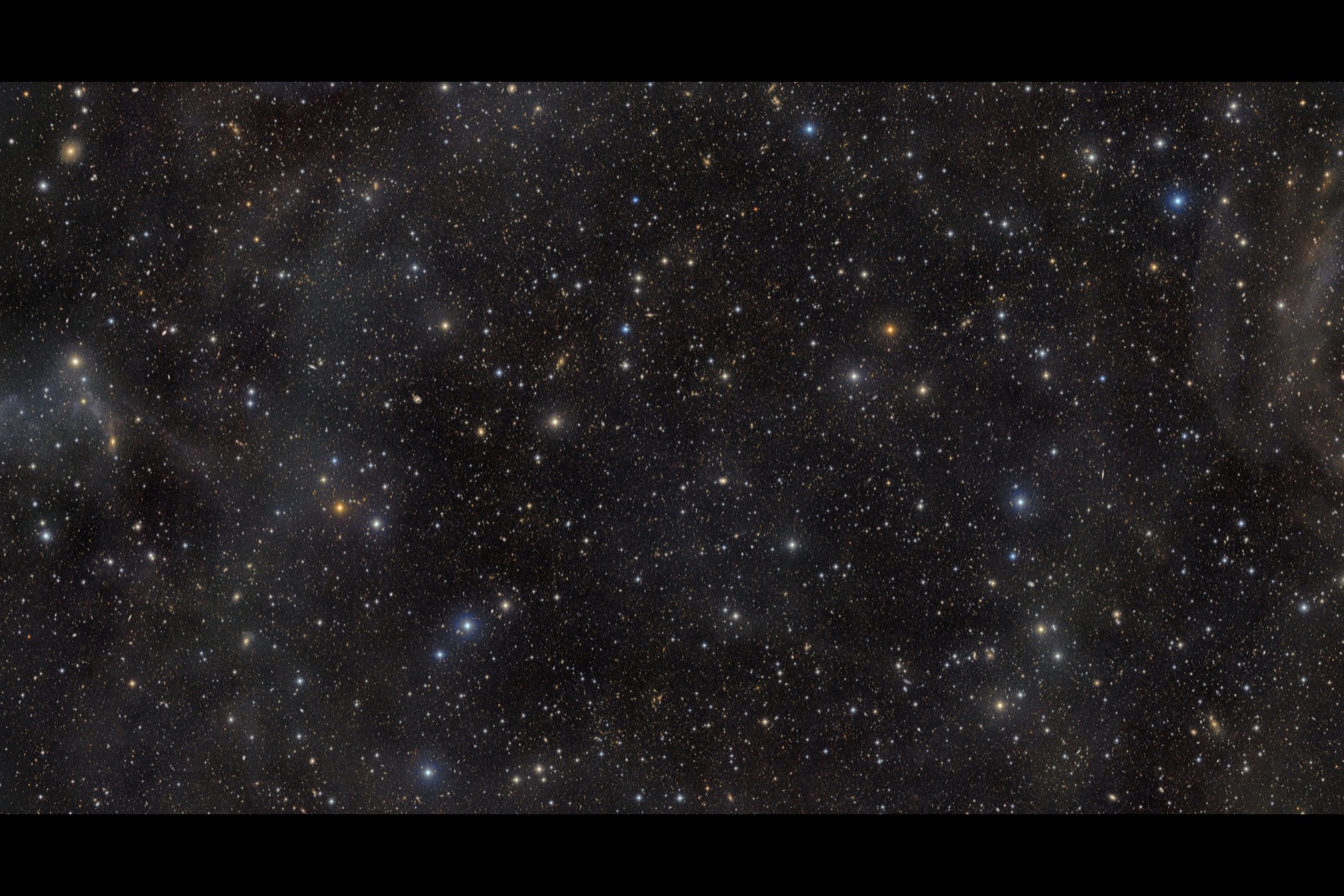
Rubin Observatory’s new COSMOS image is an invitation to slow down and look. The official 3.2-gigapixel view contains more than 500,000 galaxies and more than 50,000 stars—and you can explore it from a laptop or phone, with no telescope, special software, or physics degree required. Open the official full-resolution image from NSF NOIRLab, give yourself permission to zoom in, and treat it like a cosmic scavenger hunt.
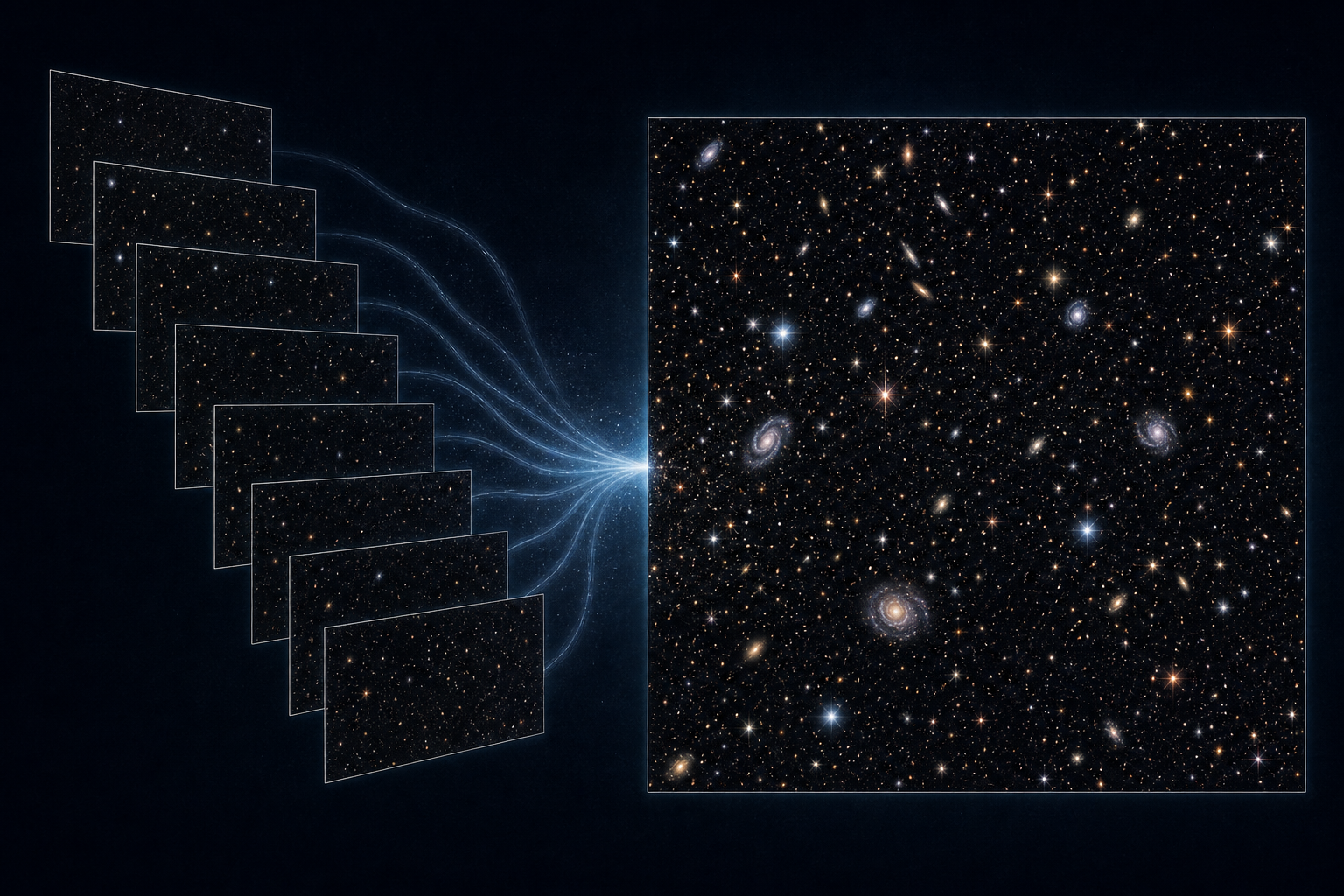
The first important thing to know: this spectacular image is not one exposure. It is a deep coadd: a combined image made from many observations. That distinction is the key to appreciating why so much is visible.
What is Rubin’s 3.2-gigapixel COSMOS image?
It is an exceptionally detailed public image of the famous COSMOS field and its surroundings, released by Rubin’s partners at NSF NOIRLab. A gigapixel is one billion pixels, so 3.2 gigapixels is far more visual information than a typical phone photo or computer display can show at once. The point is not to see everything in one glance. The point is that every zoom can reveal another population of faint, distant objects.
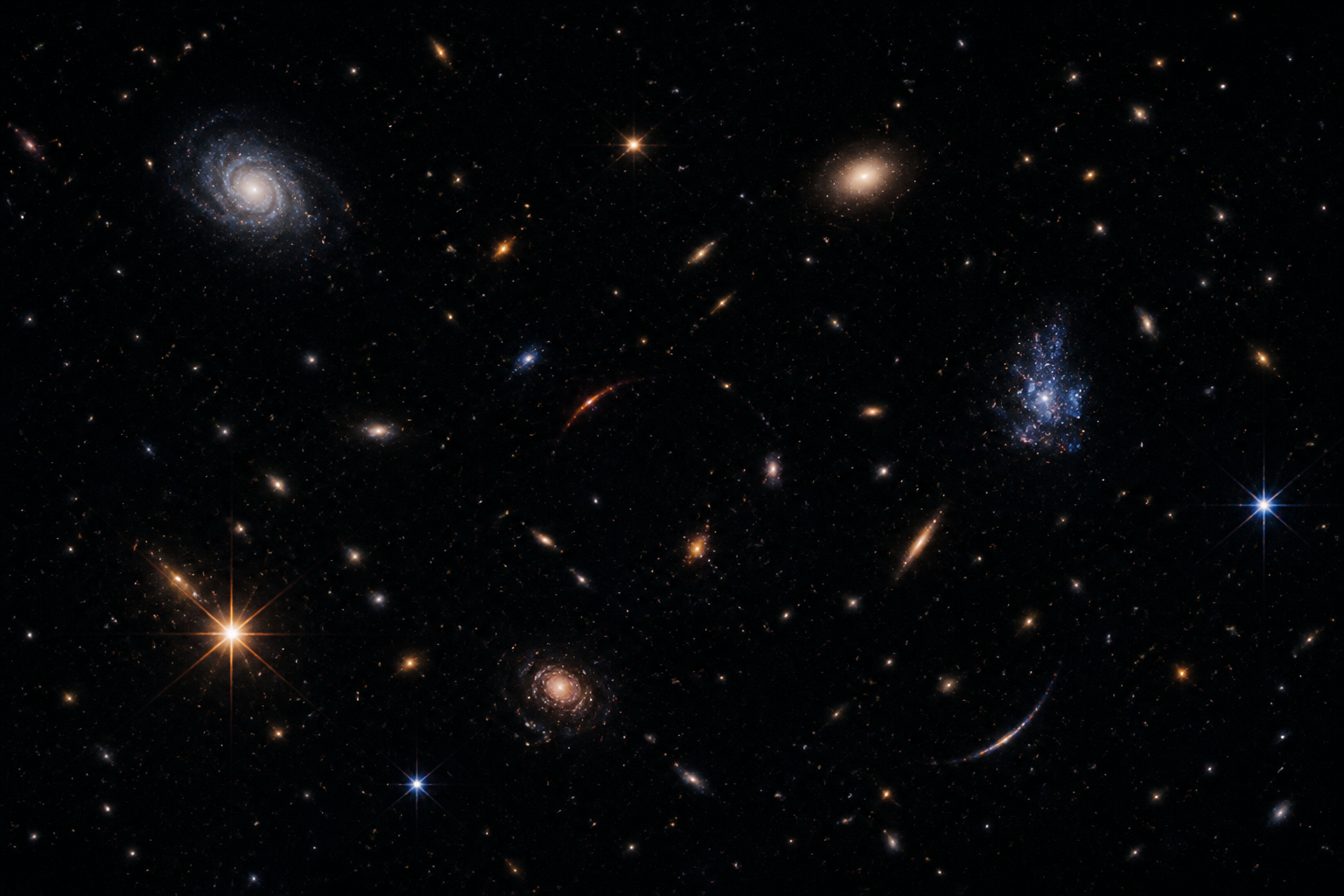
The field is rich because the sky is not empty. Foreground stars in our own Milky Way tend to look bright and point-like. Most of the tiny fuzzy, oval, or slightly smudged patches are galaxies—whole systems of stars, gas, dust, and dark matter at immense distances. Some are face-on spirals; others look stretched or featureless because of their orientation, distance, or the limits of the display.
For a first pass, resist the urge to identify every object. Pick one small patch, zoom until individual galaxies become obvious, then pan sideways. Notice how quickly the scene refills. That experience is the headline: the deep universe is crowded.
How should a beginner explore the full-resolution image?
Start with the official interactive image page rather than a screenshot shared on social media. Use its high-resolution versions, then try this simple 10-minute tour:
- Find a bright star. Look for the crispest point of light, often with diffraction spikes. Those are usually stars in our galaxy, comparatively close in cosmic terms.
- Move away from it. In the surrounding darker area, look for soft, extended shapes. Those are excellent galaxy candidates.
- Compare shapes, not brightness alone. A bright compact spot can be a star or a galaxy; the broader shape is the better visual clue.
- Choose one thumbnail-sized region. Count how many distinct galaxies you can spot before you scroll. Your count will be incomplete—and that is exactly the fun of it.
- Share one surprising find. Send a crop or coordinate-free screenshot to a friend, or start a conversation with someone who enjoys skywatching at Cosmic Match. The best question is simply: “What do you notice first?”
Why is it called a deep coadd rather than one exposure?
An exposure is one individual measurement: the camera observes a patch of sky for a particular time. A coadd combines multiple processed observations of the same area. Combining them lets faint, repeatable detail stand out more clearly than it would in a single observation, while reducing some noise and defects.
That is why calling this image “one picture Rubin took” would miss the point. It is a carefully made scientific and visual composite from commissioning-era observations. The result is a public-facing window into both the richness of the COSMOS field and the scale of modern sky surveys.
This is also a lovely reminder for beginning astrophotographers: stacking is not just a technical trick for experts. It is a way of letting consistent signal emerge. If you are planning a first night-sky project closer to home, our beginner plan for photographing the Milky Way around a new Moon explains the same patient, repeatable mindset with far simpler gear.
What is EDP2—and is it the same thing as the public image?
Not quite. The public COSMOS image is made to be explored and appreciated visually. Early Data Preview 2 (EDP2) is a scientific data release aimed at research use. According to Rubin’s recent data-releases page, EDP2 processes LSST Camera observations taken from April 2025 through January 2026 with Rubin Science Pipelines v30.
EDP2 includes limited image products—specifically deep coadd images—and it also offers catalogs, including measurements made on processed visit and difference images. In everyday language, the image lets you look; the catalogs let scientists query and measure. A catalog can record properties and detections that are not obvious from a beautiful visual scan alone.
So use the COSMOS image for wonder, close inspection, and conversation. Use EDP2 documentation when you want to understand the data products, their processing, and their research context. They are connected, but they are not interchangeable.
What can you actually spot in this image?
You do not need to name a galaxy to have a real observing experience. Try looking for:
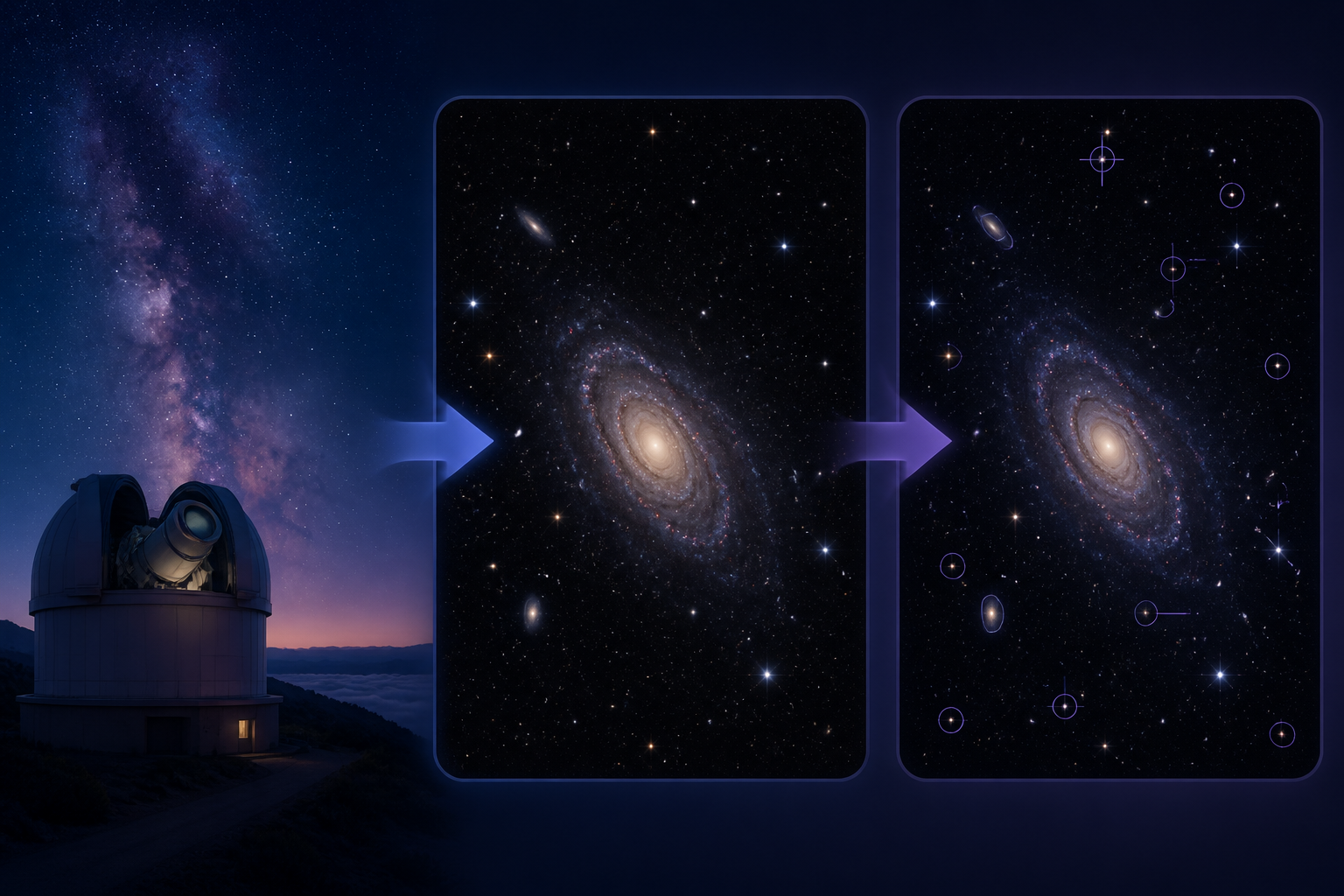
- Spiral structure: a few larger galaxies show hints of arms or a brighter central bulge.
- Elliptical-looking galaxies: smoother, rounded, often yellowish-looking patches can stand apart from spiral shapes.
- Galaxy pairs and groups: look for close-together fuzzy objects instead of isolated dots.
- Foreground stars: their sharp appearance and occasional spikes make a satisfying contrast with the softer galaxies behind them.
- The sheer density of the background: zoom out after a close look and remember that the small patch you explored was only one fragment of the field.
There is no “wrong” way to begin. Make tea, open the image on the biggest screen you have, and invite someone else to take a turn at choosing a corner. Shared curiosity is a remarkably good observing tool.
A better way to talk about a giant image
The most accurate short description is this: Rubin’s COSMOS image is a 3.2-gigapixel deep coadd built from multiple commissioning observations, revealing more than 500,000 galaxies and more than 50,000 stars. It is not a single exposure, and it is not itself the full EDP2 catalog release.
That may sound precise, but it leaves plenty of room for awe. Every faint blur is a prompt to ask what else is out there—and who else would enjoy looking with you. Join the conversation at Cosmic Match and bring your most interesting zoomed-in corner.
Image credit for the cover: NSF–DOE Vera C. Rubin Observatory / NSF NOIRLab. Explore the official COSMOS release.
Looking for a broader sky atlas? Explore DESI Legacy Surveys’ 5.6-trillion-pixel 2D map and its public viewer—then compare that wide map with Rubin’s deep look at one rich field.
FAQ
Do I need a telescope to explore Rubin’s COSMOS image?
No. The image is a public digital asset; a phone, tablet, or computer with an internet connection is enough. A larger screen simply makes zooming and comparing details easier.
Is the 3.2-gigapixel COSMOS image one Rubin exposure?
No. It is a deep coadd, meaning multiple processed observations have been combined. The public image should not be described as a single exposure.
What is EDP2 in Rubin data releases?
EDP2 is Early Data Preview 2: image and catalog products processed with Rubin Science Pipelines v30 from LSST Camera observations taken between April 2025 and January 2026. Its image products are limited to deep coadds, while its catalog products support scientific analysis.
What are the tiny fuzzy objects in the image?
Most are distant galaxies. Bright, sharply point-like objects are often foreground stars in the Milky Way, while extended smudges and ovals are typical visual signatures of galaxies.