Crew-13 Is Targeting October 1 After a Dragon Leak—What Is Still Pending
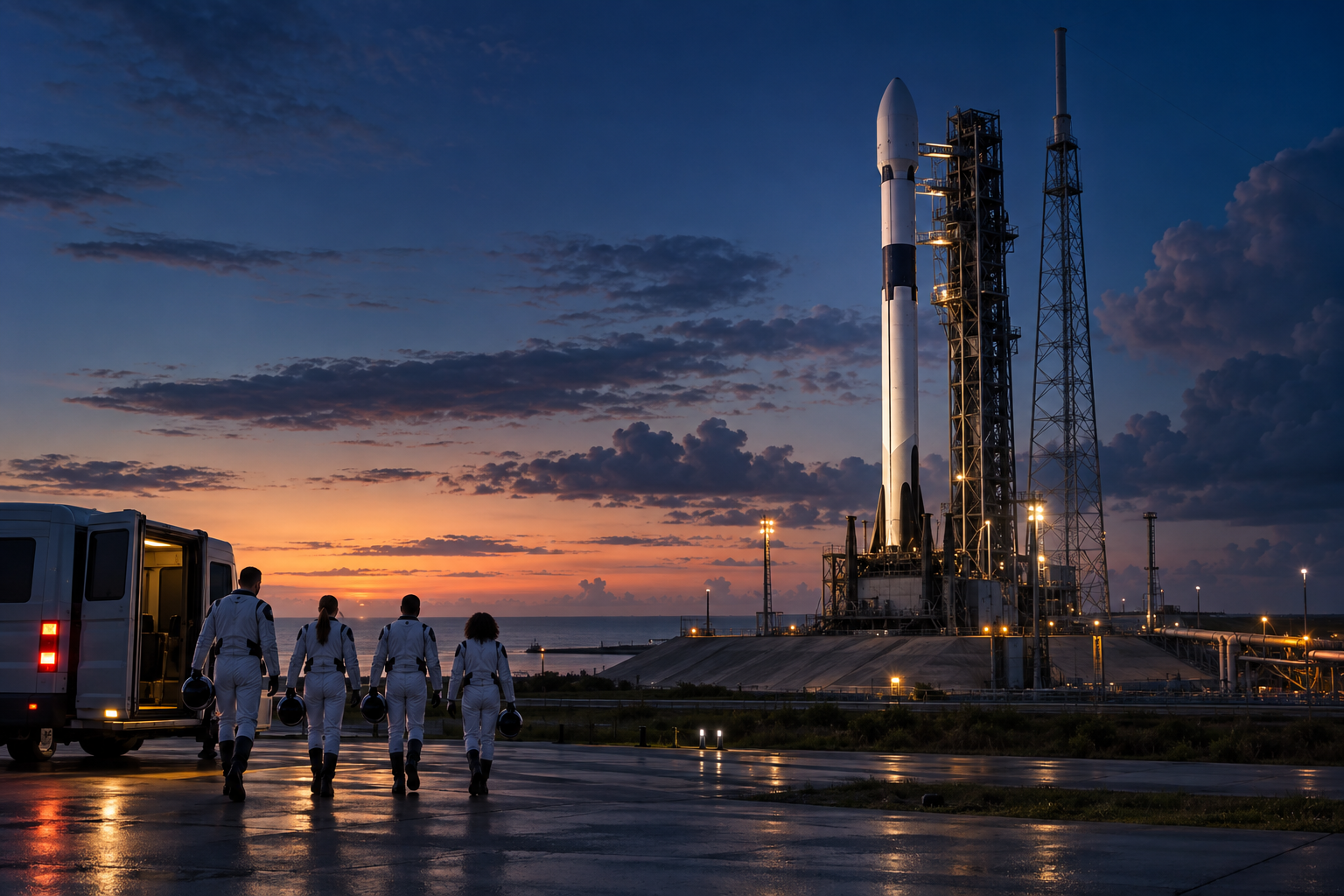
NASA and SpaceX are targeting Thursday, October 1, 2026, at 11:10 a.m. EDT (15:10 UTC / 12:10 BRT) for Crew-13’s launch to the International Space Station. That is the earliest opportunity, not a confirmation: teams still have prelaunch activities and intensive readiness reviews to complete after an earlier delay tied to an oxidizer leak detected in the Dragon spacecraft’s propulsion system.
For space fans, the useful update is simple: the calendar has a fresh target, the crew has a path toward Kennedy Space Center, and the next several days still matter. Keep the word targeting attached to every time until NASA says otherwise.

What is the Crew-13 launch date and time?
NASA and SpaceX are targeting Oct. 1 at 11:10 a.m. EDT from Space Launch Complex 40 at Cape Canaveral Space Force Station in Florida. That converts to 10:10 a.m. CDT in Austin and Houston, 8:10 a.m. PDT in Los Angeles, and 12:10 p.m. BRT in Brazil.
The launch is scheduled to send four people toward the International Space Station aboard a SpaceX Dragon spacecraft. If the Oct. 1 opportunity holds, NASA now targets docking at 7:00 p.m. EDT (23:00 UTC / 20:00 BRT) at Harmony’s forward-facing port after a planned 7-hour 50-minute rendezvous. NASA says that planned duration would be the fastest rendezvous by a U.S. spacecraft in space-station history—a conditional milestone, not a record that has already been achieved. As with every crewed mission timeline, the docking target can change when safety and operations require it.
NASA’s final Crew-13 coverage release is the source to watch for official timing and any change. For the mission’s broader background and crew roles, NASA’s Crew-13 mission page remains the best starting point.
When does NASA’s final Crew-13 coverage begin?
NASA’s live launch coverage is scheduled to begin at 9:20 a.m. EDT (13:20 UTC / 10:20 BRT) on Oct. 1, ahead of the 11:10 a.m. EDT launch target. A postlaunch news conference is scheduled for 12:45 p.m. EDT (16:45 UTC / 13:45 BRT). If the planned 7-hour 50-minute rendezvous holds, hatch opening and welcome remarks are targeted for 8:45 p.m. EDT on Oct. 1 (00:45 UTC on Oct. 2 / 21:45 BRT on Oct. 1). Watch the NASA final coverage release for the official live links and real-time schedule changes.
Why was Crew-13 delayed?
NASA and SpaceX previously adjusted the launch schedule after an oxidizer leak was detected in Dragon’s propulsion system. NASA has not publicly described a severity, repair sequence, or a guaranteed outcome beyond the current return to final prelaunch preparation, so it is worth resisting the urge to fill in those blanks.
The new date is meaningful because it restores a concrete planning window. It does not mean the vehicle is launch-committed. The agency says teams will use the coming days for a series of prelaunch activities and intensive reviews covering the crew, station, Dragon, and Falcon 9. Any one of those checks can move the schedule.

What is still pending before Crew-13 can lift off?
The short version: readiness. NASA’s wording is specific—Crew-13 is headed into final prelaunch prep, not past it. Before liftoff, teams must confirm that the crew, space station, Dragon spacecraft, and Falcon 9 rocket are ready.
That is why a responsible launch-watch plan has two parts. Put the Oct. 1 time on your calendar, then check NASA’s official coverage and status updates on the morning of launch. A target time is a reason to pay attention, not a promise that a countdown will reach zero.
If you are following from Houston, there is one especially local milestone before launch: the crew is in quarantine at Johnson Space Center and is scheduled to travel to Kennedy on Saturday, Sept. 26. That does not make the launch locally visible from Houston, Austin, or Los Angeles; it simply puts a bit of the mission’s final human preparation in Houston’s orbit.
Who is flying on Crew-13?
Crew-13 brings together four fliers headed for Expedition 75:
- Jessica Watkins, NASA astronaut and spacecraft commander
- Luke Delaney, NASA astronaut and pilot
- Joshua Kutryk, Canadian Space Agency astronaut and mission specialist
- Sergey Teteryatnikov, Roscosmos cosmonaut and mission specialist
Kutryk’s flight carries a notable Canadian milestone: the Canadian Space Agency identifies it as Canada’s first mission under NASA’s Commercial Crew Program. That makes this more than a schedule story—it is a reminder that an ISS crew rotation is international work, built by teams and careers across agencies.
How can space fans follow Crew-13 together?
For official timing and coverage, start with NASA’s Crew-13 event page rather than a reposted countdown graphic. If the target holds, make it a low-key watch-along: bring a friend, open the official stream, and keep an eye on status updates before the planned window.
Cosmic Match is built for exactly that kind of shared curiosity. Join the Cosmic Match space community to meet people who will happily discuss docking timelines, launch holds, and why “targeting” is a beautiful word in spaceflight. Houston readers can also find fellow skywatchers in Houston for the next mission moment.
And if launch day scratches your rocket itch, our guide to Starship Flight 14’s target and watch path is another useful reminder: the best launch plan leaves room for the teams to choose safety over the clock.

Crew-13’s Oct. 1 target is back on the board. We’ll treat it as exactly what NASA calls it: the earliest opportunity, pending the work that makes a crewed launch ready.
Related launch context
October 1 is also a media-reported target for Google Project Suncatcher’s first orbital TPU test. Like Crew-13, it is a useful reminder that a target date remains conditional until the operator confirms the final timeline.