Google Project Suncatcher’s October 1 TPU Test: What It Really Is
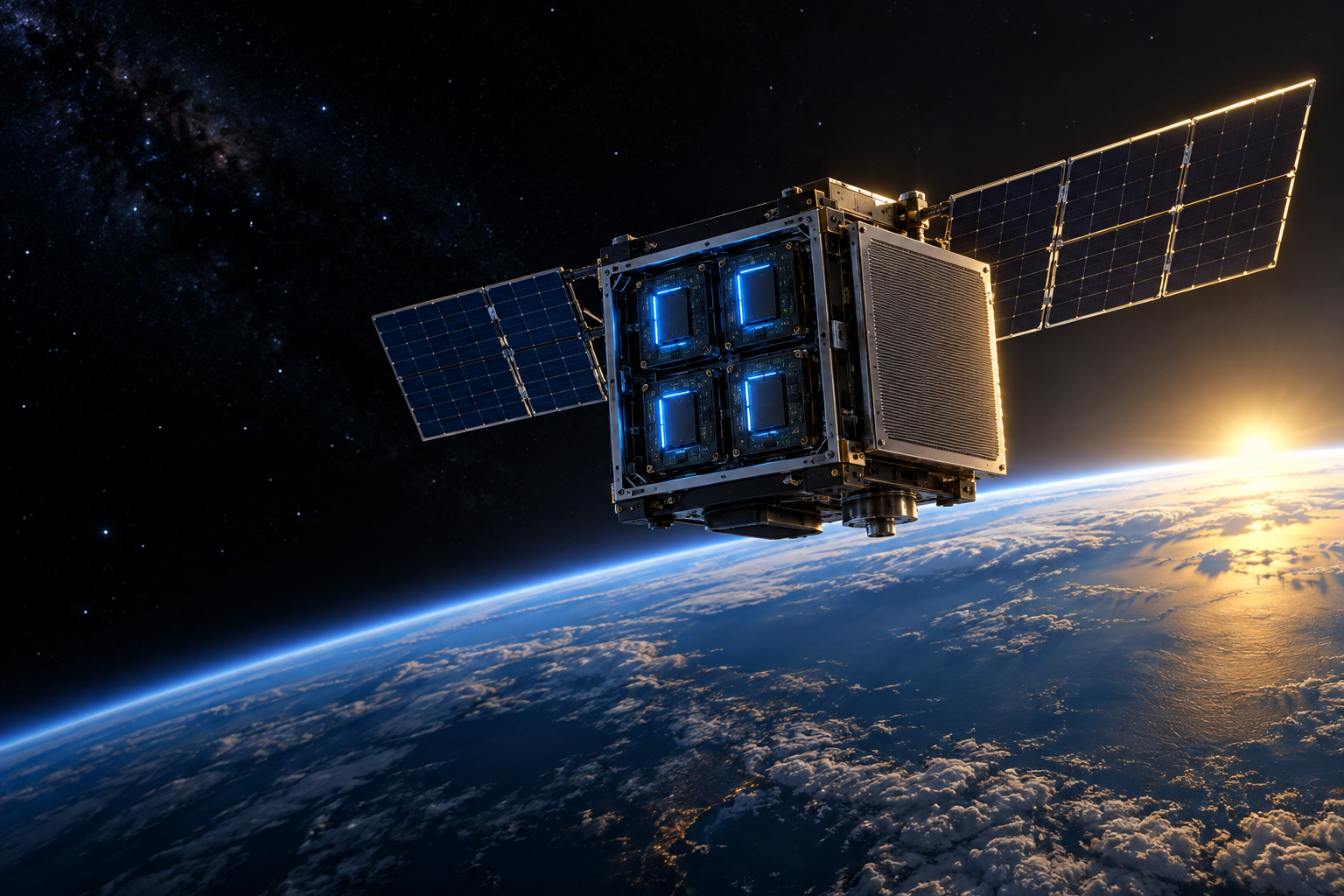
Google’s Project Suncatcher is targeting an October 1 launch on SpaceX’s Transporter-18 rideshare, according to media reports. The near-term mission is not an orbital data center: it is a small, early test of whether Google’s Tensor Processing Units (TPUs) can survive launch, radiation and the difficult thermal conditions of low Earth orbit. Google itself calls it an early test and says its next milestone is a two-satellite demonstration in 2027.
For space fans, that distinction is the whole story. A satellite carrying a few experimental processors is a long way from a fleet of solar-powered computers doing large-scale AI work above Earth. But it is also a fascinating kind of mission: an ordinary-looking rideshare payload trying to answer an unusually big engineering question.
What is Google Project Suncatcher?
Project Suncatcher is Google’s long-term research effort to explore whether scalable machine-learning infrastructure could one day operate in space. The appeal is straightforward: a spacecraft in low Earth orbit can spend far more of its time in sunlight than a solar array on the ground, though building and operating anything useful there introduces severe new constraints.
Google’s first flight is being developed with Planet and is slated for SpaceX’s Transporter-18 rideshare. Google’s September 24 update describes the launch as an upcoming early test; the October 1 date has been reported by Ars Technica and Space.com, so treat it as a target rather than a guaranteed liftoff time. Rideshare schedules can move.
The point is to collect real in-orbit data. Ground tests are valuable, but they cannot perfectly reproduce the combined vibration, acceleration, vacuum, radiation and day-night temperature swings of a flight.
What is actually flying on the October 1 target?
The prototype is a technology demonstration, not a working cloud region in space. Reporting says the small satellite carries four of Google’s custom TPU accelerators; Google’s own announcement focuses on evaluating how its Trillium TPUs behave in orbit. It is designed to run limited tests and return lessons for later designs, not to provide a public computing service or replace terrestrial data centers.
That scale matters. An operational data center needs dependable power, continuous heat removal, high-bandwidth networking, fault tolerance, maintenance plans and a way to deliver useful work to customers. This flight is checking whether the compute hardware can make it through the first gate: functioning safely in space at all.
Can ordinary AI chips survive a rocket launch and space radiation?
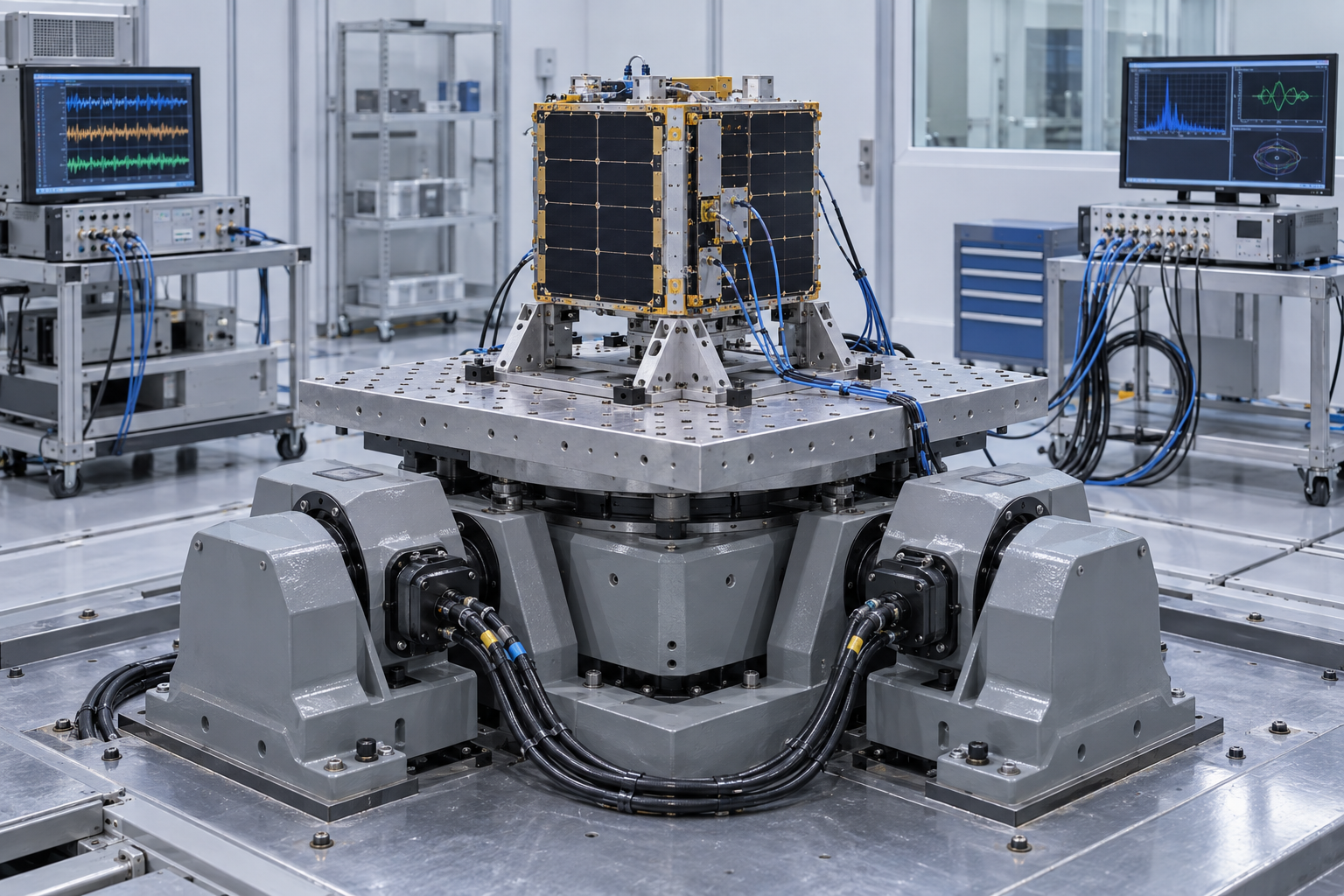
That is the central experiment. Google says a launch to low Earth orbit subjects a spacecraft to intense vibration and acceleration; individual components can experience far higher loads than the rocket’s overall acceleration. Its team performed three-axis vibration tests to mimic those launch frequencies.
Then comes radiation. Charged particles from the Sun and cosmic rays can cause errors in electronics, including “bit flips” that alter stored data or calculations. Google says it tested the TPUs in a proton-beam facility while running AI workloads and found that its Trillium chips tolerated a total ionizing dose beyond that expected during a five-year mission. That is encouraging ground evidence—not a substitute for the in-orbit measurements this flight will produce.
If you want a useful primer on how mission milestones work, our guide to ESA’s JUICE Earth gravity assist shows why a successful step in spaceflight is often a carefully measured checkpoint, not the end of a mission.
Why is cooling the hard part in orbit?
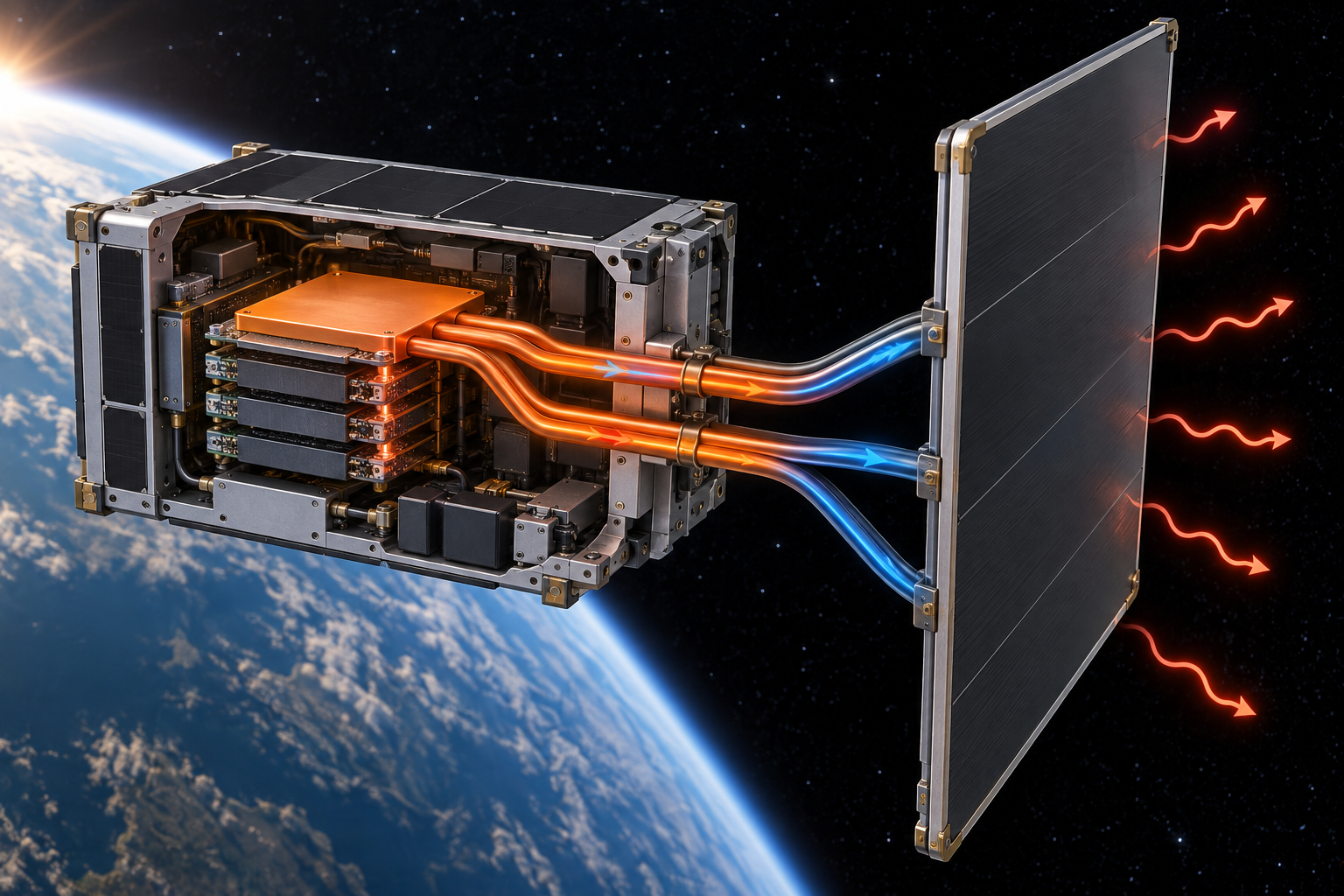
Computers turn electricity into heat. On Earth, fans and flowing air carry much of it away. In a vacuum there is no air to move heat, so a spacecraft must conduct it through hardware and radiate it away. That makes cooling an AI accelerator—designed to do a lot of work in a small volume—an especially demanding problem.
Google says it is testing a combination of heat pipes and radiators in thermal-vacuum chambers before the flight. Those are exactly the systems the satellite can exercise in real conditions. Ars Technica reports the prototype’s compute runs may be brief, on the order of minutes, because the system needs time to shed accumulated heat. That is another reminder that the test is about limits and learning, not nonstop orbital computing.
What would have to happen before an orbital data center becomes real?
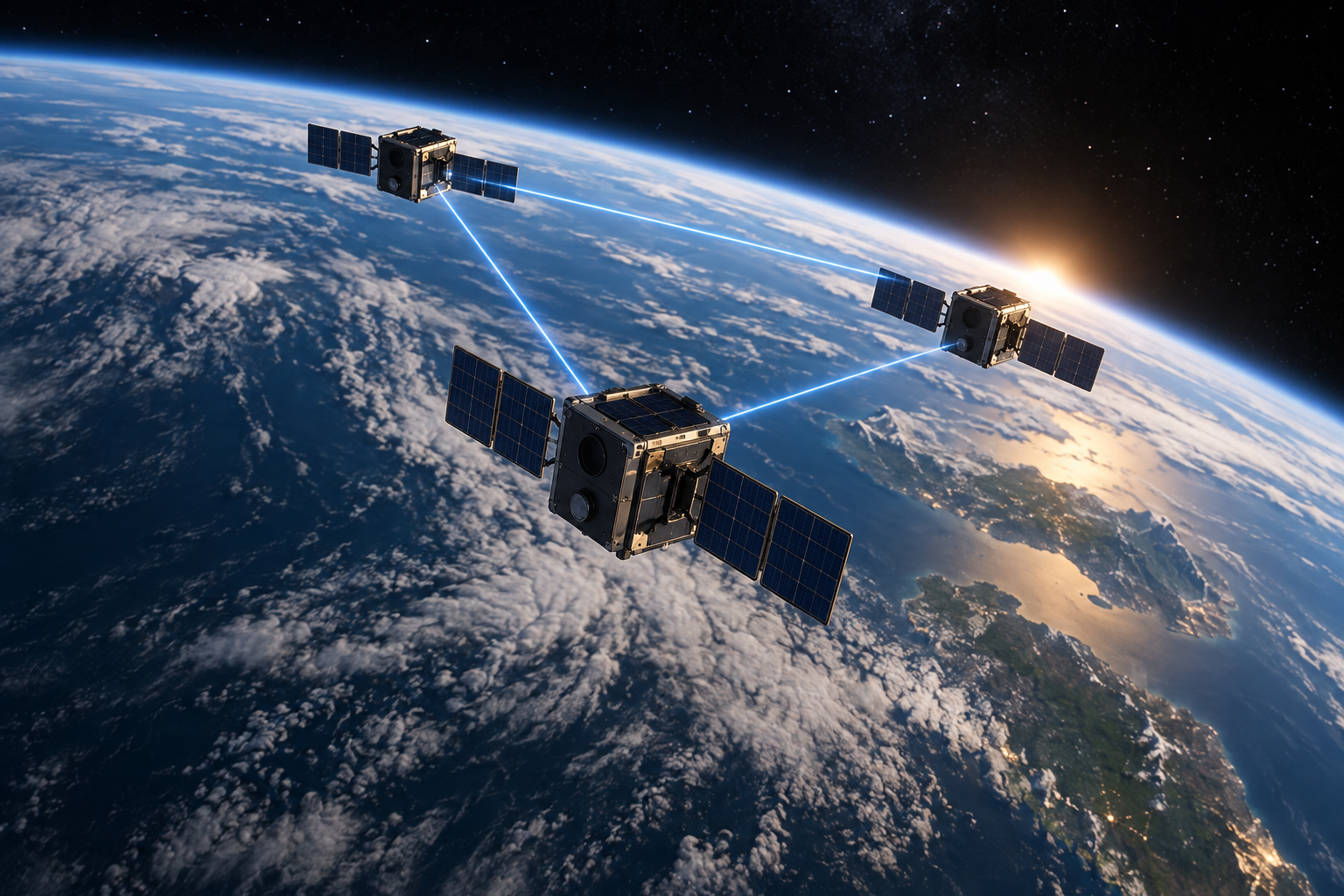
The 2026 test is only the first rung. Google’s stated 2027 milestone is a two-satellite test of the precise, high-bandwidth laser links that future clusters would need. Getting satellites to exchange data is not enough; they must keep their relative positions accurately enough for fast links to remain aligned while both spacecraft move at orbital speed.
Beyond that are questions of launch cost, orbit management, debris avoidance, reliable solar power, heat rejection, radiation effects over years, and whether the complete system makes environmental and economic sense. Those are research questions, not settled promises.
Can you see the Project Suncatcher launch from Austin, Houston, or Los Angeles?
There is no verified public launch time or local visibility prediction in Google’s announcement, so don’t plan a naked-eye viewing attempt from Austin, Houston or Los Angeles yet. Transporter rideshares launch from a range selected by the operator, and a precise trajectory and timing are required before reliable viewing guidance is possible.
The best no-equipment way to follow this mission is to watch the official provider and mission updates once they announce a webcast. If a launch becomes visible or a watch page is confirmed, it will be worth making an evening of it with fellow space fans—join the Cosmic Match community to find people who enjoy following the next countdown as much as you do.
This is also a great time to keep the bigger picture in view. NASA’s Crew-13 target and remaining checks offer a different example of why “targeting” a date does not mean every technical and weather condition has already cleared. And if launches have you curious but you own no equipment, our no-telescope skywatching field guide is an easy way to reconnect with the sky from your own neighborhood.
The bottom line
Project Suncatcher’s first flight is a small, practical test in service of a very large idea. A successful launch and on-orbit checkout would not create an orbital data center; it would tell engineers more about how a handful of TPUs, their cooling system and their spacecraft environment behave in the real world. The result—whether smooth or messy—will help determine what Google tries next in 2027.
For now, the most accurate headline is also the most interesting one: a tiny compute experiment is going to space to learn whether the future concept can survive its first reality check.
FAQ
Is Google launching an operational data center into space?
No. This is a prototype hardware-survival and performance test, not an operational data center or customer-facing cloud service.
When is Project Suncatcher expected to launch?
Media outlets report an October 1 target on SpaceX Transporter-18. Google’s own September 24 post calls it an upcoming early test, so the date should be treated as changeable until the launch provider confirms it.
What will Google test in orbit?
The mission will gather data on TPU behavior through launch loads, radiation and space’s thermal-vacuum environment, including the challenge of moving heat to radiators.
Why would anyone put AI hardware in space?
The long-term research idea is to use abundant solar energy in orbit and link satellite computers together. The technical, financial and operational hurdles remain substantial.
Following the next major human-spaceflight certification milestone? NASA now says Starliner-1 could fly uncrewed in December 2026 or January 2027, with a crewed return targeted by 2028 after testing and certification. Read our Starliner roadmap explainer.