JUICE Is Coming Back to Earth September 28—Here’s Why That Sends It Toward Jupiter
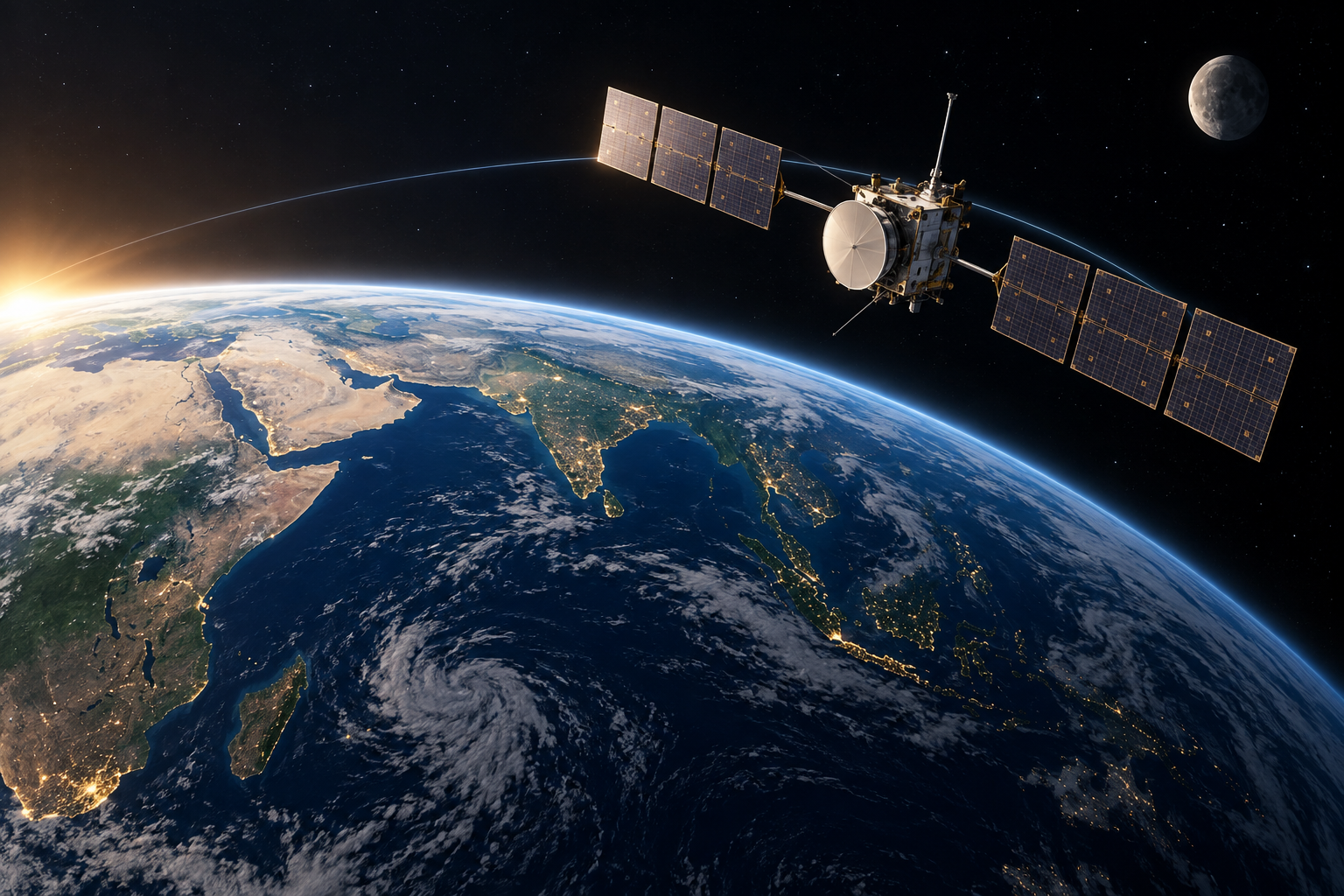
On September 28, 2026, ESA’s Jupiter Icy Moons Explorer (JUICE) will skim past Earth at an altitude of 8,640 km above the Indian Ocean. At closest approach—11:45 UTC (08:45 BRT)—Earth’s gravity will bend JUICE’s path by roughly 20 degrees and add about 3.5 km/s to its velocity. It may look like the spacecraft is returning home, but this is a deliberately choreographed, propellant-saving step toward Jupiter.
For space fans, it is a lovely reminder that a planet is not just a destination: it can be part of the engine. ESA’s mission update has the latest operational details. And while the close pass is not a naked-eye observing event from Austin, Houston, or Los Angeles, it is absolutely worth following as a live mission milestone.

What is JUICE doing near Earth on September 28?
JUICE is using Earth’s motion and gravity to reshape its own solar orbit. In a gravity assist, a spacecraft approaches a moving planet on exactly planned geometry, is pulled into a curved path, and leaves in a different direction and at a different speed relative to the Sun. It is not a free acceleration in the everyday sense—Earth gives up an immeasurably tiny bit of orbital energy—but it lets a spacecraft make a huge change without carrying the propellant that a comparable engine burn would require.
That matters for a vehicle headed to Jupiter. A direct dash outward would demand much more launch energy, and arriving too fast would make capture at Jupiter much harder. ESA’s flight plan instead uses a chain of planetary encounters to build the right route while preserving fuel for the complex work ahead: orbiting Jupiter and, later, entering orbit around Ganymede.
Why is this flyby not a delay or a wrong turn?
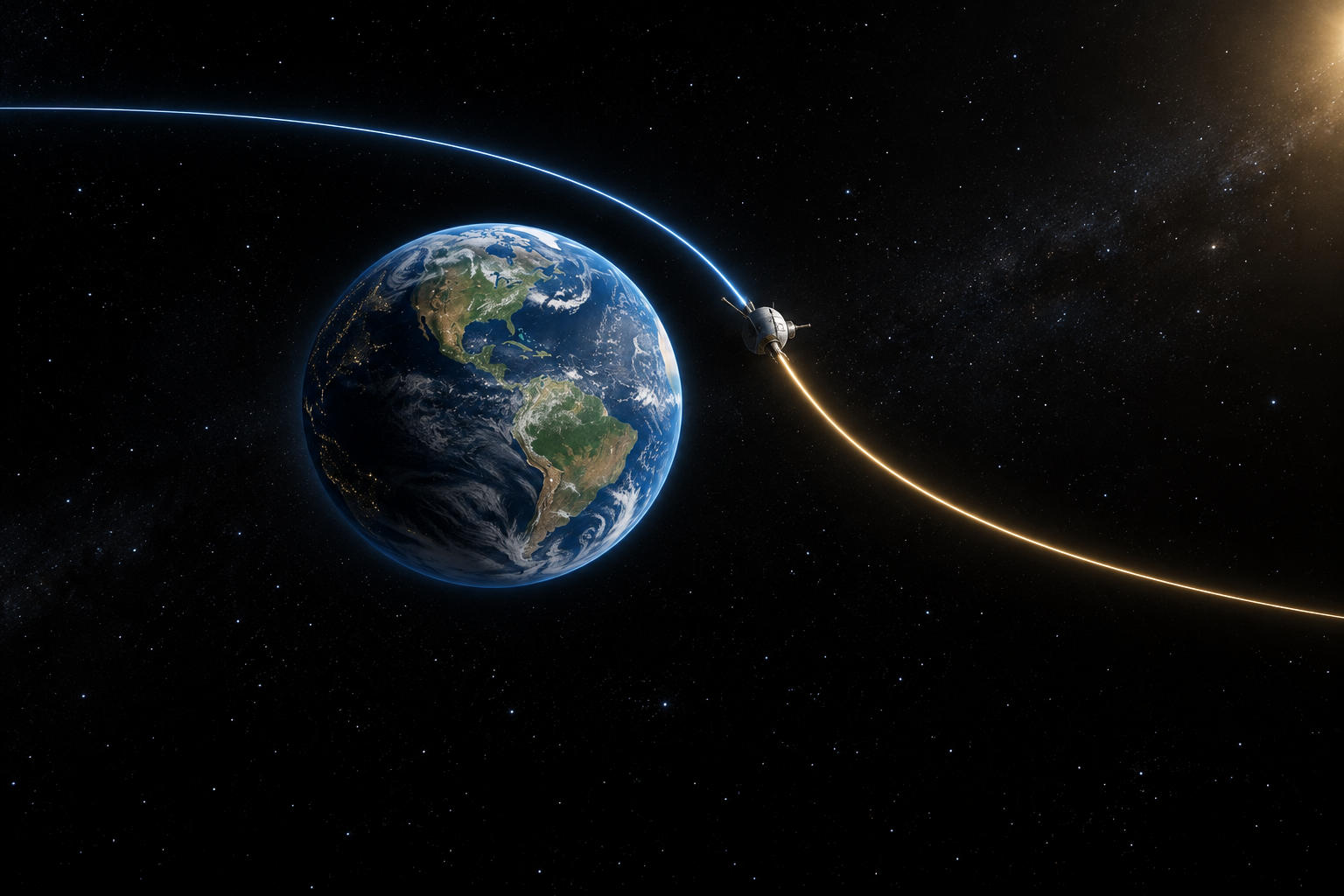
The apparent detour is the plan. JUICE launched in April 2023, completed a pioneering Moon–Earth flyby in 2024, then a Venus flyby. This September encounter is another carefully placed waypoint: it prepares the spacecraft for a final Earth gravity assist in January 2029, with Jupiter arrival targeted for July 2031.
Think of it less like turning around and more like borrowing a moving sidewalk at exactly the right angle. The goal is not simply “go faster”; it is to leave Earth on the precise track that makes the eventual Jupiter approach achievable. ESA projects a roughly 20° bend and 3.5 km/s velocity increase for this pass—numbers that show why a close encounter with a planet can be more valuable than a modest onboard burn.
For another timely mission watch on the same date, see our guide to Starship Flight 14’s September 28 launch plans. Different destination, same lesson: every major spaceflight timeline is built from exact geometry and patient preparation.
How will JUICE use Earth and the Moon for science calibration?
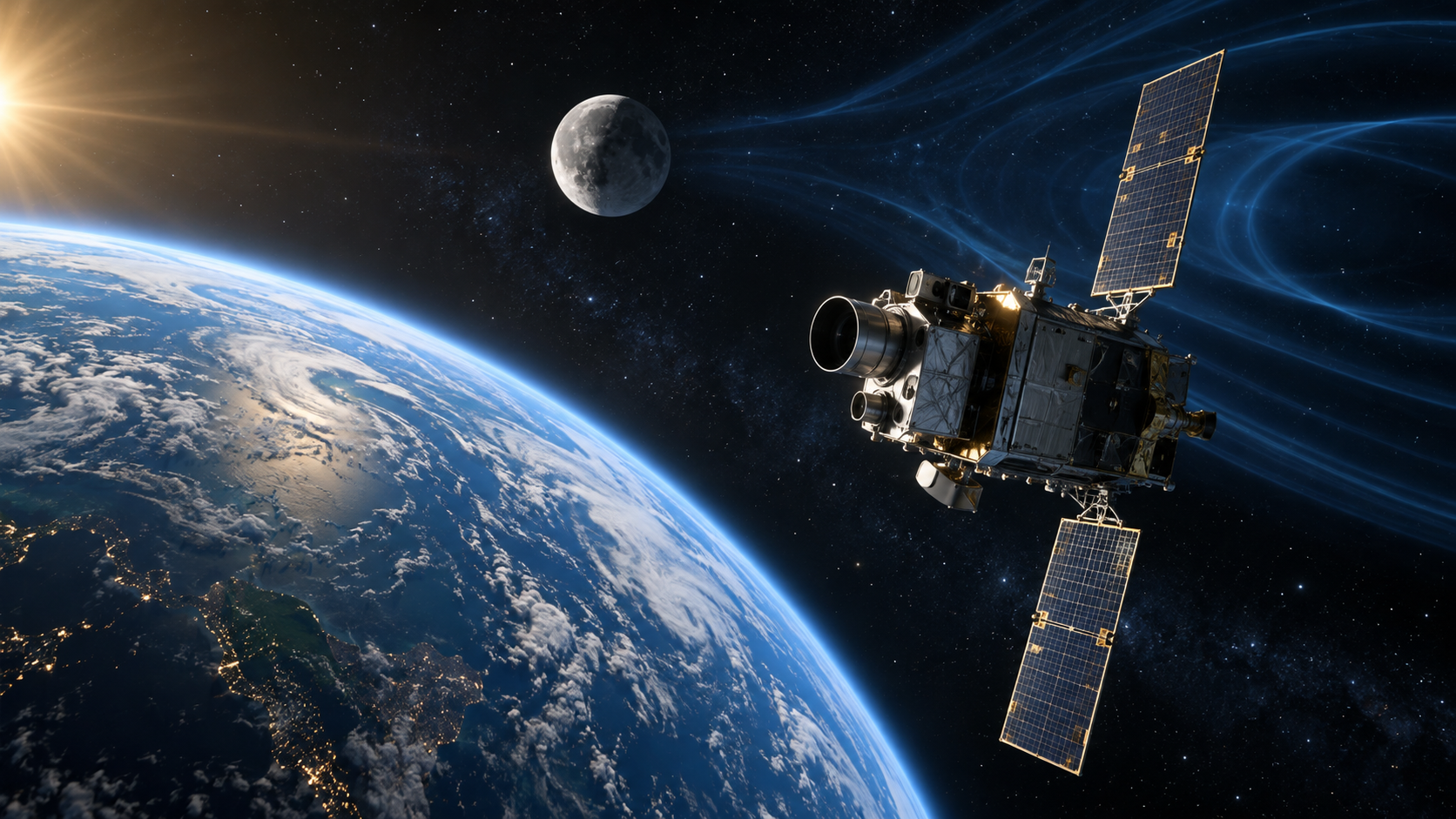
The flyby is also a science opportunity. ESA plans to operate JUICE’s 10 science instruments from September 23 through October 3, collecting observations of Earth and the Moon. Known worlds make valuable calibration targets: instrument teams can compare what their sensors see with rich existing Earth and lunar data, improve analysis tools, and prepare for observations of Jupiter’s icy moons.
The mission will also spend several days in Earth’s magnetotail, the stretched-out region of magnetic influence that extends away from the Sun. That gives JUICE a chance to take magnetic-field measurements before it confronts Jupiter’s far more intense environment. Its navigation camera will look toward the lunar horizon to test optical-navigation techniques intended for work around Jupiter’s moons.
When is closest approach, and can you see JUICE from the United States?
Closest approach is scheduled for 11:45 UTC on September 28, which is 06:45 CDT in Austin and Houston and 04:45 PDT in Los Angeles. ESA says the potentially trackable portion for well-equipped amateur observers is over Australia, about 15–30 minutes before closest approach—not in the three U.S. cities Cosmic Match serves.
So this is a follow-the-mission moment rather than a backyard-sky target. ESA says its two monitoring cameras will take images throughout the flyby, with the last shots on September 29, and plans to share imagery through its website and social channels. That makes a good reason to gather your favorite space people online, compare the first pictures when they arrive, and trade predictions about what the instruments may reveal.
If you want a local crew for the next skywatch, join the Cosmic Match space community and meet people who enjoy swapping mission news, planning observing nights, and celebrating the small wins between launches.
The hardest stretch happens before the close pass
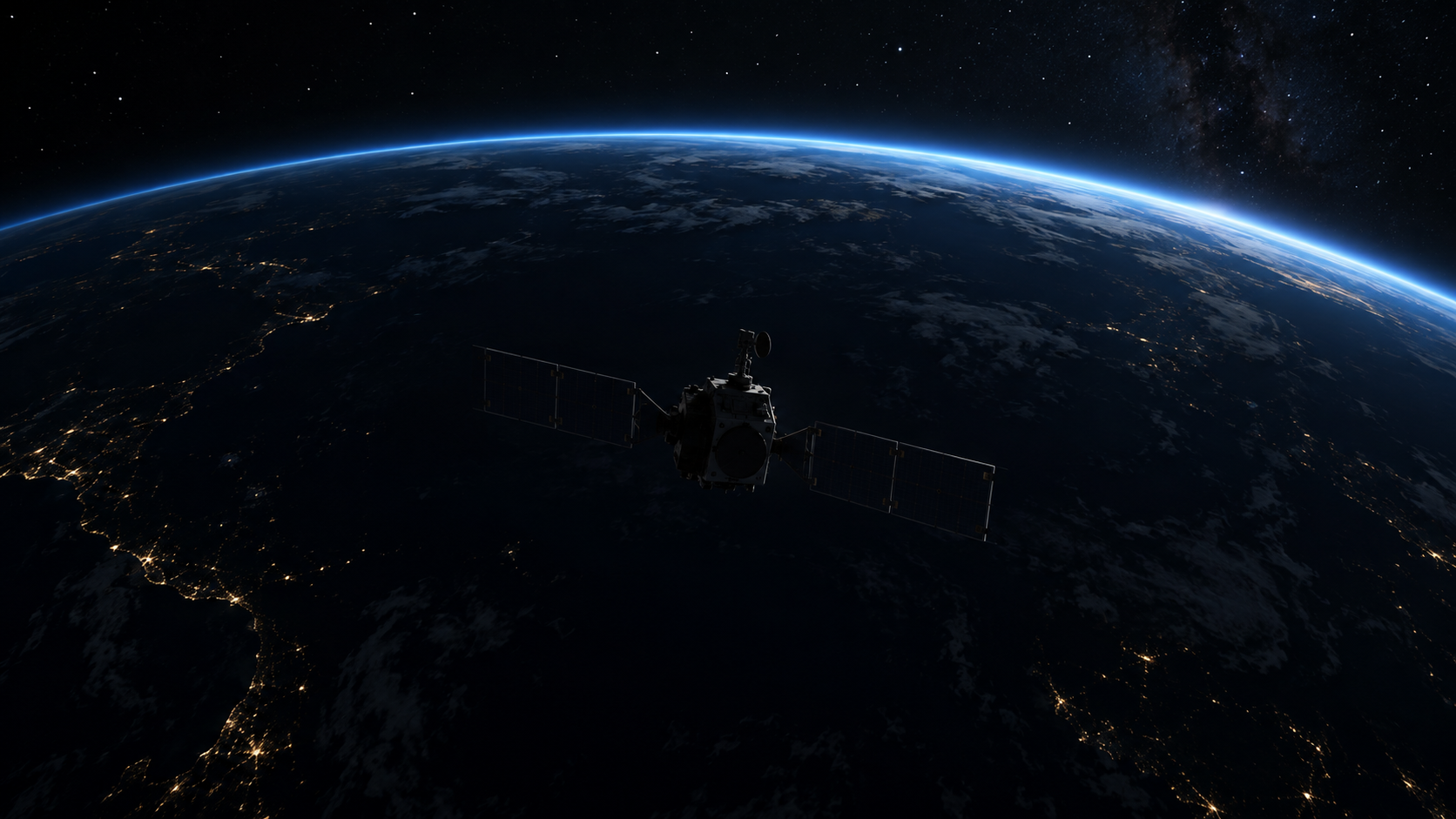
There is another elegant constraint in this flyby: JUICE will pass through Earth’s shadow from 19:24 UTC on September 27 to 04:03 UTC on September 28, operating on battery power. ESA is prioritising its most important observations during that eclipse interval so the spacecraft can conserve energy for the maneuver.
That’s why mission flybys are much more than a pretty orbital line. Navigation teams have been making small trajectory corrections since August to make sure JUICE arrives with the exact speed and angle it needs. On the day, flight controllers will be ready for a final emergency maneuver if needed, though ESA expects it will not be required.
A small Earth moment on a very long road to Jupiter
September 28 is not JUICE’s destination; it is proof that the route is working. One close pass supplies a trajectory change, a speed gain, calibration time for ten instruments, magnetic-field data, and a rehearsal for the precision the mission will need at Jupiter. By turning Earth into a carefully timed gravitational partner, JUICE saves the fuel it will need to investigate Ganymede, Callisto, Europa, and the giant planet that holds them in orbit.
Follow ESA’s coverage for the official imagery, then bring your questions to the people who will happily spend an evening talking about why “coming back to Earth” can be the fastest way farther out.
FAQ
What time is JUICE’s September 28, 2026 Earth flyby?
ESA schedules closest approach for 11:45 UTC on September 28, 2026 (08:45 BRT, 06:45 CDT, and 04:45 PDT), at 8,640 km above the Indian Ocean.
Can I see JUICE from Austin, Houston, or Los Angeles?
Not as a practical naked-eye target. ESA’s tracking guidance for this flyby concerns a 15–30 minute interval over Australia and requires suitable telescope or binocular equipment.
How much does Earth change JUICE’s course?
ESA expects Earth’s gravity to deflect JUICE’s trajectory by about 20 degrees and increase its velocity by about 3.5 km/s.
When will JUICE reach Jupiter?
After this Earth flyby and another planned for January 2029, JUICE is scheduled to arrive at Jupiter in July 2031.
Related spaceflight reading
Another timely technology demonstration is Google Project Suncatcher’s orbital TPU test. It is a separate SpaceX rideshare payload testing how compute hardware handles the realities of orbit—not an operational orbital data center.