Falcon 9’s 100th Launch of 2026 Also Marked B1067’s 37th Flight
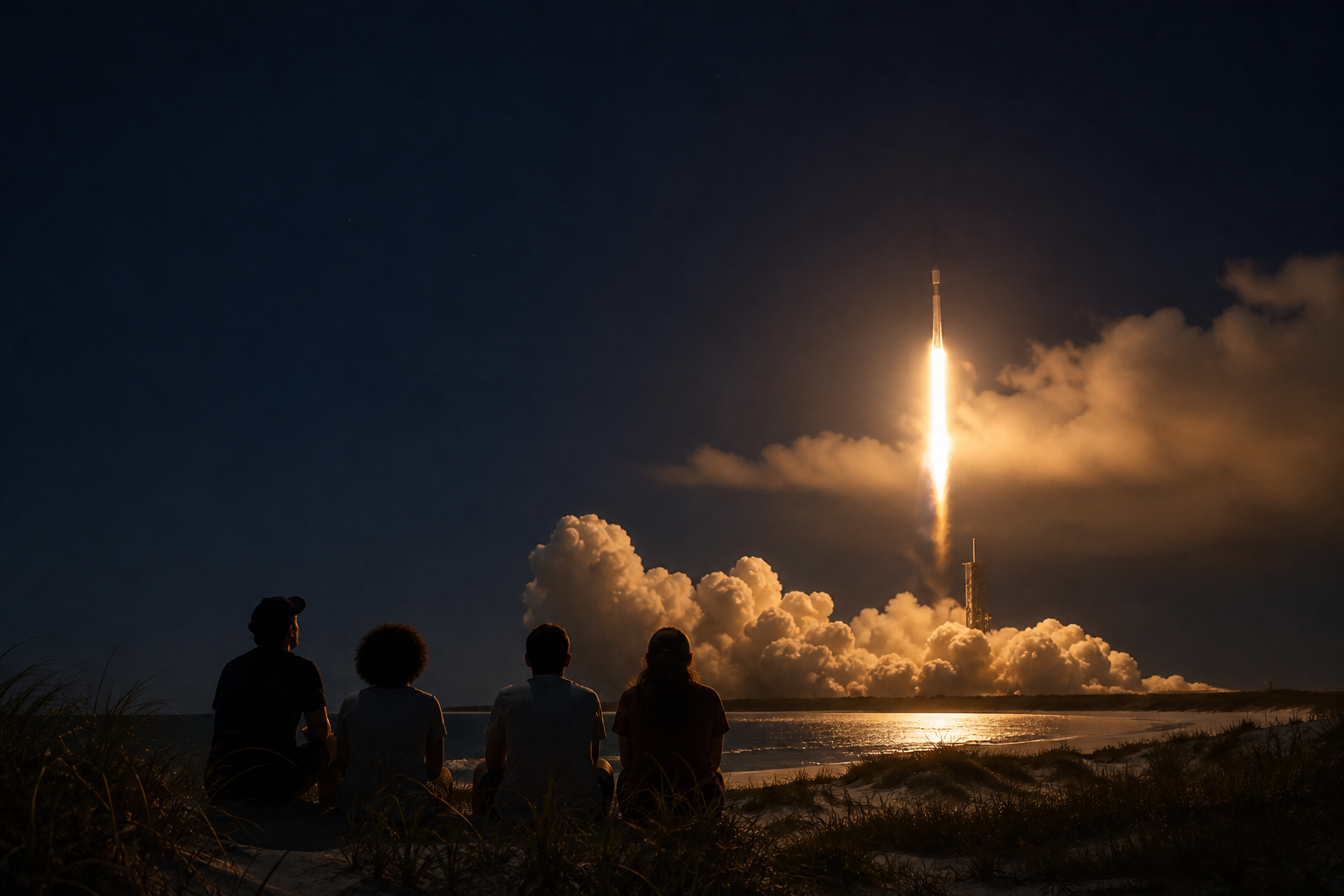
Falcon 9 completed its 100th launch of 2026 on August 25—and the Starlink mission gave booster B1067 its 37th flight. Liftoff came at 09:33:38 UTC from Space Launch Complex 40, followed by deployment of 29 Starlink satellites to low Earth orbit and a successful B1067 landing on the droneship A Shortfall of Gravitas. A routine satellite deployment delivered an unusually clear snapshot of both rapid launch cadence and booster reuse.
SpaceX’s official mission page records the completed Starlink Group 10-49 mission, and Next Spaceflight records its Falcon 9-only counting basis. These sources distinguish this milestone from SpaceX’s broader 2026 total and from the Falcon-family count.

What made this Falcon 9 launch a 2026 milestone?
According to Next Spaceflight’s mission count, Starlink Group 10-49 was the 100th Falcon 9 mission of the calendar year. That wording matters. It is not SpaceX’s 100th mission of 2026, and it is not the Falcon family’s 100th mission; those totals include different vehicles and were reached earlier.
The mission deployed 29 Starlink v2 Mini satellites to low Earth orbit. That may sound familiar—Starlink launches are designed to be repeatable—but repeatability is exactly the story. A launch tempo that reaches triple digits in one calendar year turns an idea we once treated as extraordinary into an operational rhythm.
For a beginner, think of it less like a special one-off event and more like a busy, highly coordinated night shift: teams prepare the rocket, range, ship, recovery hardware, and satellites so that a vehicle can carry out a carefully planned job again and again. The remarkable part is not that “routine” means uninteresting. It means the infrastructure and people behind a launch have become reliable enough to make ambitious spaceflight feel regular.
Why was B1067’s 37th flight a big deal?
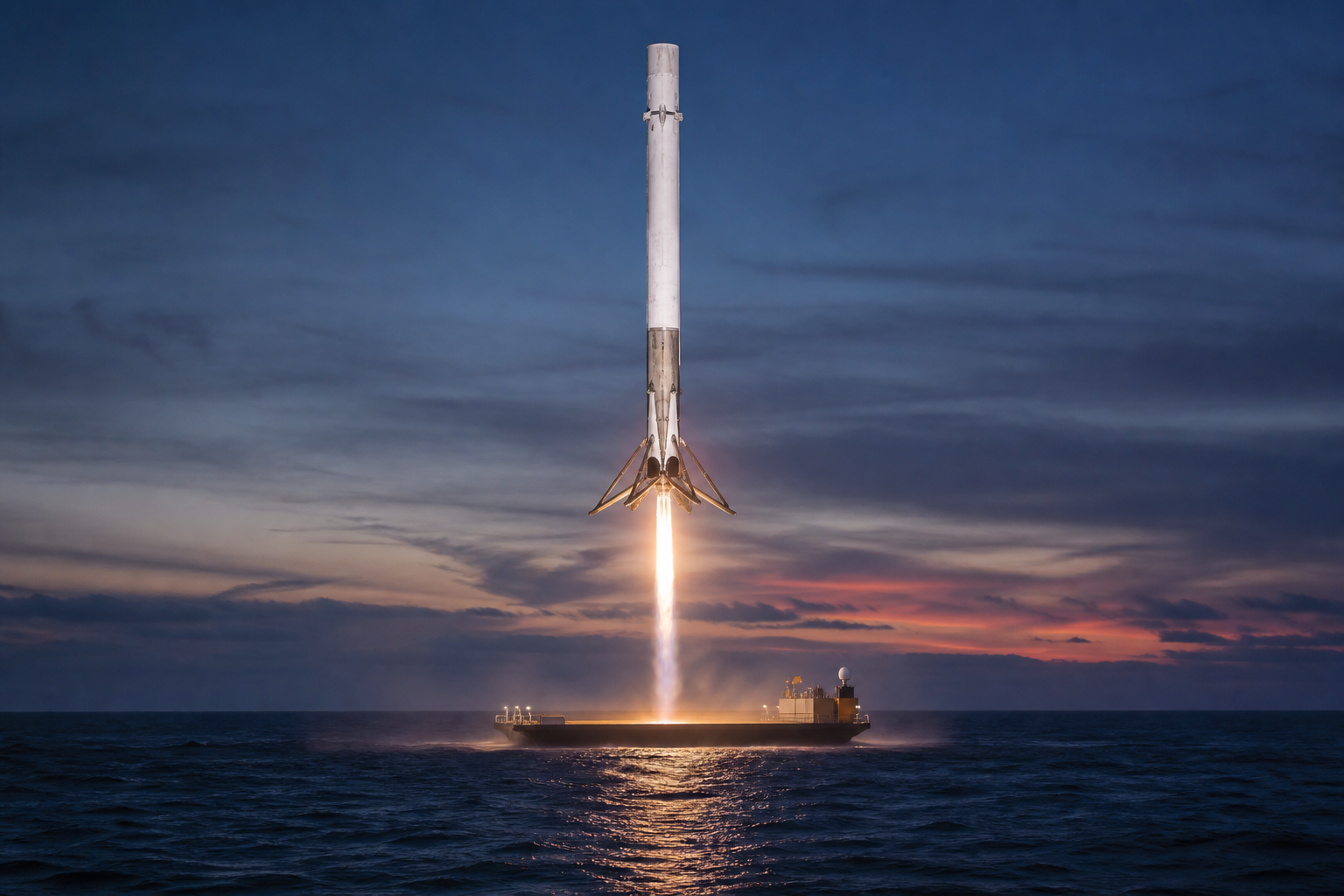
B1067 entered the mission with 36 completed flights. On Starlink Group 10-49, it completed its 37th flight and landed successfully on the droneship A Shortfall of Gravitas, according to SpaceX. Space Launch Now independently listed the planned 37th flight and recovery before launch.
A booster is the large lower section that does most of the work at liftoff. After it separates from the upper stage, it can steer back through the atmosphere and attempt a powered landing. Flying the same booster many times is not a side detail—it is central to the effort to reduce the amount of hardware that needs to be built for each launch.
The successful landing does not make future recoveries guaranteed; each mission has its own conditions. But completing a 37th flight demonstrates how much proven service life the vehicle has accumulated. That’s a tangible way to understand rocket reuse without needing an engineering degree.
Could viewers in Austin, Houston, or Los Angeles watch the launch?
The launch is complete. For viewers in Austin, Houston, and Los Angeles, the reliable way to have followed it was the remote watch-along; the cited public sources did not establish naked-eye visibility from those cities.
The mission lifted off at 09:33:38 UTC on Monday, August 25. That was 4:33:38 a.m. CDT in Austin and Houston, 2:33:38 a.m. PDT in Los Angeles, and 6:33:38 a.m. BRT in São Paulo. The official SpaceX mission result confirms deployment of all 29 satellites and B1067’s successful droneship landing.
For a little context before you press play, our look at how SpaceX set a 38-minute dual-launch record shows why cadence has become such a fascinating part of modern spaceflight.

A launch is better with people who want to talk about it
A live launch gives everyone the same countdown, the same sudden burst of light, and the same questions afterward: Did you see the stage separation? How can a booster come back? What does a 100th flight in a year actually mean? That makes it a great low-pressure reason to gather your fellow space people.
If you want more of those conversations between launches, join the Cosmic Match space community and meet people who get excited about the details. You can also explore our Space Exploration & History articles for more context beyond the countdown.
The result is now confirmed: Falcon 9’s 100th launch of 2026 paired B1067’s 37th flight with a successful droneship landing and deployment of 29 satellites. It is one more reminder that reusable rocketry is changing what “normal” looks like.
FAQ
When did Falcon 9 Starlink Group 10-49 launch?
Falcon 9 lifted off at 09:33:38 UTC on August 25, 2026, from SLC-40 at Cape Canaveral Space Force Station.
Is this SpaceX’s 100th mission of 2026?
No. This was Falcon 9’s 100th launch of calendar 2026 under the Falcon 9-only counting basis. SpaceX’s total company mission count includes other vehicles and is a different number.
How many times has B1067 flown now?
B1067 completed its 37th flight on Starlink Group 10-49 and landed successfully on A Shortfall of Gravitas.
Did I need a telescope to follow the launch?
No. The official stream or a community watch-along was the reliable option from Austin, Houston, or Los Angeles; the cited mission sources did not confirm naked-eye visibility from those cities.
Related launch milestone: Europe’s Ariane 6 has now completed its first successful GTO mission with MTG-I2, a helpful comparison in how different launch systems deliver satellites to orbit.