The First Operational Robotic GEO Servicing Mission Has Launched—But Its Real Work Starts Next Year
The First Operational Robotic GEO Servicing Mission Has Launched—But Its Real Work Starts Next Year
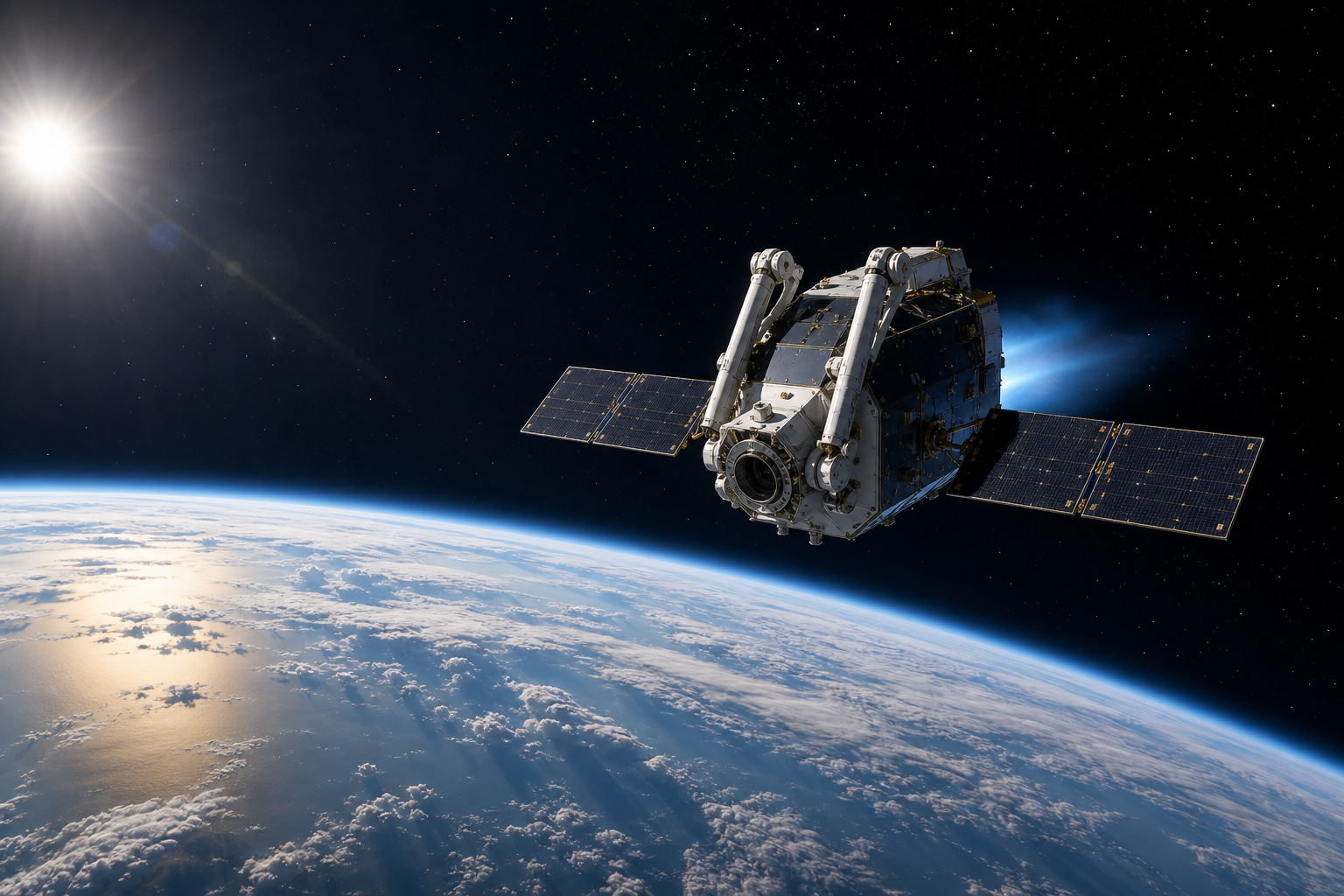
On July 21, a spacecraft called the Mission Robotic Vehicle (MRV) left Cape Canaveral carrying a payload meant to do something space fans have imagined for decades: use robots to help other satellites keep working.
The careful version matters. The vehicle has launched and is en route to geosynchronous Earth orbit (GEO). It has not started servicing satellites. DARPA says its electric-propulsion transfer will take approximately a year, after which the operational mission begins. That long, quiet climb is the actual opening chapter of a major in-space-servicing test—not a delay after the story.
DARPA calls the Robotic Servicing of Geosynchronous Satellites (RSGS) mission the first privately owned, operational robotic in-space servicing mission in geosynchronous orbit. The qualifier is important: this is an operationally oriented commercial mission, but its hands-on work lies ahead.
What launched on July 21
MRV launched aboard a SpaceX Falcon 9 from Cape Canaveral, Florida, with the NASA-supported RSGS payload. NASA says the vehicle is headed for GEO, the high orbit where satellites circle Earth at the same rate Earth rotates. That makes GEO a vital neighborhood for communications, weather, and other long-lived spacecraft.
The mission is built around a practical idea: a satellite can still be useful even after a particular subsystem or its fuel margin becomes the limiting factor. Rather than treating every aging spacecraft as a write-off, an in-space servicer can inspect it, work with it, and—in the case of this mission—install hardware that helps extend its usable life.
That does not mean MRV has already repaired anything. At this stage, it is traveling. The robotic work is a future phase.
Why the trip to GEO takes about a year
It is tempting to picture a launch as the finish line: rocket up, satellite arrives, mission starts. But orbital mechanics are more patient than that.
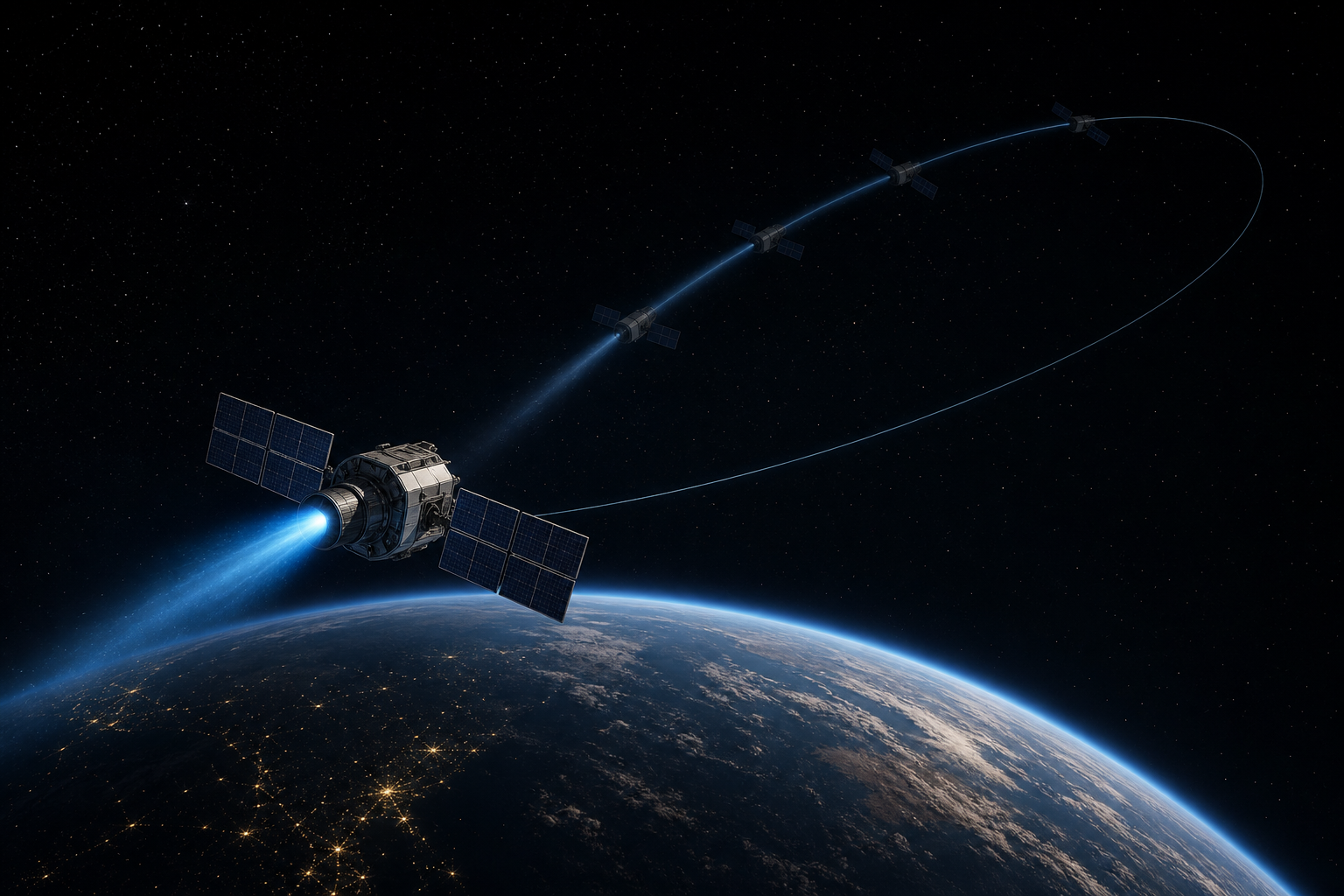
DARPA says MRV will use electric propulsion to raise its orbit over the next year. Electric thrusters are remarkably efficient, using a small, steady push rather than a short, dramatic burst. The tradeoff is time. That makes them well suited to a long transfer where conserving propellant matters.
So “launched” and “operational” are two different milestones here:
- July 21, 2026: MRV and RSGS launch from Florida.
- Over roughly the next year: MRV uses electric propulsion to climb toward GEO.
- After arrival: the operational servicing mission is expected to begin.
That sequence is why this is a mission worth following now. The launch validates the beginning of a complex campaign; the decisive demonstrations will come after the transfer. For another example of how post-launch milestones can matter more than the countdown itself, read our Swift rescue mission update.
The robot hardware: two arms, seven joints each
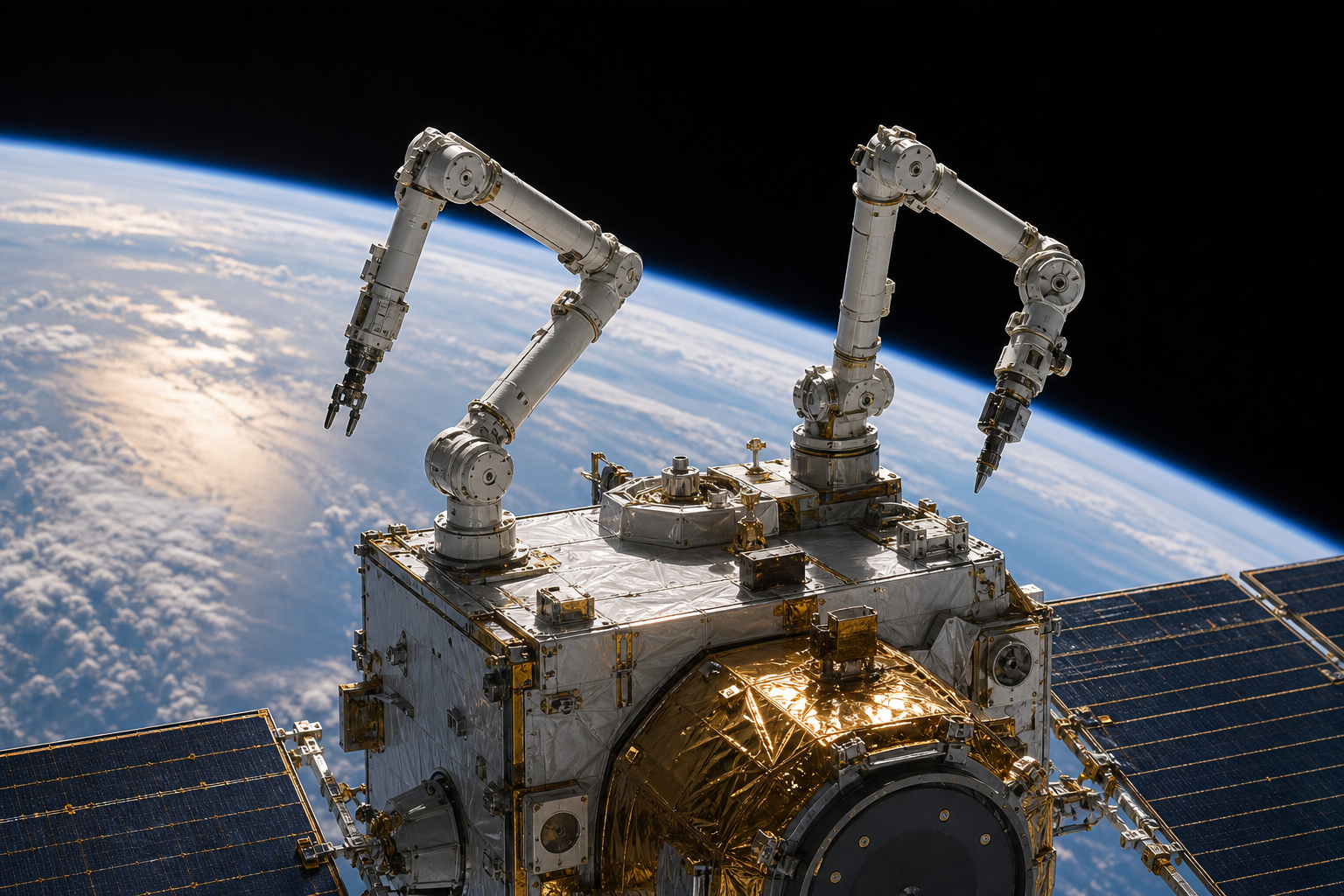
Once at GEO, MRV is meant to be more than a tugboat. Its RSGS payload carries two robotic arms, each with seven high-performance joints and a specialized tool drive. The arms can accommodate interchangeable satellite-servicing tools, giving the vehicle a flexible toolkit rather than a one-purpose attachment.
That distinction is central. A multi-joint arm can position a tool with more freedom around a complex satellite—useful when every target has its own geometry, surfaces, and operational constraints. DARPA also describes modular tools, sensors, and cameras that can support inspection and servicing tasks.
NASA’s role draws on a long lineage of space robotics, from Hubble servicing missions to robotic refueling demonstrations on the International Space Station. NASA says its support includes simulation and analysis tools, performance-verification software, and flight robot operators for highly technical procedures.
Mission Extension Pods: a different model from permanent docking
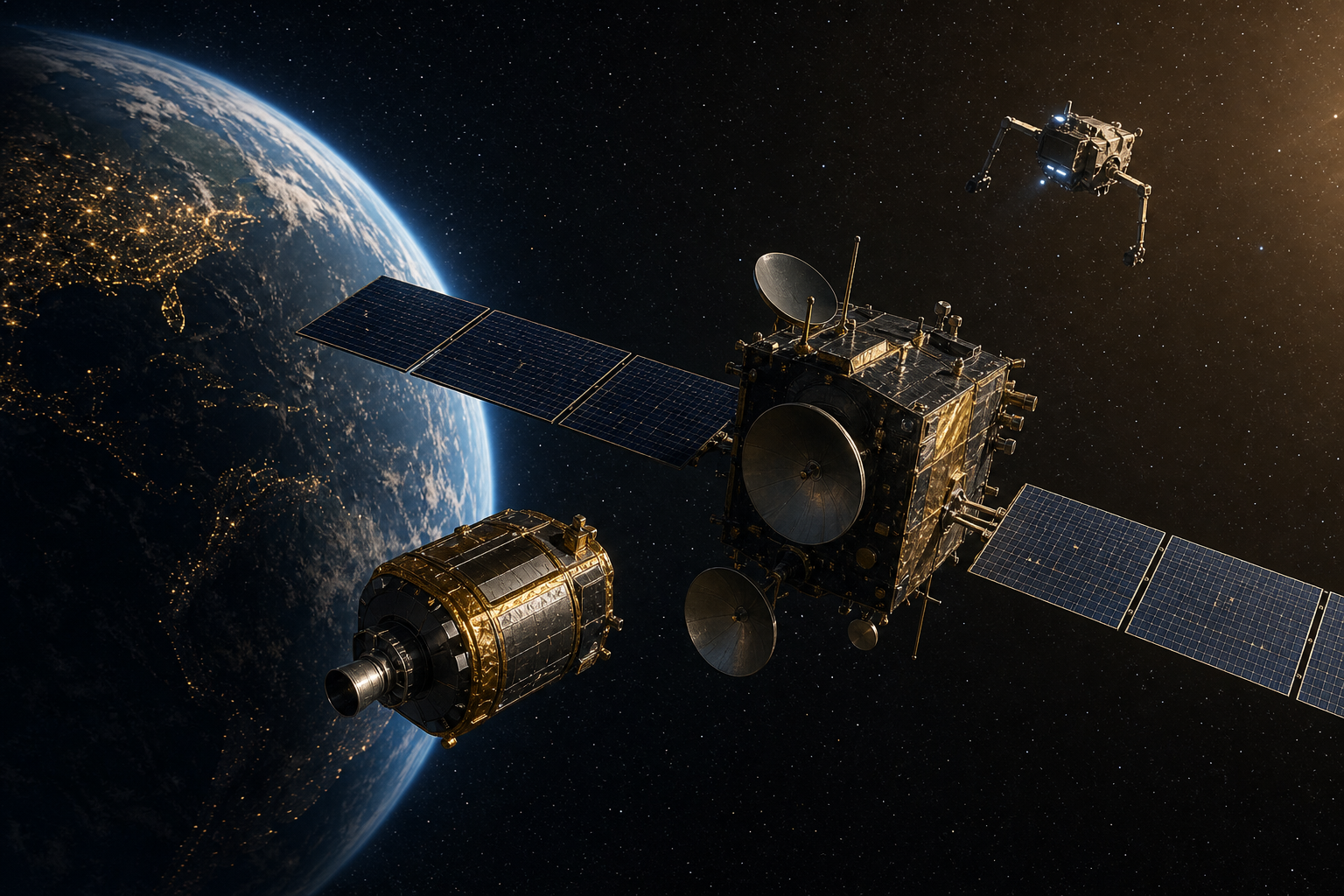
One especially concrete job for MRV is installing Mission Extension Pods (MEPs). Think of these as propulsion modules—DARPA calls them “jet packs”—for satellites that are otherwise still valuable. The launched pods are designed to add six or more years to the operational life of existing GEO satellites.
That is different from earlier life-extension vehicles that docked permanently to one satellite and became its propulsion partner. Those vehicles demonstrated an important way to keep a target alive, but they were tied to that target once attached.
MRV is designed around reusability. Its arms and interchangeable tools are intended to let one vehicle work across multiple missions, while the separate MEPs remain with the satellites that need the extra propulsion. The reusable robot and the installed propulsion pod have different jobs.
The potential upside is larger than one saved satellite. Hundreds of satellites operate in GEO, and some may be retired while their payloads still work because fuel runs low or a capability needs an upgrade. Extending a satellite’s service life could reduce replacement pressure and make operators more flexible about how they manage assets already in orbit.
What to watch over the next year
The next headline may not be another launch. Watch instead for updates on the orbit-raising transfer, arrival at GEO, checkout of the robotic systems, and the first announced operational tasks. Those are the milestones that will show whether the concept can move from impressive hardware to repeatable service.
For space enthusiasts, this is a useful reminder that progress is often incremental: a launch, a year-long transfer, then careful work around expensive spacecraft that were never designed for a quick driveway repair. It is exactly the kind of mission that gets better when you can trade notes with people who enjoy the details. Join the Cosmic Match space community or create a free Cosmic Match profile to find people who will happily follow the next checkpoint with you.
Bottom line
MRV’s July 21 launch is real progress for robotic satellite servicing. But it is the start of the mission, not the service call itself. The vehicle is now heading toward GEO on an approximately year-long electric-propulsion transfer. Only after that journey will its two seven-joint arms and interchangeable tools be positioned to help install propulsion pods designed to give aging satellites six or more additional years of work.
That future separation—one reusable robotic vehicle, multiple service opportunities, and pods that stay behind with client satellites—is what makes this more than another life-extension dock. For now, the most accurate word is en route.
Sources
- NASA: Robotic Servicing Mission Launches with NASA Support
- DARPA: Robotic Servicing of Geosynchronous Satellites Lifts Off
Curious how spacecraft learn to work safely near one another far from Earth? Read our CAPSTONE 02 lunar-rendezvous explainer.