Starship Flight 14: Booster 21 Fires 33 Engines—Still No Launch Date
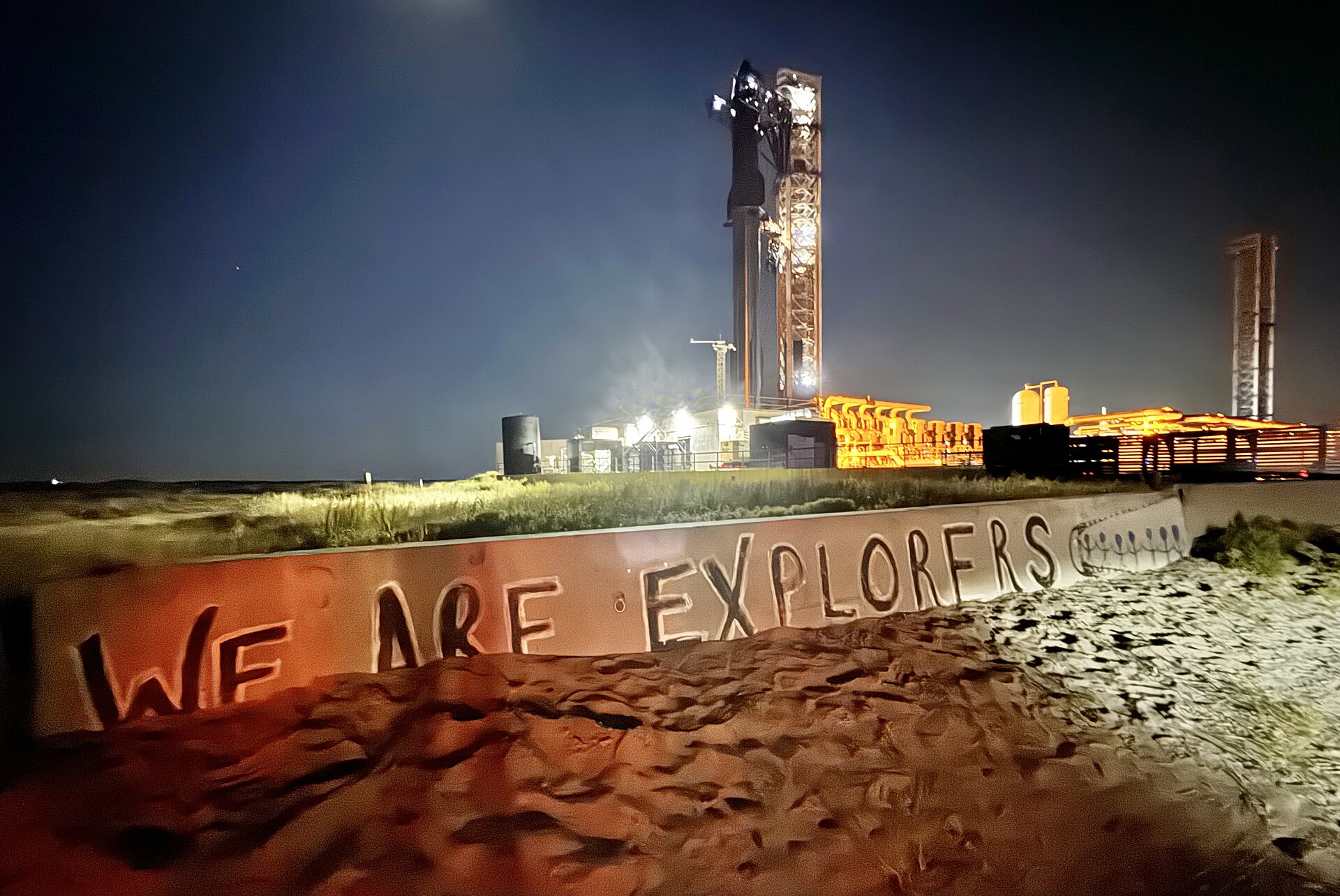
Booster 21 has now completed the second major engine milestone associated with Starship Flight 14: a reported 33-engine static fire at Pad 2 on August 28. Together with Ship 41’s recent one-engine deorbit-profile test and six-engine static fire, that means both stages have recorded significant ground-test progress. It is real movement—but it is not a launch announcement. The current public Flight 14 listing still says no earlier than September 2026, with no confirmed day or launch time.
For people following Starship from Austin, Houston, Los Angeles, and beyond, the practical takeaway is simple: the two vehicles are being tested separately in increasingly mission-relevant ways, while the public milestones needed to identify a launch window are still incomplete. Flight 14 is expected to be Starship’s first orbital flight, with Ship 41 and Booster 21 listed for Pad 2 at Starbase, Texas.

Photo: Steve Jurvetson, CC BY 2.0.

What did Ship 41’s static fires actually test?
A static fire is an engine test with a vehicle held on the ground. Propellants are loaded, engines ignite for a planned interval, and teams collect data on engines, plumbing, controls, thermal behavior, and ground equipment. It can be a major checkpoint, but it does not prove every system is ready to fly.
Next Spaceflight’s Ship 41 record lists a single-engine static fire at Massey Outpost, Texas, on August 19, then a six-engine static fire on August 20. SpaceX described the first as demonstrating a deorbit burn for upcoming orbital missions.
The tests answer different questions: the one-engine firing exercised a controlled burn profile relevant to lowering an orbital spacecraft’s path for return; the six-engine firing checked how Ship 41’s full engine set operated together on the stand. They are complementary evidence, not interchangeable labels for “launch-ready.”
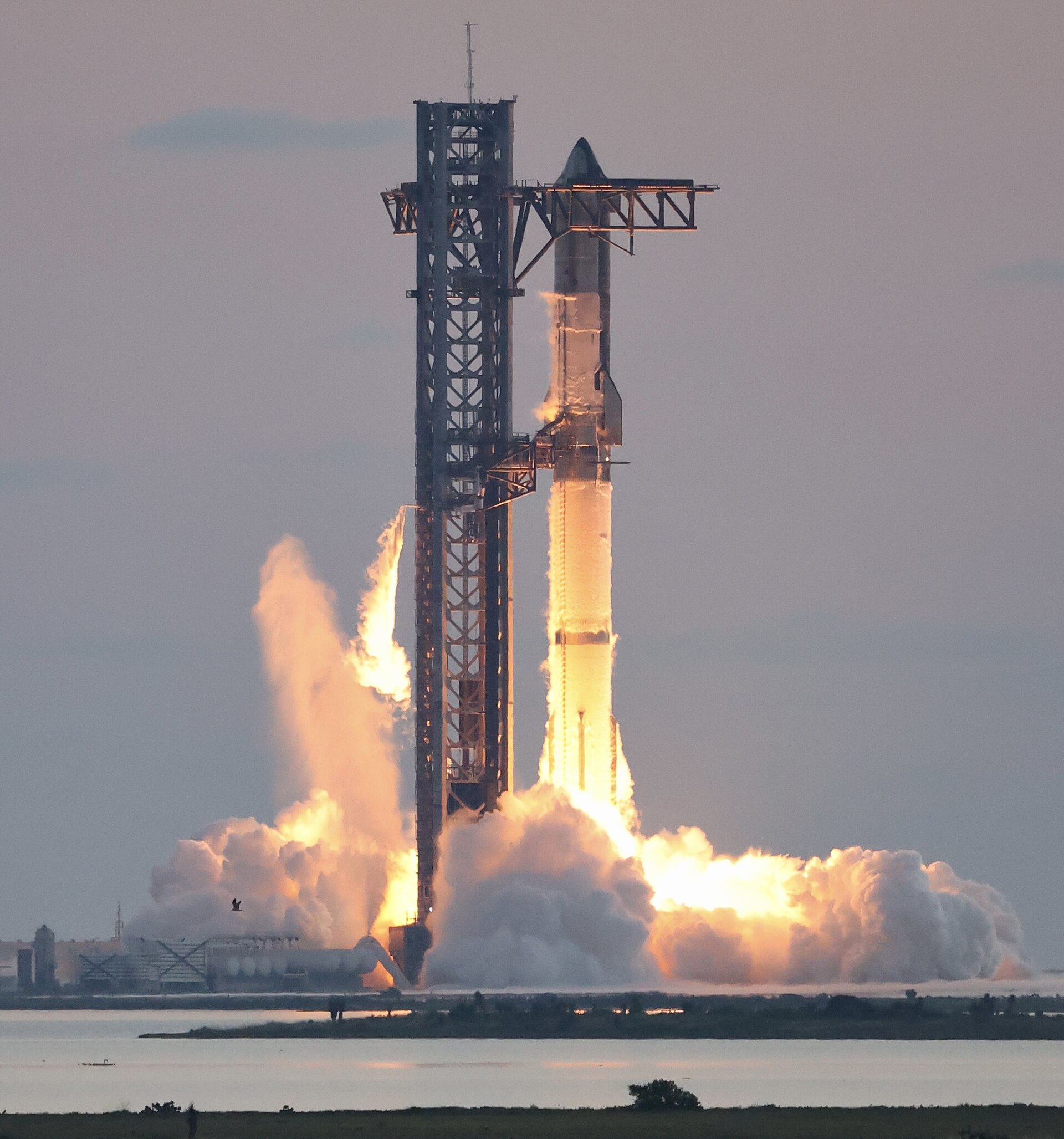
Photo: Steve Jurvetson, CC BY 2.0.

What does Booster 21’s 33-engine static fire add?
Next Spaceflight’s current Starship page records a 33-engine static fire for Booster 21 at Pad 2 on August 28. That is the first-stage counterpart to Ship 41’s engine campaign: instead of testing the upper stage’s six engines, the reported test exercised the Super Heavy booster’s full 33-engine set on the ground.
This report is attributed to Next Spaceflight’s current record. As of this update, it should not be presented as a formal SpaceX launch confirmation. The distinction matters: a reported full-engine firing is meaningful hardware-readiness evidence, while an official mission announcement is a separate event.
A 33-engine firing lets teams gather data on a much more complex set of engines, vehicle systems, and pad hardware operating together. It does not show that Booster 21 and Ship 41 have flown as a stack, that every preflight review is closed, or that the integrated vehicle has been declared launch-ready.
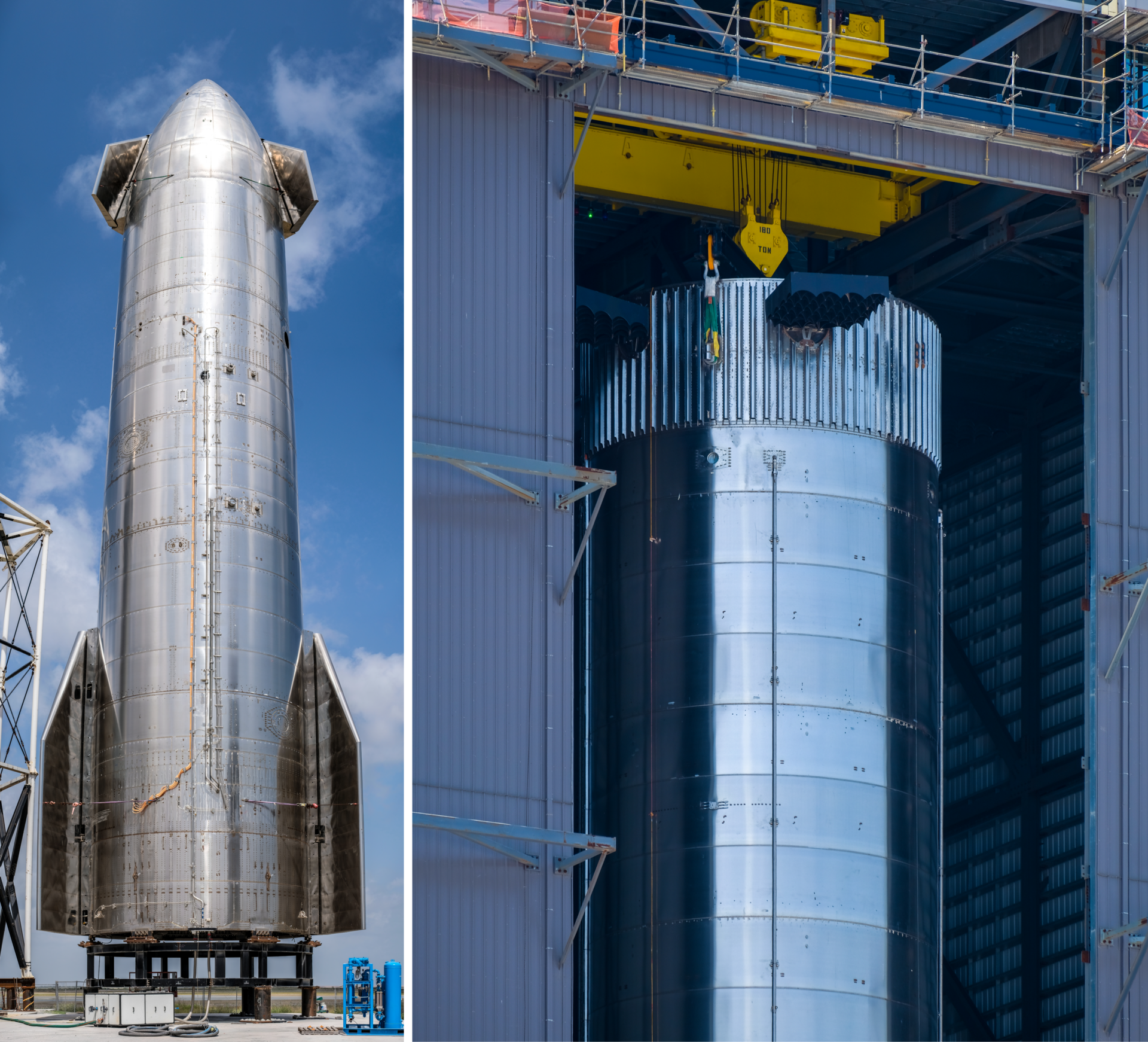
Photo: Lars Plougmann, CC BY-SA 2.0.

Why do tests on both stages still not set a launch date?
This is the counterintuitive part. A six-engine Ship test plus a reported 33-engine Booster test sounds like the finish line—but ground-engine campaigns are only part of a launch campaign. The public Flight 14 checklist still shows 6 of 19 items complete and leaves several launch-critical steps open: SpaceX confirmation, vehicle moves to the launch site, stacking, FAA operational guidance, airspace and maritime notices, and a launch road closure.
The same live listing remains NET September 2026. NET means no earlier than: a planning window, not a calendar appointment. It provides no exact day or time. Neither the public listing nor the authorities’ public operational channels currently supplies a confirmed Flight 14 launch window.
Why test a one-engine deorbit-burn profile?
Getting home is a separate problem from getting to orbit. A deorbit burn is a controlled engine burn that changes a spacecraft’s path so it can re-enter the atmosphere at the intended place and time. That capability is mission-critical for an orbital Starship.
The August 19 test was a ground demonstration of that burn profile—not an orbital flight rehearsal. It did not put Ship 41 in space, demonstrate atmospheric reentry, or demonstrate a landing. Space.com reported the single-engine firing lasted about 15 seconds and the six-engine test about 60 seconds; those durations are from that secondary report.
What should Starship fans watch next?
It is too early to plan a public viewing event in Austin, Houston, or Los Angeles. The completed static fires were ground tests in Texas, not public skywatching events. When an operator-confirmed launch time arrives, that will be the moment for reliable stream details and a community watch-along. Until then, use SpaceX’s official updates, the live Flight 14 listing, and reputable reporting—not a circulating “launch date” graphic.
Space missions are more fun when the questions have somewhere to go. You can join the Cosmic Match space community free and meet other enthusiasts for a future Flight 14 livestream night. For a Houston-friendly way to turn space news into conversation, see our guide to Space News & Brews.
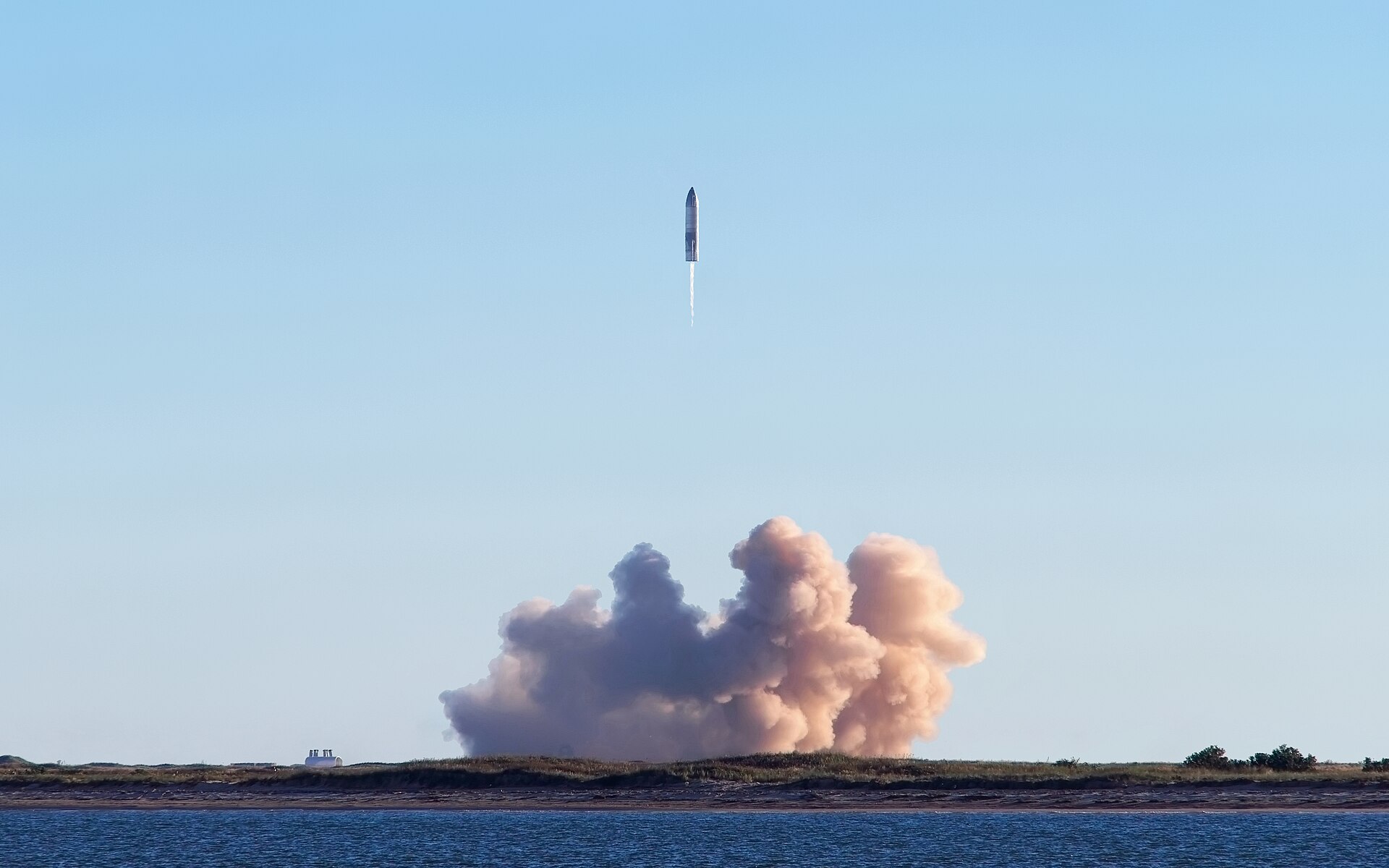
Photo: Forest Katsch, CC BY-SA 4.0.

For another example of separating a test result from an overclaim, read what AstroRad’s Artemis I results actually show.
The bottom line
Booster 21’s reported 33-engine static fire and Ship 41’s engine tests are legitimate, separate hardware-readiness milestones for Starship Flight 14. They do not establish a launch date, confirm an exact launch time, or prove Booster 21, Ship 41, or the integrated vehicle is launch-ready. Flight 14 remains NET September 2026—and that is the most accurate countdown there is.
FAQ
What is a static fire?
A static fire is an engine test performed while a vehicle is restrained on the ground.
Did Booster 21 complete a 33-engine static fire?
Next Spaceflight’s current Starship record lists a 33-engine static fire for Booster 21 at Pad 2 on August 28. This article attributes that milestone to the current Next Spaceflight record; it is not presented as a formal SpaceX launch announcement.
Does testing both stages mean Flight 14 is launch-ready?
No. The current public checklist still lacks SpaceX confirmation, stacking and several operational notices. Engine tests are evidence of hardware progress, not an integrated-vehicle launch declaration.
Has Starship Flight 14 been given a launch date?
No. The current public listing says no earlier than September 2026 and gives no confirmed day or time.
Can I watch Flight 14 from Austin, Houston, or Los Angeles?
There is no confirmed launch time or local public viewing plan yet; the completed static fires were ground tests in Texas.