NASA Chose PRIMA as Its First Probe Explorer—But It Is Not Fully Confirmed Yet
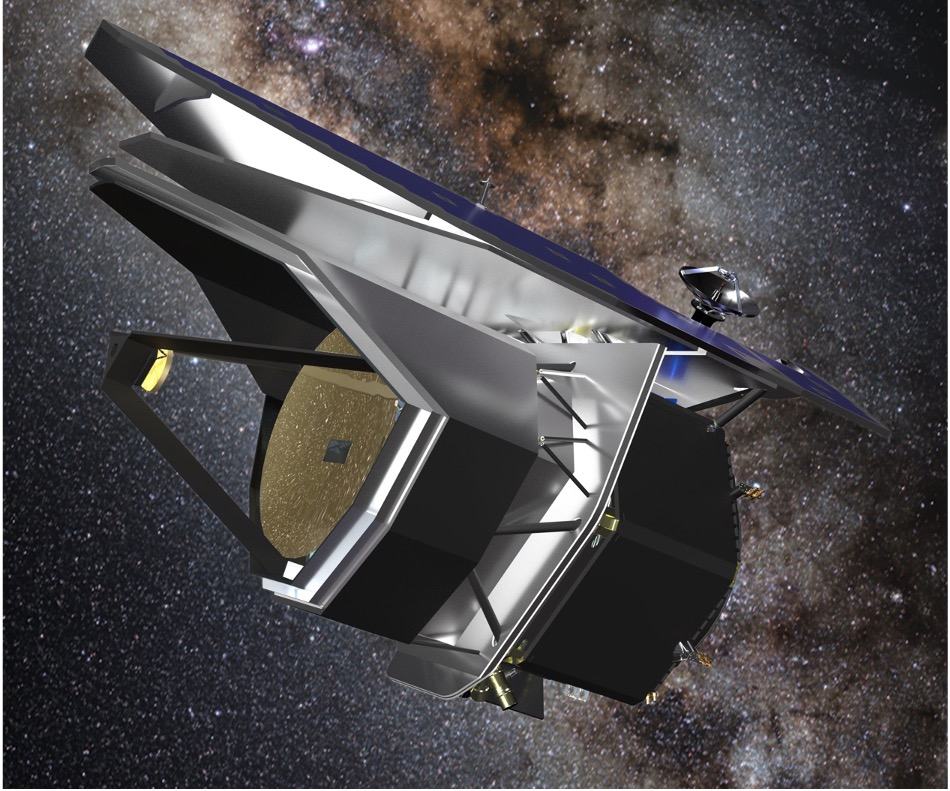
NASA has selected PRIMA—the PRobe far-Infrared Mission for Astrophysics—as the first mission in its new Probe Explorer class. That is a meaningful milestone, but it is not final approval to build or launch the observatory: PRIMA is moving into Phase B, where its preliminary design and technology are developed, and a later NASA confirmation review must still decide whether it can enter Phase C implementation. NASA’s September 23 announcement makes that boundary explicit.

Artist rendering of the planned PRIMA Observatory. Credit: NASA/JPL-Caltech. This is a concept rendering, not a photograph of a built spacecraft.
What did NASA actually select PRIMA to do?
NASA selected PRIMA to advance to Phase B: preliminary design and technology development. It is the first astrophysics mission in the new Probe Explorer class, a tier recommended by the National Academies’ 2020 astronomy decadal survey. The point is to create a mission class between smaller Explorer missions and NASA’s biggest flagships—ambitious enough to tackle major science questions, with a more bounded scope.
The next decision matters just as much as this one. NASA says PRIMA will face a confirmation review of its technical, programmatic, and cost performance before it can begin Phase C, the implementation stage. So the accurate headline is not “NASA has a new telescope in space.” It is: NASA has chosen the concept it wants to mature, then test against the realities of building it.
If confirmed, the project cost would be capped at $1.2 billion, excluding launch and other non-project costs. NASA’s target is a 2033 launch and a planned five-year mission—both are conditional on that confirmation.
Why does far-infrared light matter?
Our eyes cannot see infrared light. In space, though, infrared is where cold dust, newborn stars, and many hidden structures announce themselves. PRIMA’s planned 5.9-foot (1.8-meter) telescope would survey the sky at far-infrared wavelengths, filling a useful gap between observatories such as the James Webb Space Telescope and radio telescopes.
That wavelength gap is more than a technical footnote. Dust absorbs and scatters visible light, but it also warms up and glows in infrared. Looking in the far infrared can make the dusty raw material of stars and planets easier to trace. You do not need a telescope in your backyard to appreciate the result: it is a different way of reading the universe’s history.
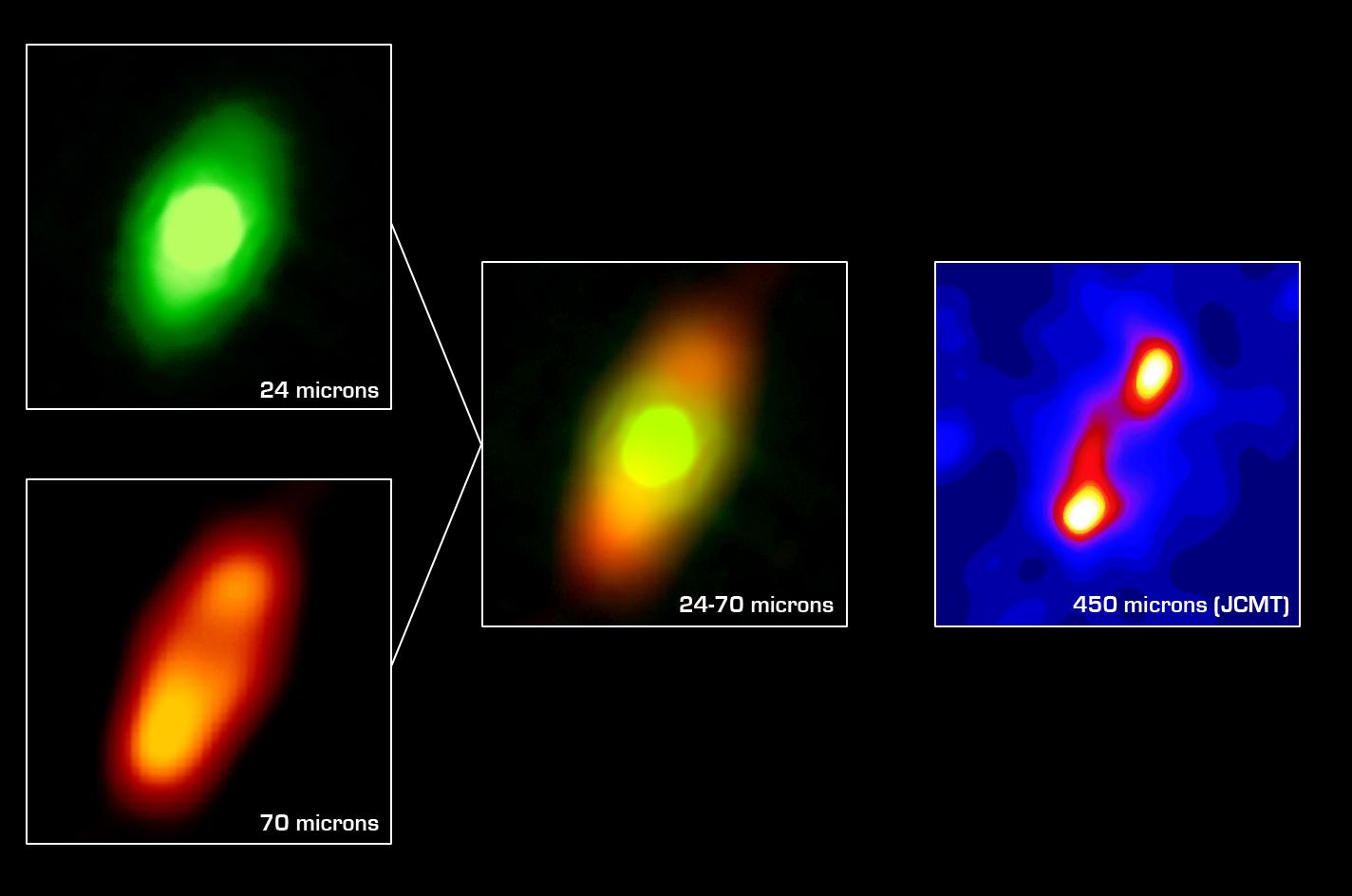
Spitzer infrared observations of Fomalhaut’s dust disk, a reminder that cold material can glow at infrared wavelengths. Credit: NASA/JPL/Caltech/Maxwell Telescope.
What could PRIMA teach us about planets and galaxies?
NASA lists four connected science goals. PRIMA would investigate how planetary systems form; how galaxies and their central black holes grow over cosmic time; how dust and heavy elements build up; and how these processes connect to the universe we see today.
Think of dust as a clue, not just cosmic clutter. In a young planetary system, it is part of the material from which worlds assemble. In galaxies, dust records star formation and can hide energetic activity from a visible-light view. Far-infrared observations help scientists follow that concealed energy.
The mission’s planned instruments include an imaging polarimeter, PRIMAger, to map broad areas of sky, and FIRESS, a high-resolution spectrometer. Caltech notes that the telescope and detectors are designed to operate hundreds of degrees below zero to reduce the telescope’s own thermal glow—an essential trick when you are trying to detect faint infrared signals.
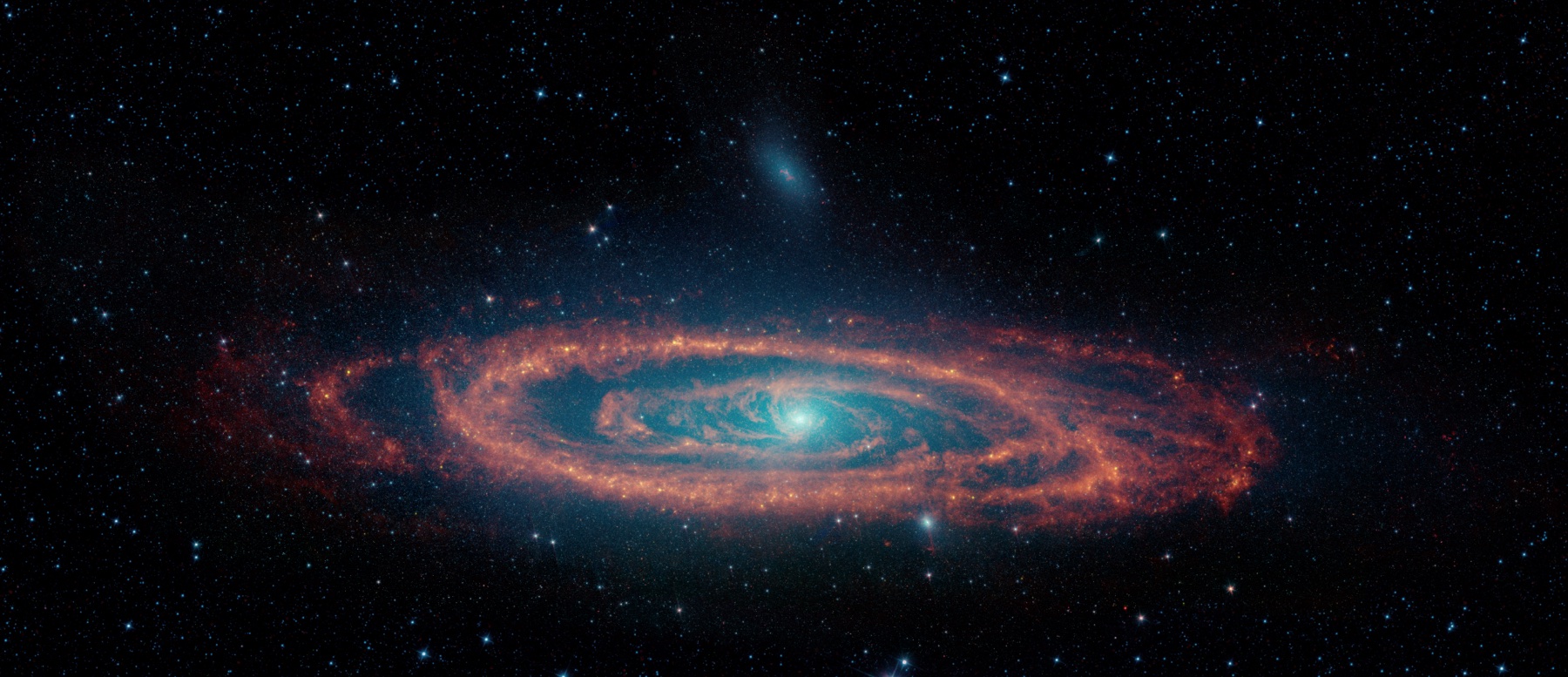
Spitzer’s infrared view of Andromeda maps stars and dust in false color; red and orange features trace dusty regions tied to star formation. Credit: NASA/JPL-Caltech.
Where will PRIMA be managed?
There is a real Southern California connection, but it is a mission-operations connection rather than an observing event. NASA’s Jet Propulsion Laboratory in Southern California will manage PRIMA. Caltech/IPAC will operate the mission science center: receiving, processing, archiving, and helping schedule the science data, according to Caltech’s announcement. NASA also names Goddard and Marshall as partners, with contributions planned from several international agencies.
For people in Austin, Houston, or Los Angeles, there is no future “look up and see PRIMA” moment to promise. The rewarding part will come later, if confirmed: public science results and images that give everyone a new lens on dusty star nurseries and evolving galaxies. Until then, the honest story is the process itself—big science begins with a concept, a design phase, and a review that can still change the outcome.
If that kind of careful cosmic detective work is your thing, join the Cosmic Match space community to trade mission news and sky questions with people who light up at the same discoveries. And for another example of how astronomers weigh evidence without jumping past it, read our explainer on the Milky Way’s first convincing microblazar candidate.
For the next step up the decision ladder, read what NASA’s UVEX KDP-C milestone changes: it shows what formal implementation commitment looks like after a mission has matured beyond Phase B.
What happens next for NASA PRIMA?
PRIMA’s team now works through Phase B. NASA will later conduct its confirmation review, weighing technical readiness, programmatic performance, and cost performance before deciding whether the mission proceeds to Phase C. Until that review happens, “selected to advance” is the precise phrase—and it is plenty exciting on its own.