Best Stargazing Spots Near Austin, TX
Best Stargazing Spots Near Austin, TX
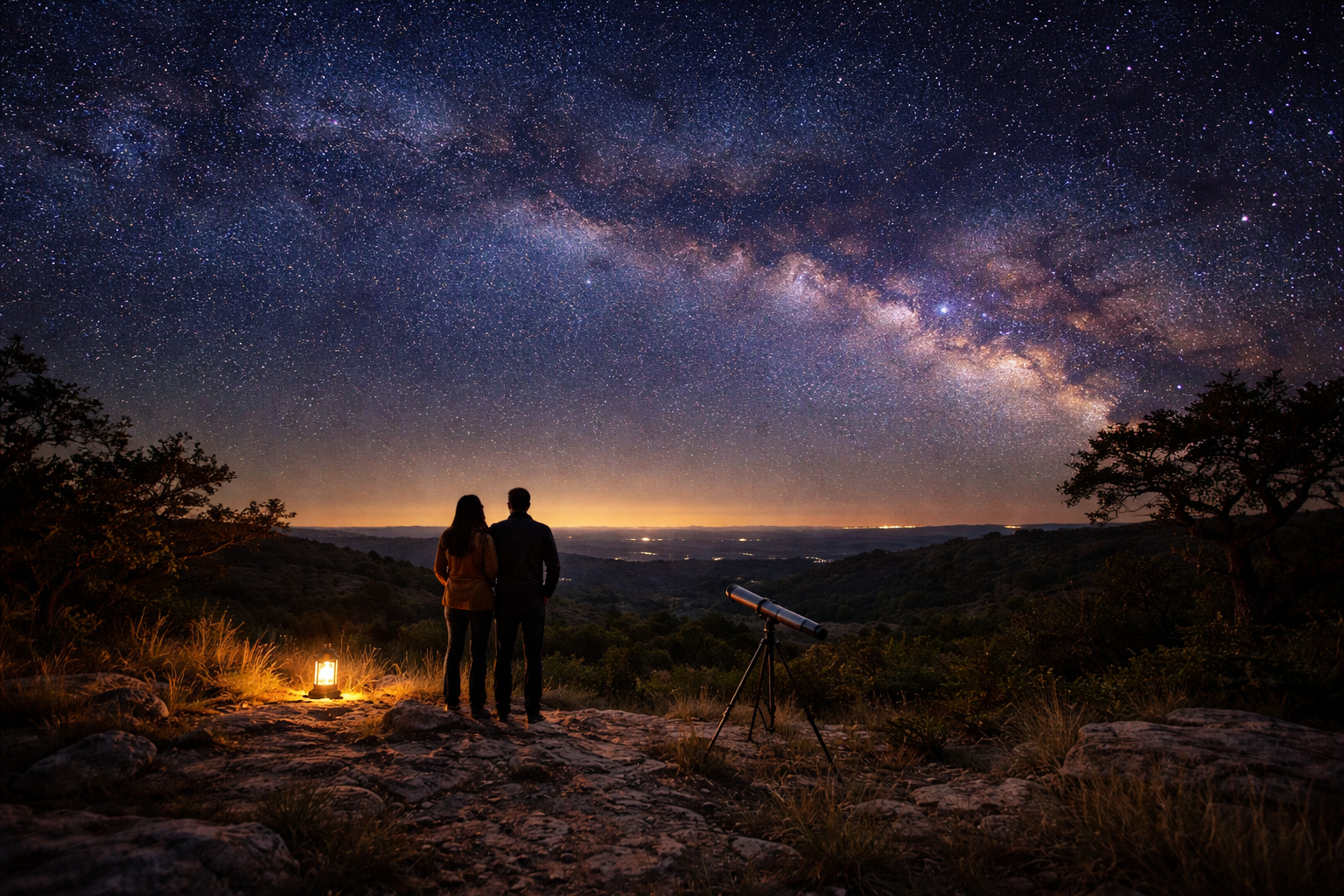
If you live in Austin and you love the stars, you already know the struggle: light pollution turns our night sky into a washed-out gray soup. But here is the good news — drive just an hour or two in any direction, and you will find some of the darkest, most jaw-dropping skies in the entire state of Texas.
Whether you are planning a solo adventure with your telescope, organizing a meetup for your astronomy club, or hoping to impress someone who geeks out over galaxies, this guide covers the best stargazing spots near Austin that are actually worth the drive.
- Enchanted Rock State Natural Area (Fredericksburg)
Distance from Austin: ~2 hours west Why it is special: Enchanted Rock sits in the heart of the Texas Hill Country, far enough from San Antonio and Austin to offer genuinely dark skies. The granite dome itself is one of Texas's most iconic landmarks — and standing on top of it under a clear winter sky, watching the Milky Way unfurl overhead, is an experience that tends to convert even casual sky-watchers into full-blown astronomy obsessives.
Bortle Class 4–5 skies are the norm here. Bring a red flashlight, dress in layers (Hill Country nights get cold even in spring), and arrive before sunset to snag a good spot on the dome.
Pro tip: Reserve your day-pass well in advance. Enchanted Rock fills up fast on weekends, especially around new moons.
- Fredericksburg & the Hill Country Star Party Scene Distance from Austin: ~1.5–2 hours west
Why it is special: The Texas Hill Country has quietly become one of the best stargazing regions in the state, and Fredericksburg is its social center of gravity. The Austin Astronomical Society and other clubs run organized star parties in the area throughout the year, often at private ranches with zero light intrusion.
If you are new to stargazing, these gatherings are a fantastic way to look through seriously impressive equipment and learn from people who have been doing this for decades. Bring your curiosity and a thermos of coffee.
- Pedernales Falls State Park Distance from Austin: ~1 hour west
Why it is special: A closer option than Enchanted Rock, Pedernales Falls offers solid dark skies and a genuinely beautiful setting along the Pedernales River. Set up on the riverbanks or in the campground away from facility lighting, and you will get a clear view of the Milky Way on a new moon night.
The park has primitive camping available, making it an easy overnight destination. Stargaze until midnight, sleep under the sky, wake up for sunrise over the river. About as close to perfect as a Texas night out gets.
- Balmorhea State Park (Far West Texas) Distance from Austin: ~5 hours west
Why it is special: Yes, this one is a road trip. But if you are willing to make the drive, Balmorhea rewards you with some of the darkest skies you will find anywhere in the lower 48. We are talking Bortle Class 2 territory — on a clear moonless night, the Milky Way casts an actual shadow.
Pair it with a visit to the McDonald Observatory in Fort Davis. Their public Star Party nights are some of the best astronomy outreach events in the country, and they let visitors look through genuinely powerful telescopes.
- Reveille Peak Ranch (Burnet) Distance from Austin: ~1 hour northwest
Why it is special: This privately-owned dark-sky preserve has become a beloved spot for Austin stargazers who want organized events without driving halfway across the state. They host regular star parties with loaner equipment available, which makes it a low-barrier entry point if you do not own a telescope yet.
The skies are legitimately dark for something this close to Austin, and the community atmosphere is warm and welcoming. For anyone looking for a fellow space enthusiast to share the experience with — say, someone you connected with on Cosmic Match — Reveille Peak Ranch is practically purpose-built for a first astronomy date. Organized, not too remote, and the sky does most of the conversational heavy lifting.
- Lake Buchanan Area (Llano County) Distance from Austin: ~1.5 hours northwest
Why it is special: The Highland Lakes region northwest of Austin offers a comfortable middle ground — dark enough to see thousands of stars, close enough to not require a full weekend commitment. The open water of Lake Buchanan adds reflective drama to sunsets, and the area is genuinely beautiful during daylight too. Several local ranches and parks along the lakeshore make good impromptu stargazing spots.
Tips for Your Austin Stargazing Trip Check the moon phase first. A full moon is gorgeous, but it washes out faint deep-sky objects. Plan around new moon nights if you want the Milky Way at its best.
Use red light only. White flashlights destroy your night vision. Red-mode headlamps (widely available on Amazon) preserve it. This is not optional — it is astronomy etiquette.
Give your eyes 20–30 minutes to dark-adapt. Resist the phone screen. The longer you spend in true darkness, the more detail your eyes will reveal.
Download a sky-charting app. SkySafari and Stellarium are both excellent. Use their red-night-vision mode to avoid killing your dark adaptation.
Dress warmer than you think you need to. Texas evenings are deceptive — it is often 15–20°F colder than the afternoon forecast once you are standing in an open field at 11 PM.
Find Your Cosmic Co-Pilot
Stargazing solo is meditative and wonderful. Stargazing with someone who matches your enthusiasm for what is up there? That is something else entirely.
If you are an Austin-area space enthusiast still searching for someone to share these skies with, Cosmic Match was built for exactly this. It is a dating app for people who get genuinely excited about dark-sky preserves, telescope optics, and the quiet fact that light from the Andromeda Galaxy left before our species existed.
The stars will be there. The right person to watch them with — that part takes a little more searching. We can help with that.
Clear skies, Austin.
Planning your next outing? Check out our guide to Astronomy Events in Austin TX 2026 — meteor showers, star parties, and everything on the sky calendar this year.
Plan the Perfect Astronomy Date
Once you have found your favorite stargazing spot near Austin, the next step is planning a memorable evening. For date ideas, romantic itineraries, and tips on what to bring, check out our guide to stargazing date ideas in Texas — from Hill Country nights to the McDonald Observatory in West Texas.
Coming up: The Lyrids meteor shower 2026 peaks April 21–22. See our complete guide to the best viewing spots in Austin and Texas.