Astronomy Events in Austin TX 2026: Your Complete Sky Calendar
Astronomy Events in Austin TX 2026: Your Complete Sky Calendar
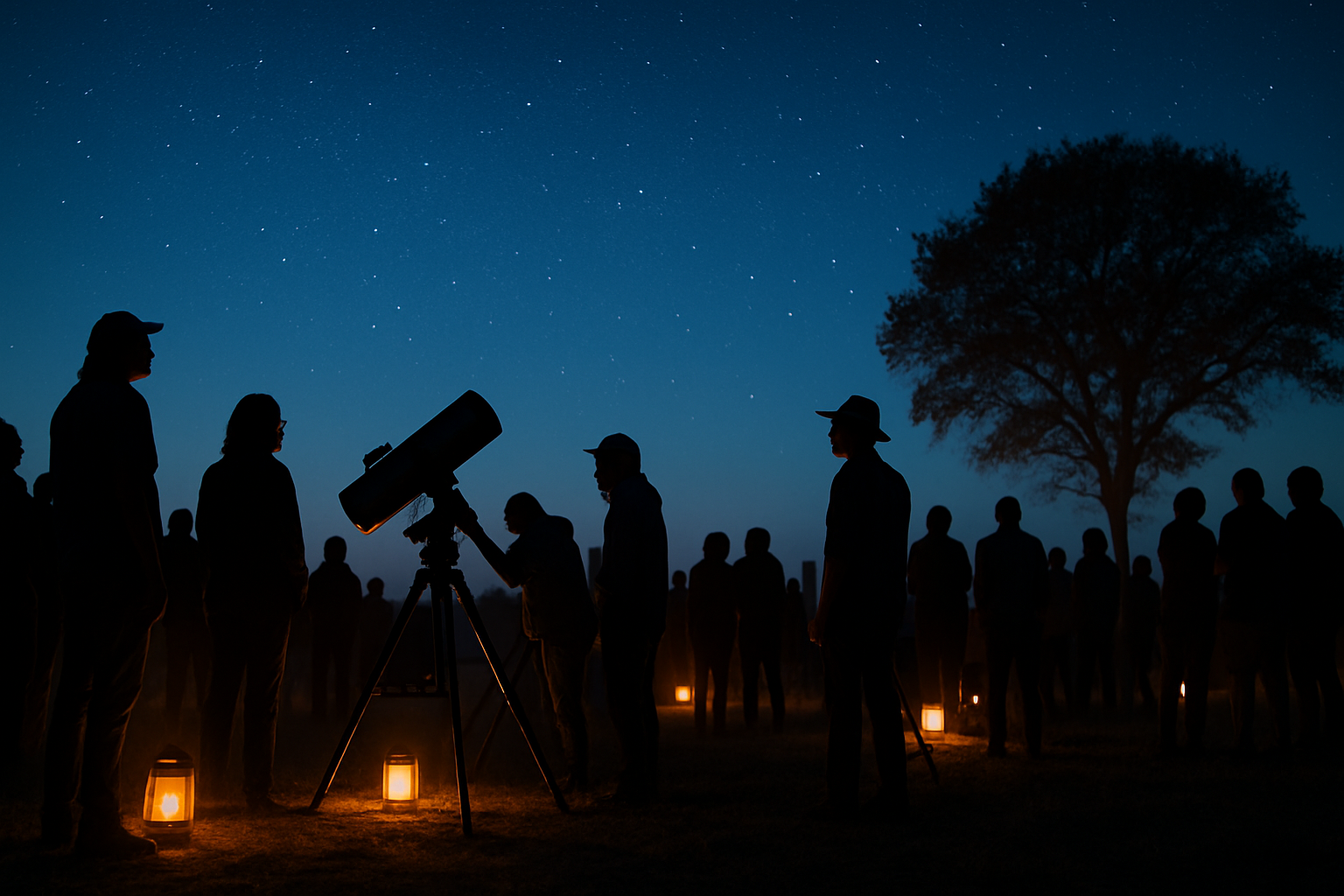
Austin has a surprisingly active astronomy community — more active than most people realize until they stumble into their first star party and spend three hours talking to strangers about eyepiece focal lengths. If you have been wanting to get more involved in the local space scene, this guide is your starting point.
Here is what is on the calendar for 2026 and where to find your people.
The Austin Astronomical Society
If there is one organization that anchors Austin's amateur astronomy community, it is the Austin Astronomical Society (AAS). Founded in 1953, the AAS hosts regular public star parties, observing nights, and monthly meetings. They are genuinely welcoming to beginners and bring out members with some serious equipment.
Their public star parties typically happen at:
- Reimers Ranch Park (Hudson Bend, west of Austin)
- McKinney Falls State Park (southeast Austin)
Meetings and event schedules are posted on their website. If you are new to Austin's astronomy scene, showing up to one of these is the single best first step.
Major Sky Events to Mark on Your 2026 Calendar
Meteor Showers
Eta Aquariid Meteor Shower — Peak: May 5–6, 2026
One of the better annual meteor showers for Southern Hemisphere observers, the Eta Aquariids are still well worth watching from Austin. The radiant rises in the pre-dawn hours, so set your alarm for 3–4 AM and head somewhere dark. At peak, expect 20–40 meteors per hour under good conditions — more if you are away from city lights.
For a local pre-dawn plan, see our Eta Aquariids 2026 Austin viewing guide with moonlight expectations and where to face before sunrise.
Perseid Meteor Shower — Peak: August 11–13, 2026
The Perseids are arguably the most beloved meteor shower of the year — summer-friendly temperatures, a high peak rate (up to 100 meteors per hour under ideal conditions), and a radiant that climbs high enough for excellent Northern Hemisphere viewing. Head to Pedernales Falls or Reveille Peak Ranch for best results.
Geminid Meteor Shower — Peak: December 13–14, 2026
The Geminids are actually the most prolific annual meteor shower in terms of raw numbers, and unlike most showers they perform well even before midnight. The catch: mid-December in the Hill Country means cold. Bundle up accordingly.
Leonid Meteor Shower — Peak: November 17–18, 2026
The Leonids vary enormously from year to year, ranging from a modest 10–15 meteors per hour to the occasional historic storm (though storms are rare). Worth watching regardless — even a modest Leonid night produces some spectacularly fast, bright meteors.
Planetary Highlights
Saturn at Opposition — 2026
Saturn opposition gives you the best views of the year — the planet is closest to Earth, fully illuminated by the sun, and rises right around sunset. Even a modest beginner telescope will show you the rings. This is one of those views that genuinely never gets old, no matter how many times you have seen it.
Jupiter Conjunctions and Oppositions
Jupiter is a reliable showstopper throughout 2026. At opposition, its cloud bands and the four Galilean moons (Io, Europa, Ganymede, Callisto) are visible through even a small telescope or good binoculars.
Venus as Evening Star
Venus dominates the western sky after sunset for a significant portion of 2026. It will be among the brightest objects in the sky — impossible to miss even in Austin's light-polluted skies.
Star Parties and Organized Events
Reveille Peak Ranch Star Parties (Monthly)
Reveille Peak Ranch in Burnet hosts regular star parties with a mix of guided tours, loaner telescopes, and open observing. Check their schedule directly — events fill up, especially in spring and fall when the weather is most cooperative.
Texas Star Party (Fort Davis — May 2026)
The Texas Star Party is one of the premier dark-sky observing events in the entire country. Held each May near McDonald Observatory in West Texas, it draws serious amateurs from across the US and beyond. If you own a telescope and have not been, consider this your sign.
AAS Monthly Meetings
The Austin Astronomical Society holds regular meetings with guest presentations, equipment swaps, and general community. These are free to attend and a great way to get oriented in the local scene.
Dark Sky Apps Worth Having
Before you head out to any Austin-area stargazing site, download at least one of these:
- SkySafari — The gold standard for serious amateurs. Telescope control, detailed charts, and offline use.
- Stellarium — Free, open-source, and excellent. The web version works anywhere.
- Clear Outside — Specialized astronomy weather forecasting. More useful than a general weather app when you need to know if there will be cloud cover at 2 AM.
- Light Pollution Map — Shows Bortle class data for anywhere you plan to drive. Essential for site scouting.
Finding Your Astronomy Community in Austin
Astronomy is one of those hobbies that genuinely brings people together. There is something about spending a night under a really dark sky — realizing how much you cannot see from the city, and how much the universe has been waiting for you just an hour down the road — that creates fast friendships.
If you are looking for fellow Austin space enthusiasts beyond the astronomy club circuit, Cosmic Match is worth a look. It is a dating app built specifically for people who are into astronomy, astrophotography, space exploration, and all the adjacent rabbit holes. The compatibility scoring is built around the things that actually matter to people in this community.
Whether you find your observing partner through the AAS or through an app, the Austin astronomy scene has room for you. Come for the Perseids. Stay for the people.
Clear skies and good seeing, Austin.
Make It a Date
Knowing what is happening in the sky is only half the equation. For ideas on how to turn a star party or meteor shower into a genuinely memorable evening, check out our guide to stargazing date ideas in Texas — with specific venue picks, what to bring, and why the Texas Hill Country is one of the best date destinations in the country.
Coming up: The Lyrids meteor shower 2026 peaks April 21–22. See our complete guide to the best viewing spots in Austin and Texas.
If you want one especially easy mid-May target, our guide to the May 18, 2026 Moon-Venus conjunction breaks down when to look and what to expect from city skies.