How to Photograph a Public Star Party Without Ruining Night Vision
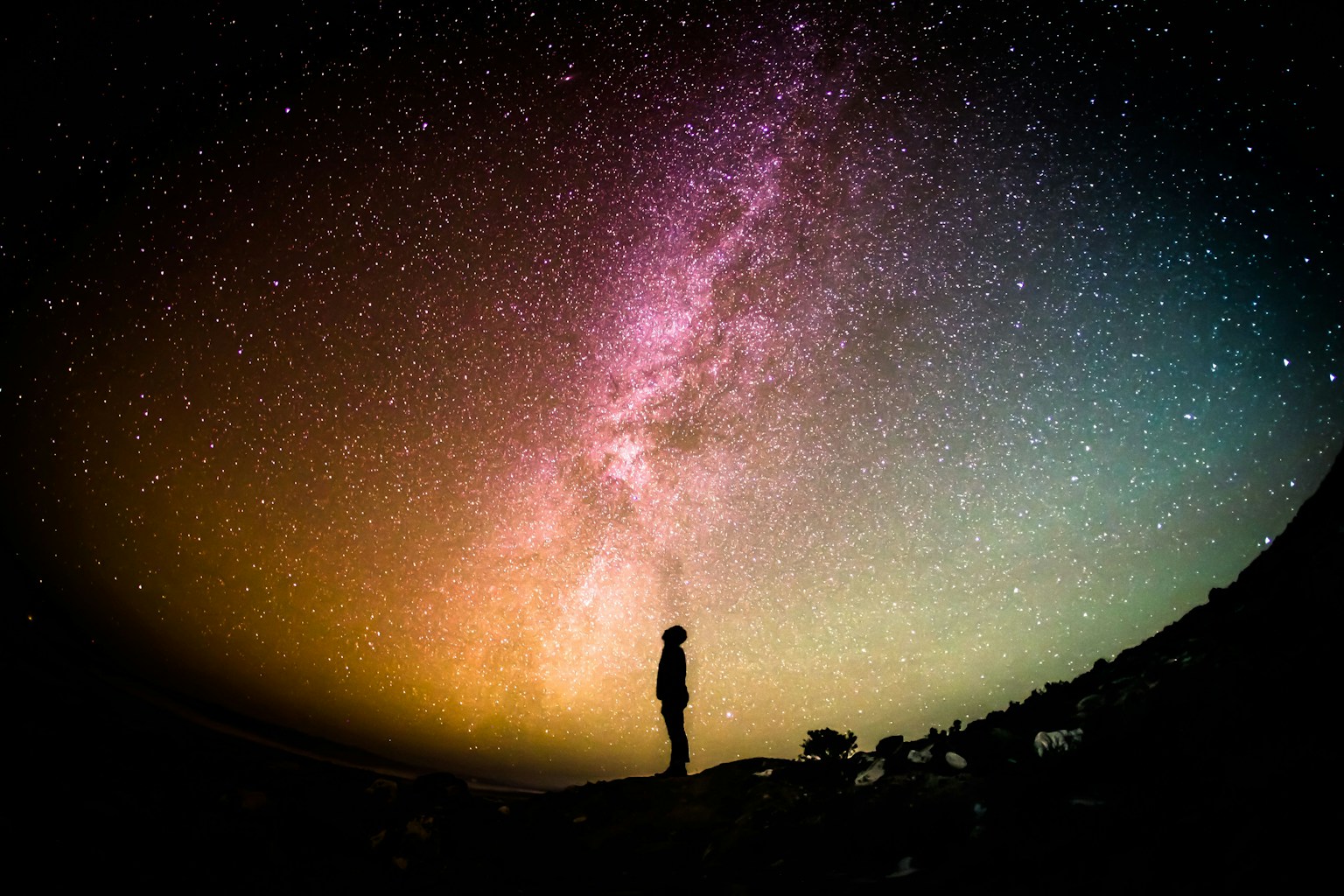
A public star party is not a photo set—and that is exactly why a good image from one feels special. If you are heading to Austin’s Sep. 25 St. Elmo’s Brewing Co. gathering or Sep. 26 Yegua Knobbs Preserve session, arrive ready to make a few quiet frames, protect everyone’s dark adaptation, and put the camera away when it gets in the way. The Austin Astronomical Society’s public-party guidance explicitly asks visitors to help keep the observing field as dark as possible and protect night-adjusted eyes.
That one principle makes the rest of the decisions easy: no flash, no surprise white screen, no tripod planted in the telescope line, and no photograph of another person without asking. You can still come home with a photo you love—and you may make a few observing friends while you learn.
What does respectful star party photography look like?
Think of the observing field as a shared low-light workspace. People may be lining up for an eyepiece, using charts, focusing a camera, or finally seeing a faint object after their eyes have adjusted. Your first job is to be easy to share the dark with.
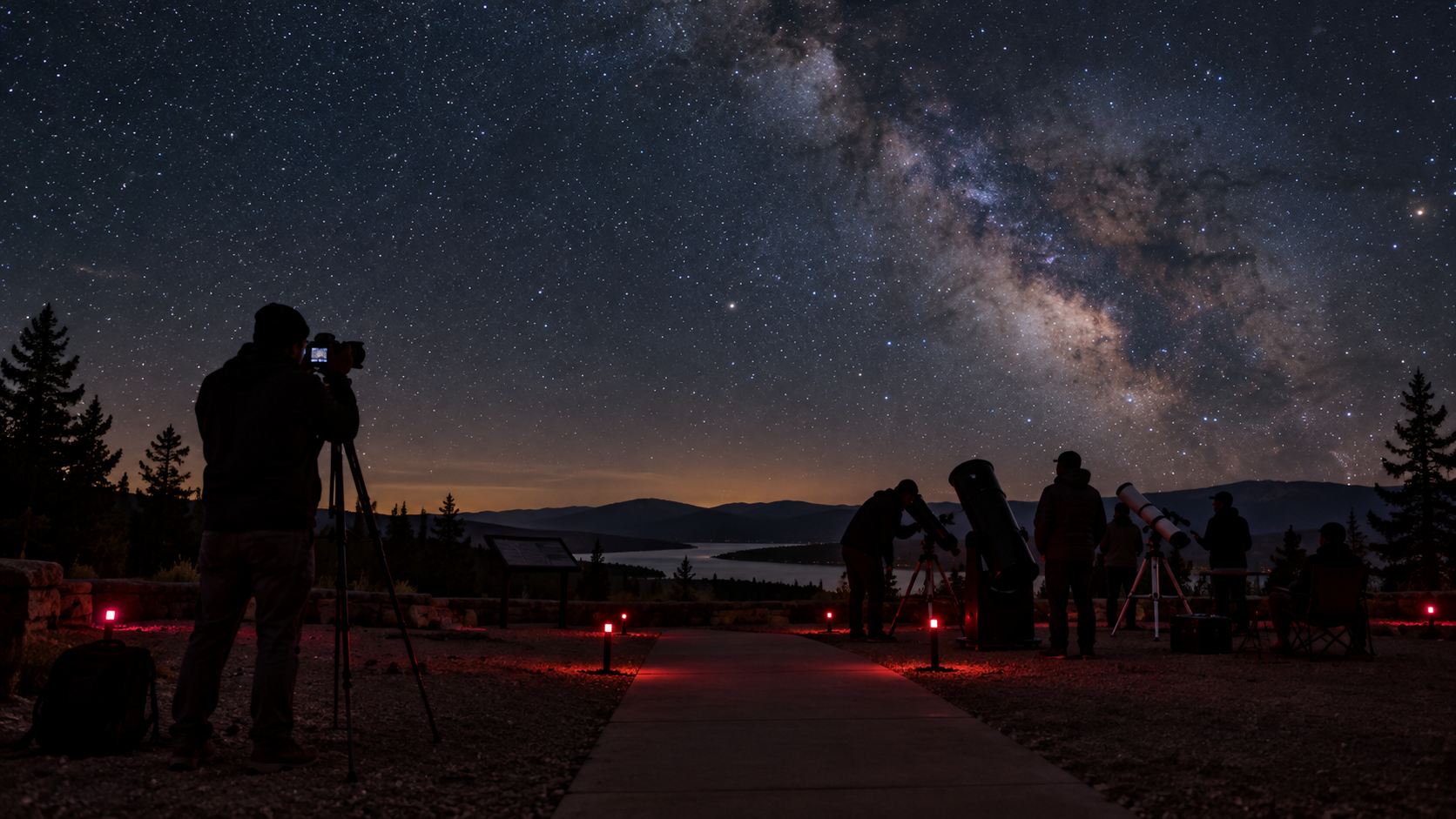
Before you set up, ask the host where photographers can stand and whether there are site-specific rules. AAS notes that public parties depend on weather and can use different venues, so the organizer’s instructions on the night always win. Keep a clear path around telescopes, avoid walking between an observer and the sky, and move slowly near cables and tripods.
For a warm-up that does not need a dark field, try phone Moon photography from Austin. For the star-party night itself, simpler and dimmer is better.
How do I set up a red screen without lighting up the field?
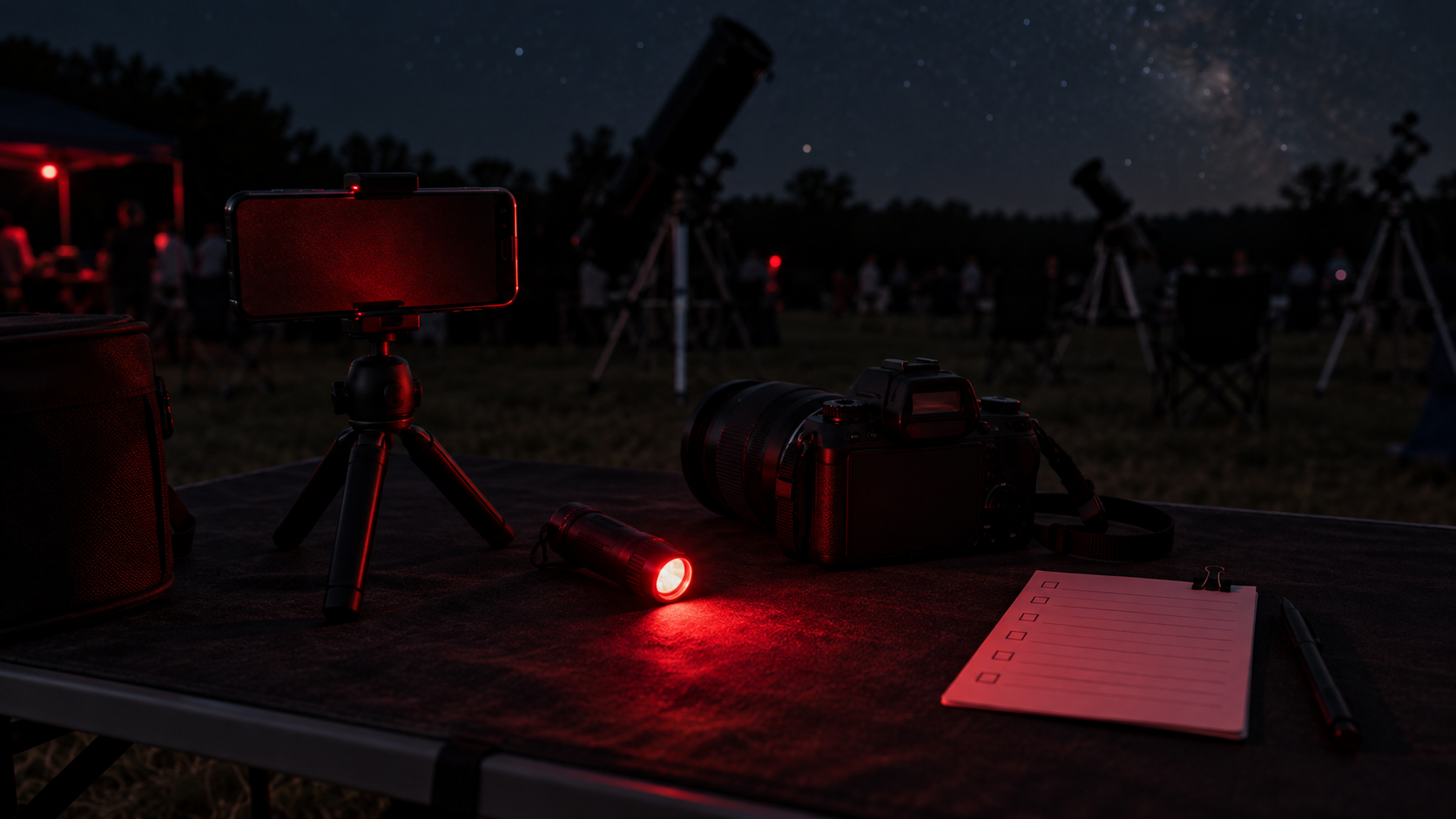
Do the bright-screen work before you arrive: download maps, choose a camera preset, and save any star chart you need. At the site, turn screen brightness all the way down, use a red display mode if your device offers it, and keep the screen pointed toward your body or the ground. A physical red filter over a flashlight is useful, but it is not permission to sweep light across faces, telescopes, or the horizon.
A practical setup is small: a charged phone, a dim red light, a camera on a stable tripod, and a way to make adjustments without repeatedly opening a bright menu. Turn off every flash option—including autofocus-assist lamps and the camera’s review image if it is glaring. If a setting requires a bright screen or a long troubleshooting session, step well away from the observing line.
Should I use flash at a public star party?
No. Do not use flash for people, equipment, “behind the scenes” frames, or a quick selfie. It can instantly disrupt the dark adaptation that the group has spent time building. If you need an image of a person or telescope, ask first and plan it before darkness, at the end of the event, or in a designated area where the host says it is fine.
This is also why car headlights, bright headlamps, and tablet screens deserve the same caution. AAS directs visitors toward etiquette that protects eyes and the dark observing field; following the spirit of that request matters more than finding a technical loophole.
What camera settings work without constant screen-checking?
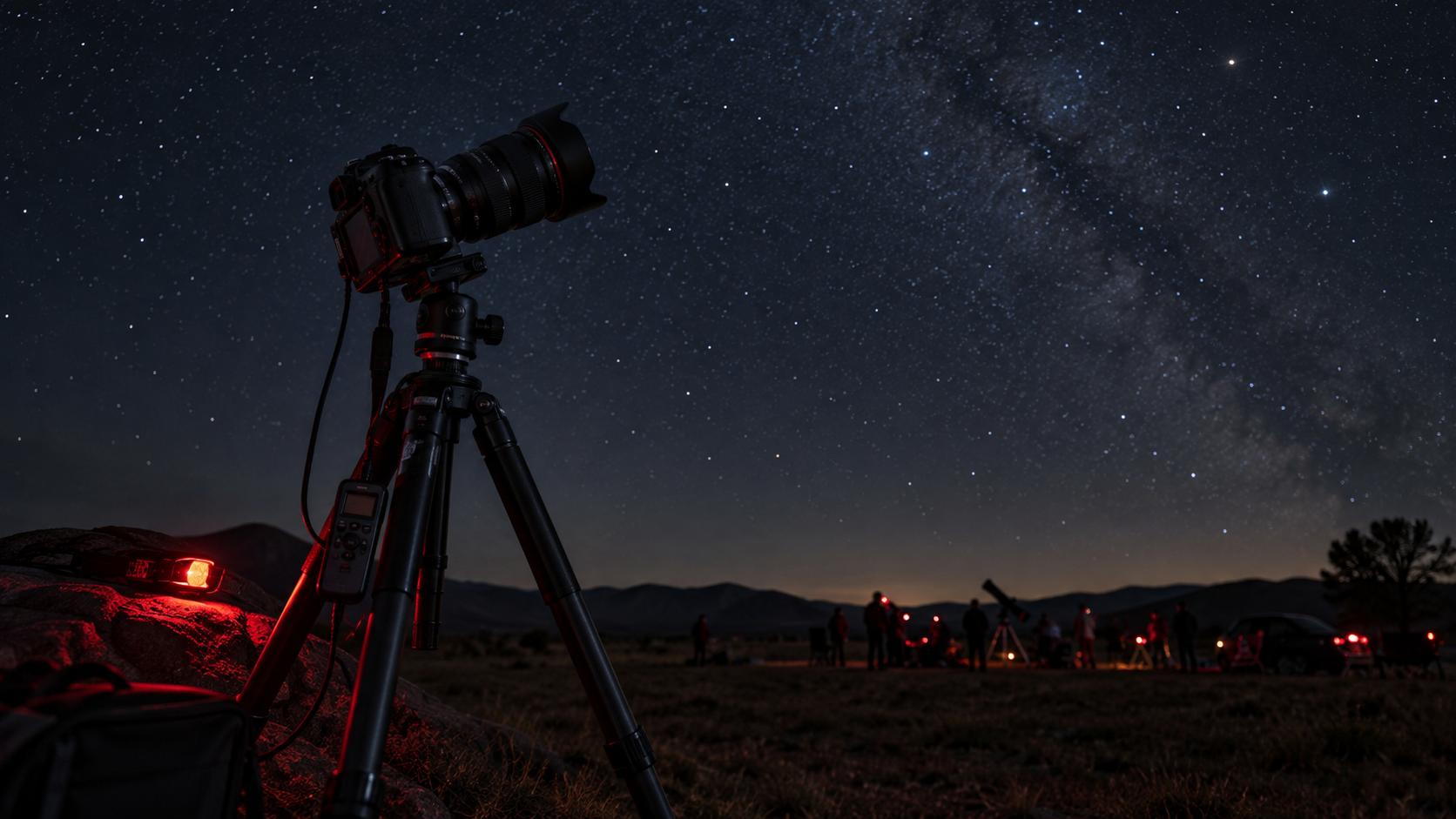
There is no universal exposure for every sky and lens, but a conservative starting approach is better than chasing a perfect histogram all night. Use a tripod, manual focus set and confirmed before the field gets busy, a short self-timer or remote release, and a sequence of test exposures made away from people. For a wide, fixed-tripod night-sky frame, start modestly and adjust in small increments rather than leaving your screen glowing for minutes.
If the group is actively observing through telescopes, frame the wider scene from outside the line rather than trying to photograph through someone’s eyepiece. If your project needs tracking, polar alignment, a laptop, or repeated light checks, arrive early and ask the host for a suitable spot. Our beginner planisphere guide for Austin, Houston, and LA is a useful low-screen alternative for getting oriented before a night out.
When should I ask before photographing people?
Nearly always. A public event does not make every attendee a background prop. Ask before you make a recognizable portrait, photograph someone’s child, include a distinctive telescope setup, or share a frame that identifies where another person is observing. A simple “Would you be okay in this wide shot?” is enough. Accept no gracefully, and do not post a candid image later just because it came out well.
Wide silhouettes, hands adjusting a non-identifying piece of gear, and sky-first compositions can often tell the story without putting anyone on the spot. If a host says no photography in an area or asks you to stop, stop immediately. The best community photos come from trust, not from getting the shot at any cost.
When is it better to put the camera away?
Put it away when it changes the experience for someone else: during a host’s talk, near a queue at an eyepiece, when your troubleshooting is generating light, or when the group has asked for a darker field. Put it away when you have spent the last half hour managing menus instead of looking up. Public star parties are a rare chance to see the sky alongside people who are delighted to explain what is overhead.
A small camera break can be the best part of the night. Ask what is in the telescope. Listen for the story behind the object. If you enjoy nights like that, join the Cosmic Match astronomy community to meet local people who would happily compare first frames, share a skywatching plan, or simply stand outside for one more look. And if you want another welcoming Austin observing option, see our Painter Hall Telescope Nights first-timer guide.
A 60-second etiquette check before you press the shutter
- Flash off? Check the camera flash, phone flash, focus-assist light, and headlamp.
- Screen dim and red? Turn it down before you enter the field.
- Out of the telescope line? Leave room for observers, cables, and hosts.
- People comfortable with the frame? Ask before recognizable photos.
- Can this wait? If the field is active or your setup needs bright troubleshooting, wait or step away.
The goal is not to be invisible. It is to be a considerate part of the group—the person whose camera habit makes the shared sky better, not harder.
FAQ
Can I use a red flashlight at a public star party?
Usually, a dim red light pointed at the ground is the considerate choice, but follow the host’s rules at that specific event. Do not shine any light toward faces, telescopes, or the sky.
Can I photograph telescopes at a public star party?
Ask the owner or host first, especially if the telescope or its setup is distinctive. Photograph only from a safe distance and do not block an observing line or touch equipment.
What should I do if my camera needs a bright screen to change settings?
Walk away from the active observing area, make the adjustment with the screen shielded, then return only when you are ready. Better yet, save your settings before the event.
Are Austin Astronomical Society public star parties held in all weather?
No. AAS says its events are weather-dependent; cloudy nights may have an alternative program and rain usually leads to cancellation. Check the official event information before leaving.
Sources
- Austin Astronomical Society: public star parties and 2026 schedule
- Austin Astronomical Society: Star Party Etiquette
Cover photo: Unsplash.