Stargazing Chairs for Beginners: What Matters Before You Buy
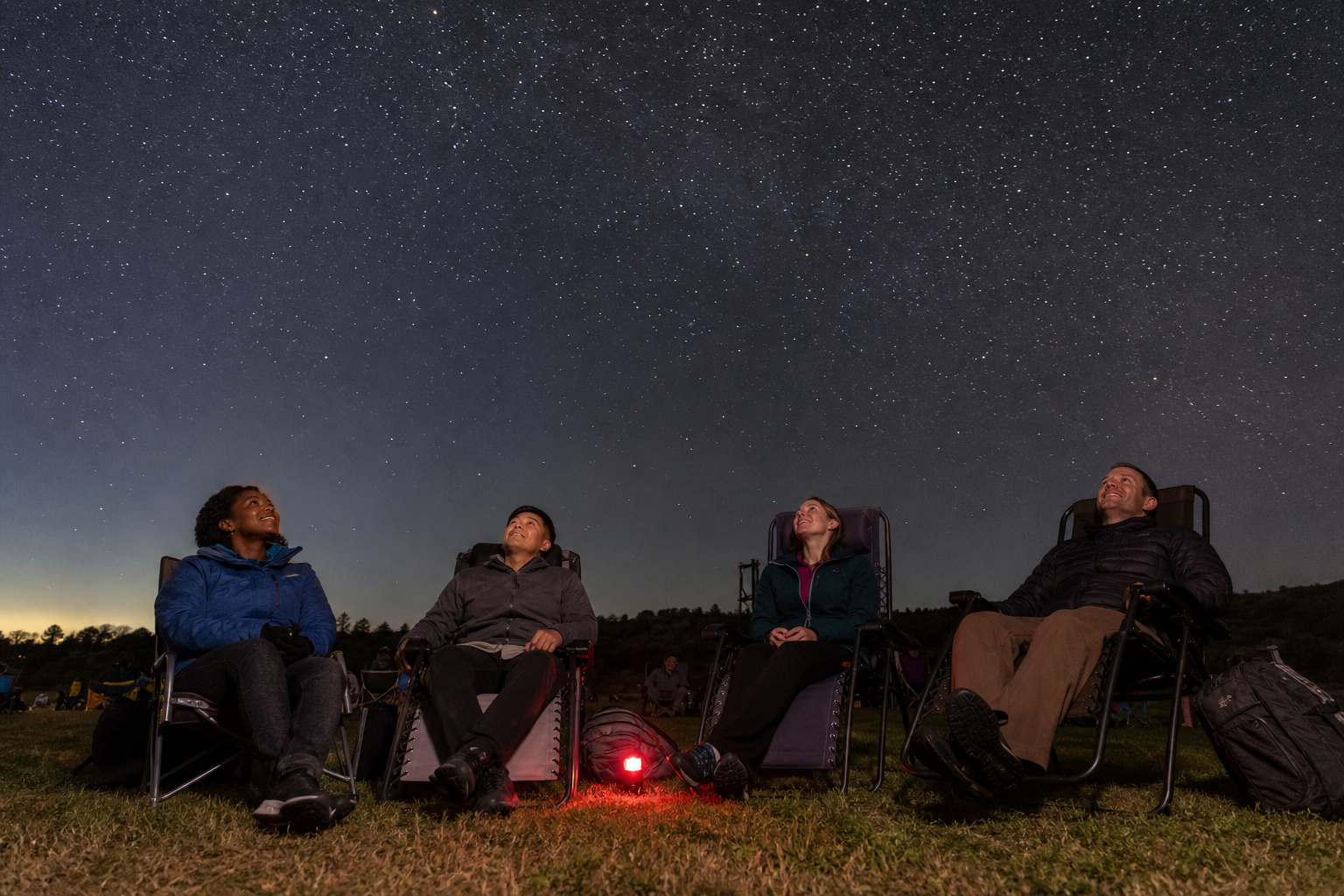
A good beginner stargazing chair is the one that lets you look up for 30 to 60 minutes without turning the night into a neck-and-back negotiation. Before you compare brands, decide where you observe, how far you carry your gear, and whether you need a mostly upright seat for binoculars or a deep recline for meteor showers. The best chair for stargazing beginners is usually a stable, portable chair with enough recline and head support for the way you actually watch the sky.
This is a buying framework, not a product ranking. No affiliate links, no mystery “best overall” winner. Bring this checklist to a store, borrow a friend’s chair at a star party, or use it to decide whether your current camp chair only needs a small upgrade.

What kind of chair works best for stargazing?
For long naked-eye viewing, a reclining chair or zero-gravity-style chair is often the most comfortable shape because it supports your body while you look high overhead. A standard folding camp chair is easier to carry and works well for conversations, quick constellation checks, or a public event where you will stand up often. A low lounge chair can be pleasant for a meteor shower, but it can be difficult to get out of on uneven ground.
There is no universally superior type. Start with the observing pattern:
- Meteor showers and wide-sky watching: prioritize a smooth recline and head or neck support.
- Binocular astronomy: choose a stable chair that holds a comfortable semi-reclined position and lets your feet feel planted.
- Public star parties: prioritize portability, a reliable lock, and a seat height that makes standing up simple.
- Balcony or patio viewing: measure first. A wide recline may need more room than you expect.
The most important test is simple: sit in the chair, look up at an imaginary point high above you, and stay there for a few minutes. If your neck immediately starts doing all the work, that chair is asking too much of you.
How much recline and neck support do you need?
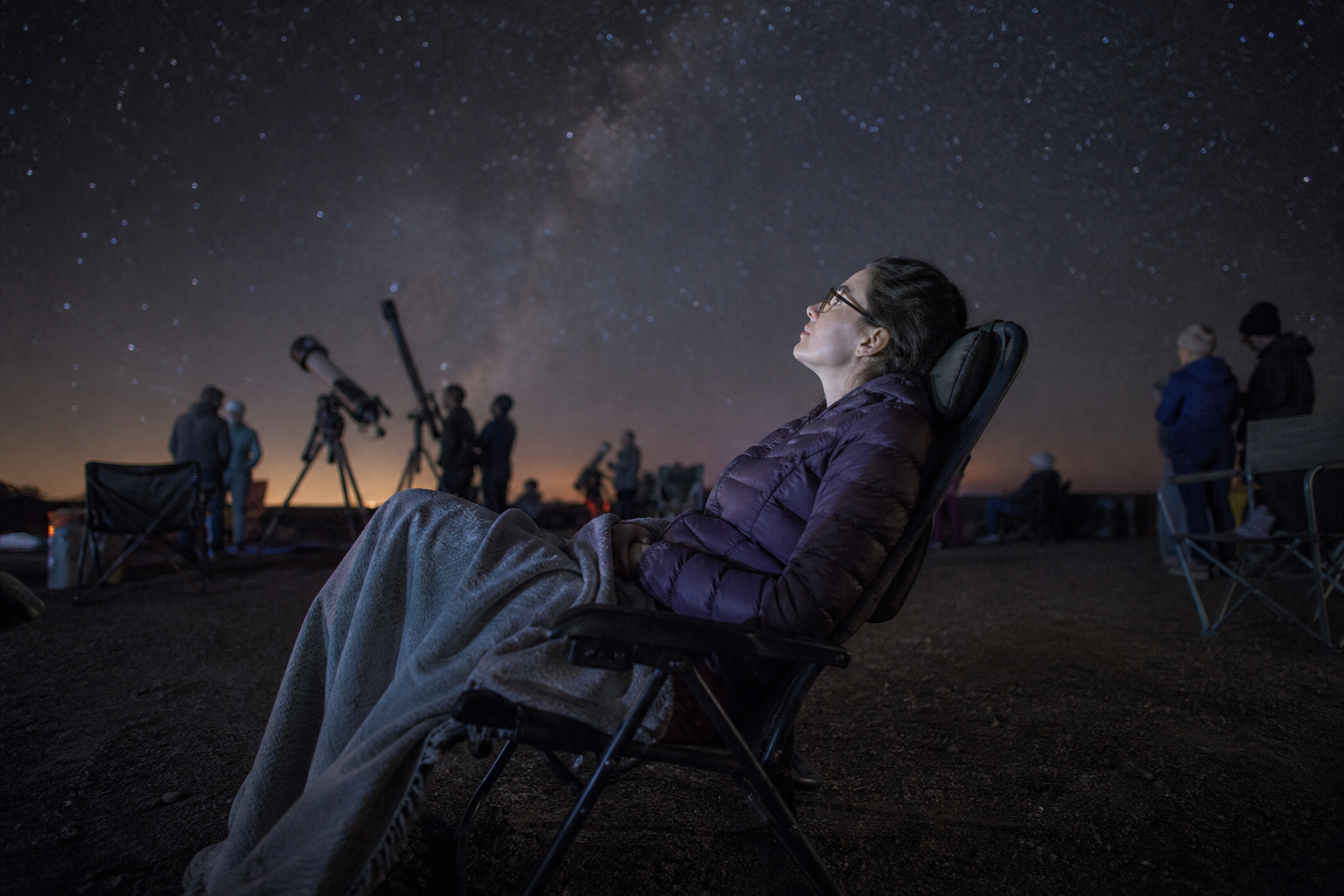
More recline is helpful when the event is happening overhead, but the deepest possible recline is not automatically better. You still need to get in and out safely, adjust a blanket, and talk with people beside you. Look for a position that shifts your gaze upward without forcing your chin toward your chest.
Head support matters especially if you have had neck stiffness after looking up. Some chairs include an adjustable pillow; others leave space to add a small travel pillow or rolled towel. Test the support with your usual jacket on. A high collar, hood, or puffy layer changes where your head rests.
What makes a stargazing chair stable outdoors?
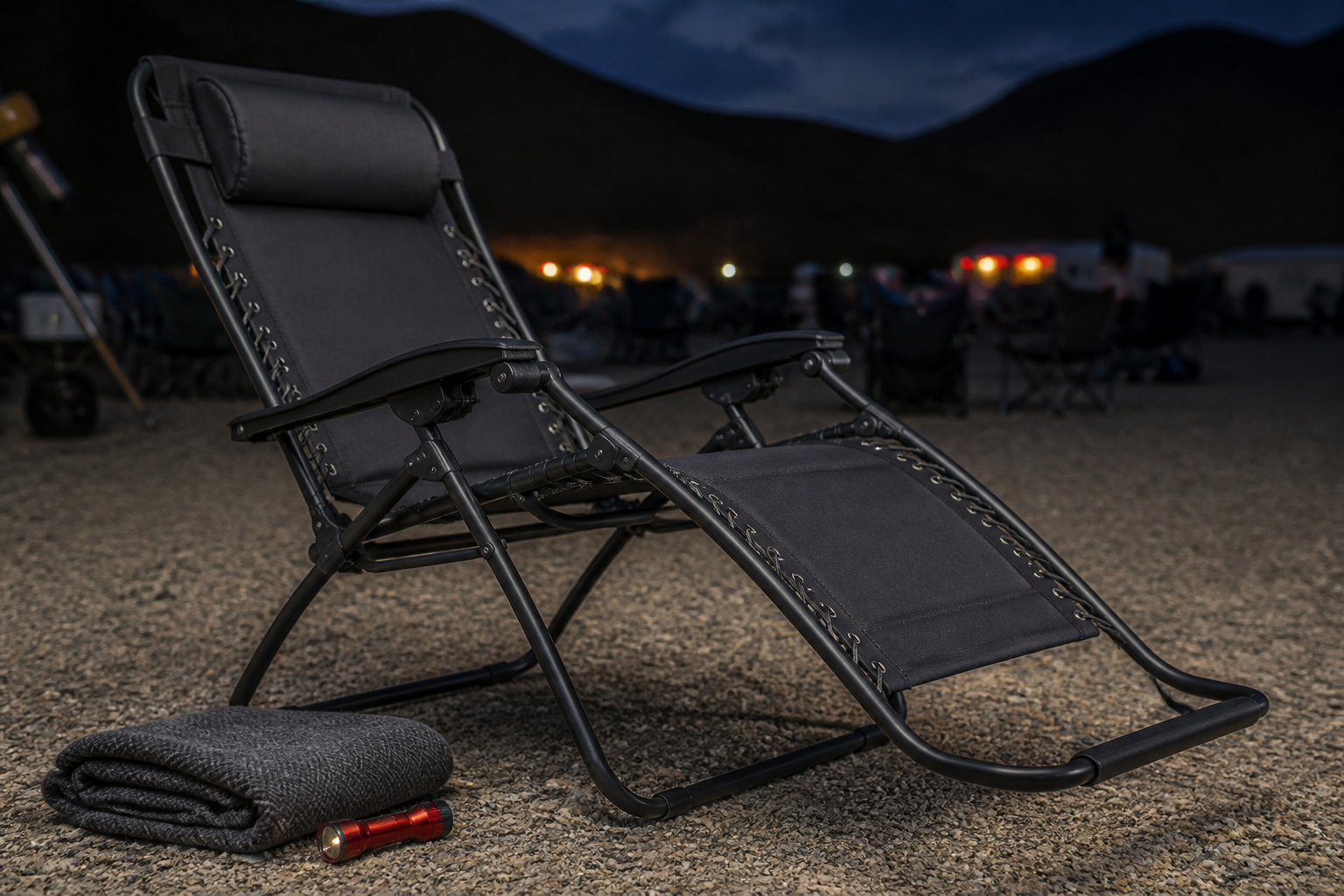
A chair can feel solid on a smooth store floor and wobble on grass, gravel, or packed dirt. Before buying, inspect the footprint: wider contact points and a frame that does not twist when you shift your weight are more useful than a long feature list. If you observe on soft ground, narrow feet can sink or tilt. A simple ground mat or furniture pads may help, but they do not turn an unstable chair into a safe one.
Try the chair’s lock or recline mechanism several times. You should understand it without looking, in low light, and it should not suddenly release when you lean back. Check the stated weight capacity and use it as a limit, not a target. If a chair has moving parts, bring it home, open and close it in daylight, and practice once before taking it to a dark site.
For an easy first outing that does not require equipment, use a chair with our Perseids no-telescope city night plan. The chair is there to keep you outside long enough to notice the sky, not to make the setup complicated.
Portability is part of comfort
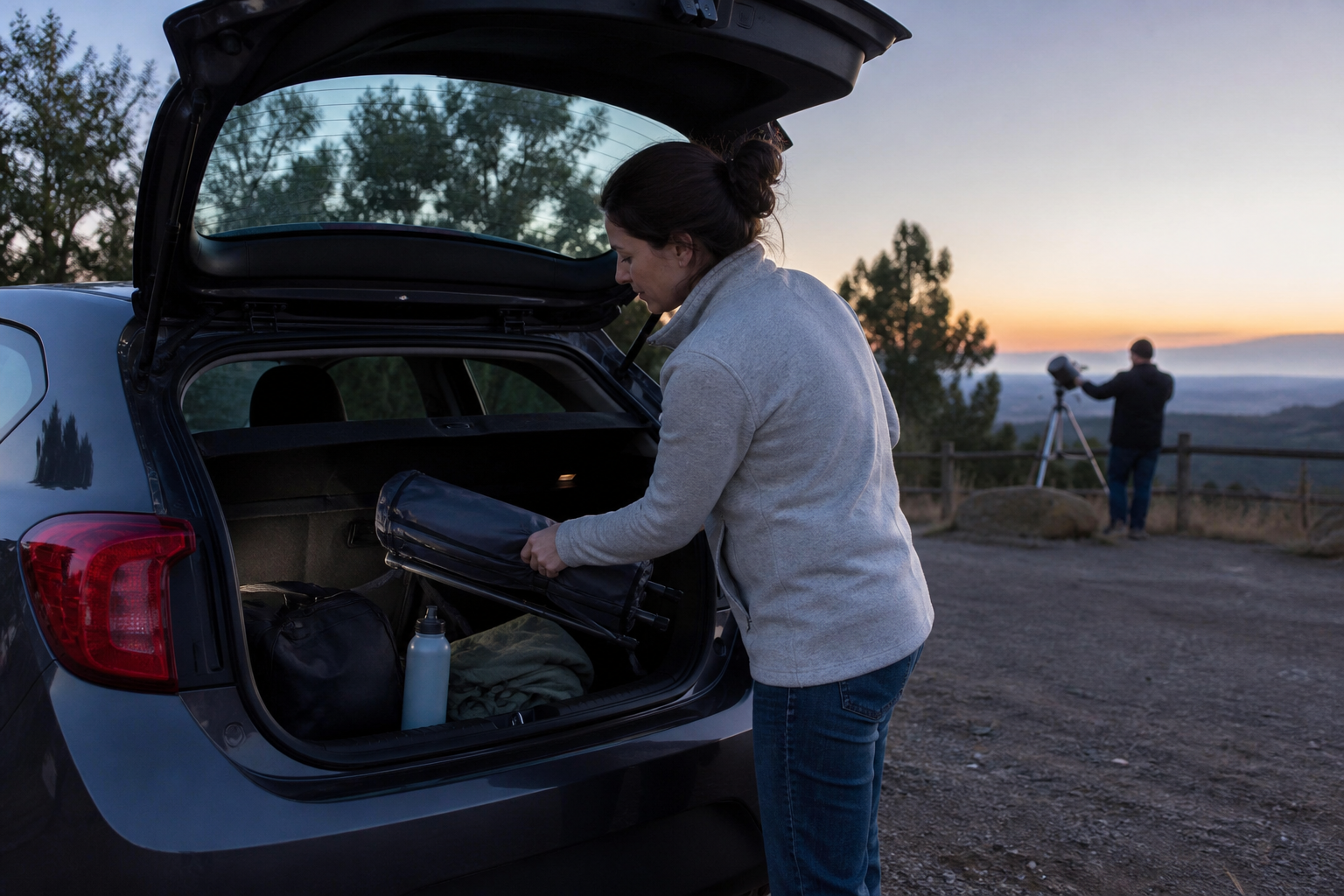
The chair you leave in the garage is not the right chair for your routine. Think through the full trip: stairs, a city apartment elevator, a walk from parking, muddy grass after rain, and the trunk space left after water, layers, and a shared snack. A carrying strap or bag can be genuinely useful, but only if the folded chair is a weight you are comfortable managing.
Compact folding chairs usually win on transport. Recliners often win on long-session comfort. A middle-ground option can work well if you attend occasional star parties and also want a chair for a balcony or outdoor movie. There is no award for buying the largest chair you can fit in a car.
Do you need accessories with a stargazing chair?
Only add what solves a real problem. A light blanket makes the temperature drop easier to handle. A small lumbar cushion can help if a chair’s curve does not suit you. A red flashlight is useful for walking safely without blasting everyone’s night vision. A drink pocket is convenient, but keep it secondary to stability and posture.
Avoid accessories that complicate the recline path or create tripping hazards in the dark. Set your bag and water where you can reach them from the seat, then keep the space around your feet clear. At a community event, use low light and ask before setting up close to someone else’s view.
A five-minute store or borrow-before-you-buy checklist
- Sit down and stand up twice without using a table or another person for leverage.
- Lean back and look high overhead for several minutes.
- Shift your hips and shoulders. The frame should not feel unstable or pinch.
- Operate every lock and fold point yourself.
- Picture carrying it from your car to your typical observing spot.
- Ask whether you can replace worn fabric, elastic cords, or feet if the chair is designed for it.
If you cannot test in person, check the folded dimensions, chair weight, stated capacity, recline description, return policy, and owner manual before ordering. Skip reviews that only say a chair is “comfortable”; look for details about ground conditions, height, recline behavior, and long sessions.
A chair is also an easy way to make observing social without making it complicated. Bring an extra seat to a local astronomy event, or join free at Cosmic Match to meet people who want to trade sky notes, snacks, and the occasional “did you see that?” moment. Once you are comfortable outside, the next step can stay simple too: our smartphone star-focus guide starts with a stable setup rather than expensive gear.
FAQ
Is a zero-gravity chair good for stargazing?
It can be excellent for long naked-eye sessions because it lets you recline while supporting your back and head. Test the lock, the stability on your usual ground, and whether you can get out of it comfortably.
Can I use a regular camp chair for astronomy?
Yes. A regular camp chair is often the best portable option for casual skywatching or a public star party. Add a small pillow or take more standing breaks if looking high overhead strains your neck.
What should I bring with a stargazing chair?
Bring a light layer or blanket, water, and a dim red flashlight for safe movement. Keep the area around the chair clear, especially on uneven ground.
Is a low chair better for meteor showers?
A low lounge chair can make it easier to watch a broad patch of sky, but only if you can safely get in and out of it. On uneven or damp ground, a taller stable chair may be the better choice.