Dark-Sky Photography Spots Near Austin: A Permission-First Field Guide
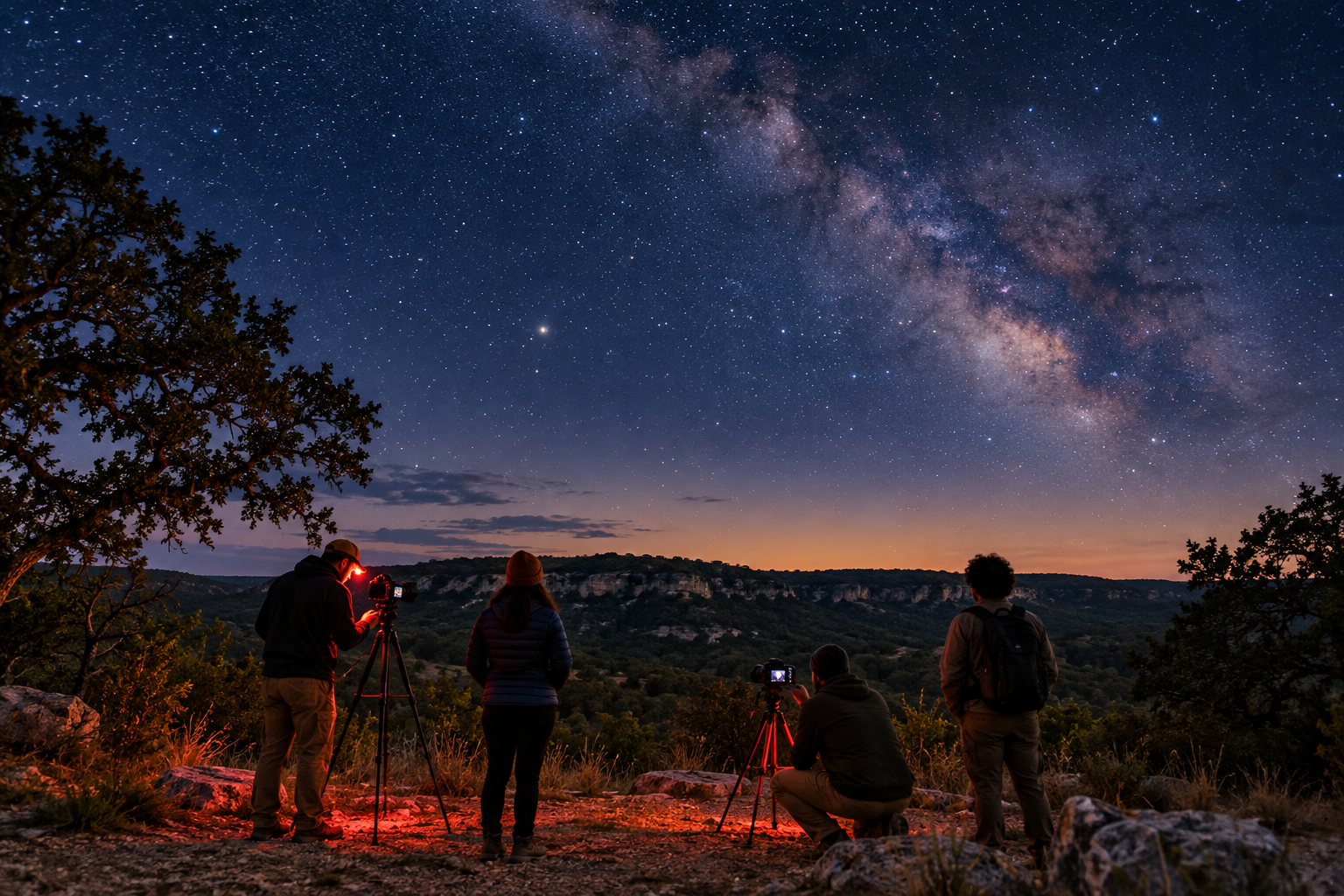
Austin photographers do not need to drive to West Texas for a useful dark-sky session—but they do need a legal plan for the night. Start with a public campground or an after-dark program, check the park’s current hours and alerts, and use a light-pollution map before you load the car. For an overnight trip, Colorado Bend State Park and Pedernales Falls State Park are practical starting points; Enchanted Rock is a strong option on ordinary dates but is closed to general visitors October 12–16, 2026 for permitted hunting.
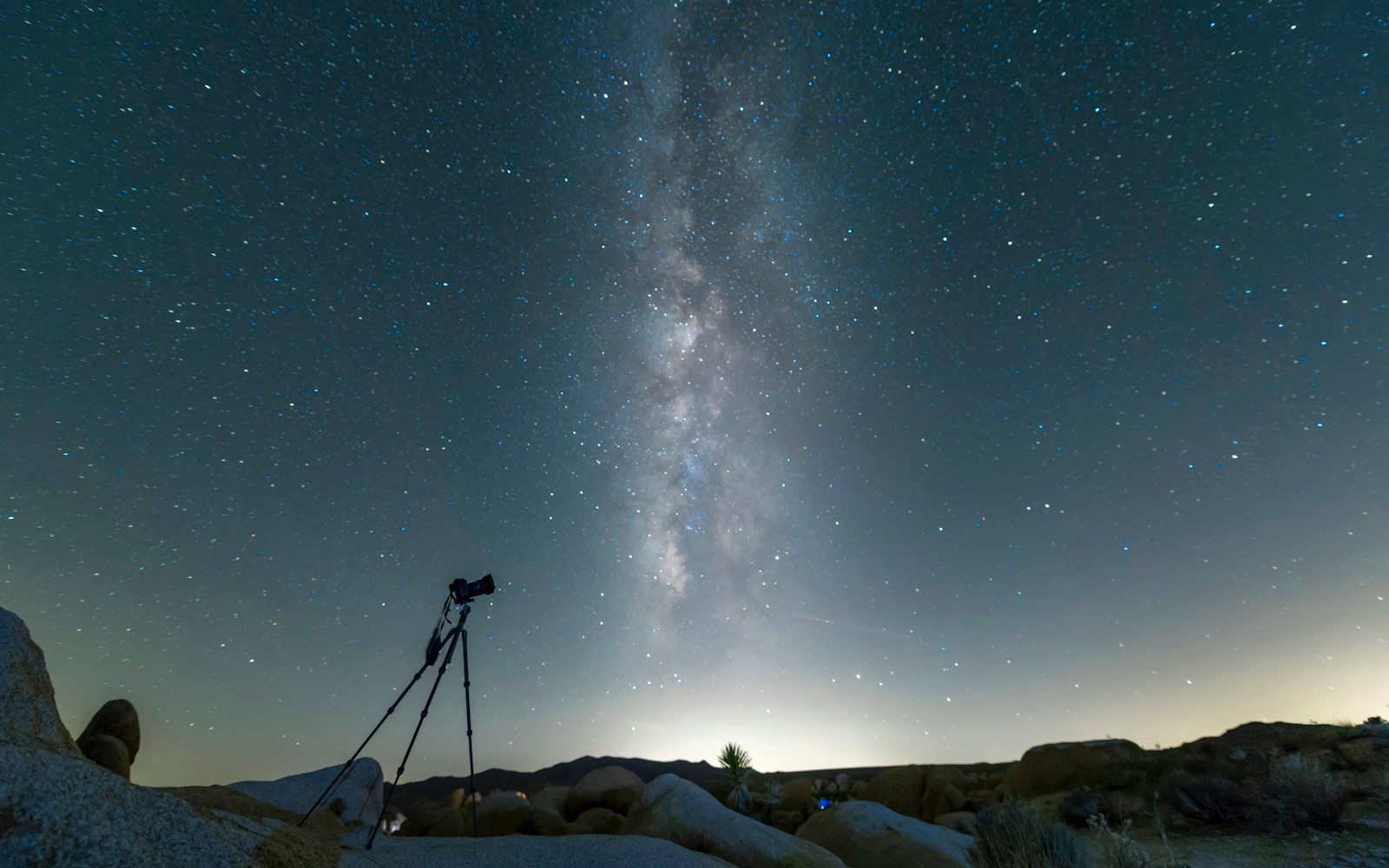
What makes a dark-sky photo spot practical near Austin?
A “dark” pin on a map is only the first filter. A workable location has an open view of the part of the sky you want, legal after-dark access, a safe place to park and walk, and a realistic route home or reserved campsite. The National Park Service’s night-sky maps are a useful starting point for judging skyglow; use them to compare a location, then confirm the rules on the land manager’s page.
For wide Milky Way landscapes, favor a low, unobstructed southern or southeastern horizon in season. For constellations, meteors, and stacked nightscapes, a modestly darker site with a clean horizon and solid foreground may beat a longer drive to a crowded overlook. Keep car headlights, white flashlights, and casual phone use out of the frame—and out of your neighbors’ night vision.
Before a first outing, practice your focus and exposure routine with our smartphone stars setup. If your subject is the Moon rather than faint deep sky, the city can work beautifully; see how to photograph the Moon with a phone from Austin.
1. Colorado Bend State Park: the best overnight-first choice
Drive from central Austin: about 2 hours northwest, depending on your route. Why it helps: Texas Parks & Wildlife describes Colorado Bend as a rugged park with 35 miles of trails and drive-up, walk-in, and primitive hike-in camping. The park is open daily 6 a.m.–10 p.m.; day users should not interpret those hours as permission to set up on a trail after closing. Reserve a campsite when you need the full night.
The appeal here is space: a more remote Hill Country setting, a river-and-limestone foreground, and fewer nearby city lights than Austin. The tradeoff is logistics. The entrance road can flood in heavy rain, the terrain is rocky, and the official page says capacity can be reached—reserve day use and camping ahead. Set up at your permitted campsite or other explicitly authorized area, not on a trail or road shoulder. Read current conditions on the Colorado Bend State Park page before leaving.
2. Pedernales Falls State Park: a close-in practice night—if you camp
Drive from central Austin: roughly 45–60 minutes west. Why it helps: it is close enough for a low-friction test of your tripod, composition, and red-light workflow, with Hill Country texture along the river. But it is not an open-ended nighttime day-use site. Park gates close 10 p.m.–8 a.m.; campers arriving after 10 p.m. need to call the park before 4:30 p.m. for the gate code.
Book a site if you want to photograph after dark, and stay out of closed areas and the river/falls zone. The park warns that water can rise quickly and flash flooding is common. With a bright Moon or a light-pollution glow toward Austin, make a foreground-first image: limestone, a live oak silhouette, or a modest star trail can be a more honest goal than a high-contrast Milky Way portrait. Current access, fees, and alerts are on Pedernales Falls State Park’s official page.
3. Enchanted Rock: excellent on normal nights, not a shortcut around closures
Drive from central Austin: about 1 hour 45 minutes to 2 hours. Why it helps: Enchanted Rock is an International Dark Sky Park, and the official trail guidance identifies Bortle 3 skies at the Scenic Overlook. The Loop Trail is the exception to the park’s typical sunset trail closure and may be open for hiking until 10 p.m.; all other trail access has its own limits. Reserve early—weekends, school breaks, and holidays can require advance reservations, and the park can fill.
For this scheduled release, one date-specific warning matters: the park’s alert page lists a closure to general visitors from 12:30 p.m. October 12 until 1:30 p.m. October 16, 2026 for permitted hunting. Do not drive out assuming a dark-sky designation overrides an access closure. On normal dates, check the Enchanted Rock park page, its trail rules, and alerts immediately before departure.
4. Reimers Ranch: a useful nearby observatory evening, not a midnight landscape site
Drive from central Austin: about 45–60 minutes west. Reimers Ranch has an astronomical observatory and is a great option for an organized program or an early-evening test of your camera workflow. Its public park hours run 7 a.m. to civil twilight, so it should not be treated as a DIY overnight landscape-photography location. Check the Travis County Reimers Ranch page and the observatory’s reservation information for programs.
That distinction is useful for beginners: a host site with people around, familiar parking, and a clear closing time can be a better first step than a solo remote shoot. If you are looking for people who will happily debate focal length, cloud forecasts, and whether the Moon is helpful tonight, join the Cosmic Match astronomy community before your next outing.
Do I need a camera to scout a dark-sky spot?
No. A phone, a compass app, and 20 patient minutes can tell you a lot. Visit in daylight first if possible. Mark where you can safely park, where the horizon is blocked by trees, and where someone’s porch or roadway will enter the frame. At night, let your eyes adapt before deciding a site is too bright—avoid looking at a bright phone screen.
For a first capture, use the gear you already own:
- Phone or camera with a fully charged battery; switch to night mode or manual exposure if available.
- A stable tripod or a low, solid support; the tripod matters more than a fancy lens.
- A red-light headlamp, warm layer, water, and offline map.
- Spare battery or power bank; long exposures and cool nights drain phones quickly.
- A friend or small group, plus a shared plan for arrival, campsite, and departure.
If you are attending a community event instead, our guide to photographing a public star party without ruining night vision has the etiquette basics. And for a nearby, no-gear way to meet the local sky-watching crowd, start with Austin star-party options.
A five-minute go/no-go check before you drive
- Open the official park page. Confirm alerts, entry hours, camping reservation, and trail status.
- Look at clouds, wind, and Moon phase. A clear, moonlit night can still be excellent for foregrounds; a hazy night rarely improves with more driving.
- Check the light-pollution map and your horizon. Darkness overhead is not the same as a clean low horizon.
- Confirm after-dark permission. Campground, ranger-led program, or explicitly authorized route—never a closed trail, private gate, or roadside pull-off.
- Tell someone your plan. Share the location, expected return, and the car you are driving.
The best dark-sky photo spot near Austin is the one you can use legally, safely, and often enough to learn it. Make your first trip a short, permission-first outing with a simple composition; the perfect galactic-core photo can wait.
FAQ
Where is the closest legal place to photograph stars near Austin?
Pedernales Falls State Park is among the closest Hill Country options, but overnight photography should be planned around a campsite and its access rules. Reimers Ranch is close for observatory programs and early-evening practice, not an all-night landscape shoot.
Can I photograph at Enchanted Rock after dark?
On normal dates, follow the park’s reservation, trail, and closing rules; the Loop Trail has different evening access from most trails. Check alerts immediately before travel—general visitors are listed as closed out October 12–16, 2026 for permitted hunting.
What is the minimum gear for dark-sky photography?
A phone or camera, a stable tripod, a red light, power, warm layers, and a legal place to stay after dark are enough to begin. Learn the location and your focus routine before buying specialized gear.
Is it safe to photograph alone at night?
It is safer to go with a friend or small group, stay in authorized areas, share your plan, and avoid unfamiliar trails after dark. Do not rely on cell service in Hill Country parks.