Annie Jump Cannon and the Star Classification System We Still Use
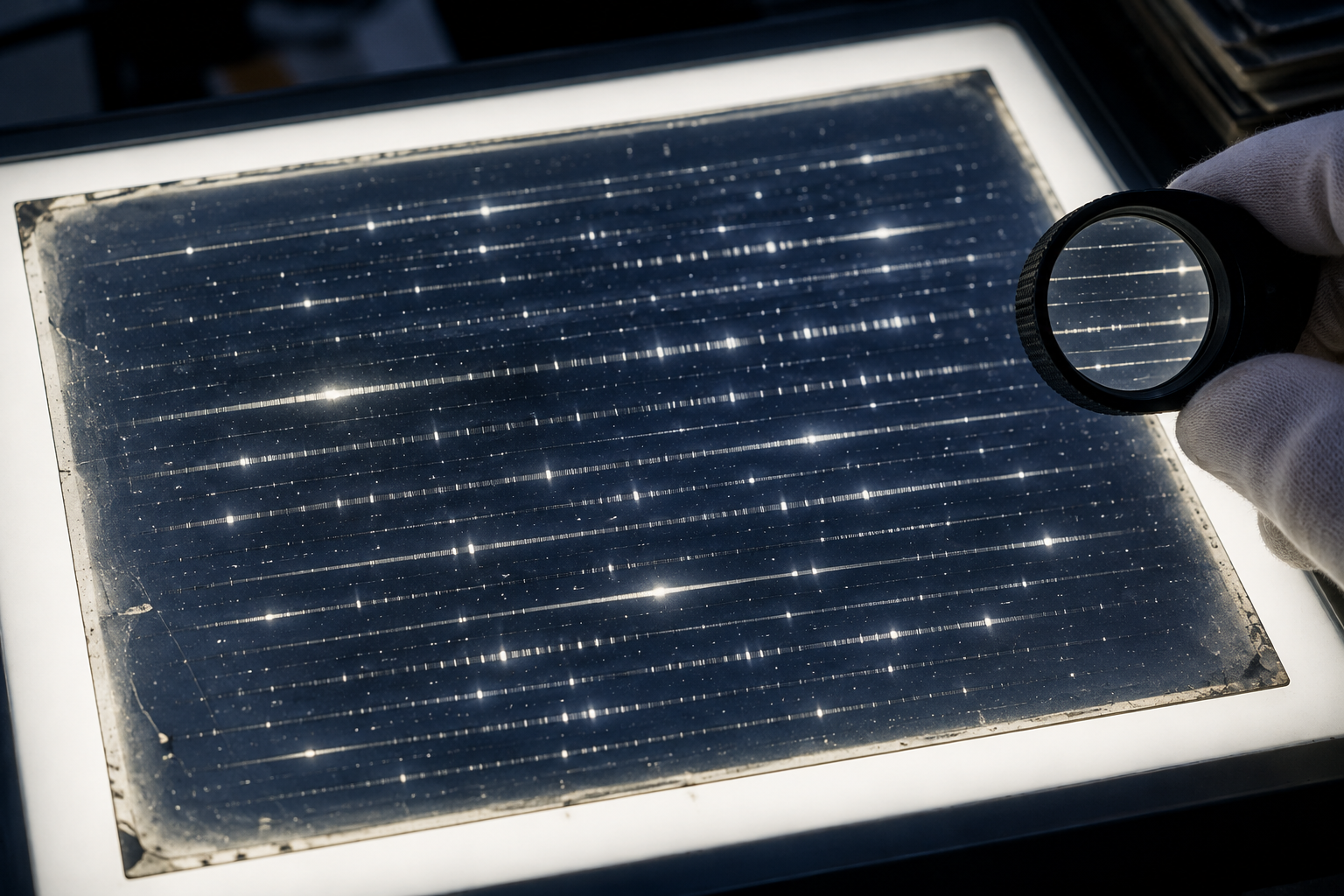
If you have ever learned that the Sun is a G-type star, you have met Annie Jump Cannon’s legacy. At Harvard College Observatory, Cannon helped turn thousands of faint streaks on glass photographic plates into a practical shared language for stars: the familiar O, B, A, F, G, K, M sequence. It was not a lone-genius flash. It was painstaking, collaborative work—built on earlier classifications, a remarkable observatory team, and an archive of stellar spectra—that the International Astronomical Union adopted in 1922 and astronomers still use in refined form today.
For a night-sky community, that story has a lovely payoff: every time a guide calls the Sun a G star or a red giant an M star, it is using a map Cannon helped make. It is a reminder that astronomy grows when people compare notes, share observations, and make a huge sky legible together.
Who was Annie Jump Cannon?
Annie Jump Cannon (1863–1941) was an American astronomer who joined the Harvard College Observatory staff in 1897 after studying astronomy at Wellesley and Radcliffe. She had become deaf after an illness in young adulthood; that fact is part of her biography, not an explanation for her achievement. Her skill was visual and analytical: reading the patterns in stellar spectra—light split into bands and lines—recorded on photographic glass plates.
At Harvard, Cannon worked within a large and consequential network that included Williamina Fleming, Henrietta Swan Leavitt, Edward C. Pickering, assistants, plate makers, observers, catalogers, and later collaborators. The women hired as “computers” were doing far more than clerical arithmetic: they inspected images, found patterns, measured stars, and made research connections. The Harvard College Observatory’s history describes the resulting Henry Draper Catalogue as containing more than 225,000 spectra.
That team context matters. Cannon built on Fleming’s earlier lettered scheme, reworked it using the strength and appearance of spectral lines, and made the method consistent enough to apply at enormous scale. You can meet another member of that wider Harvard story in our profile of Henrietta Leavitt and the discovery that let us measure the universe.

What did Cannon’s stellar classification system change?
Before a standard system, different observers could sort stars in different ways. Cannon’s work gave astronomy a durable organizing tool: classify a star from its spectrum, then compare like with like. A prism placed in front of a telescope’s lens spread each star’s light into a tiny spectrum; dark or bright features in that spectrum carry clues about physical conditions in the star.
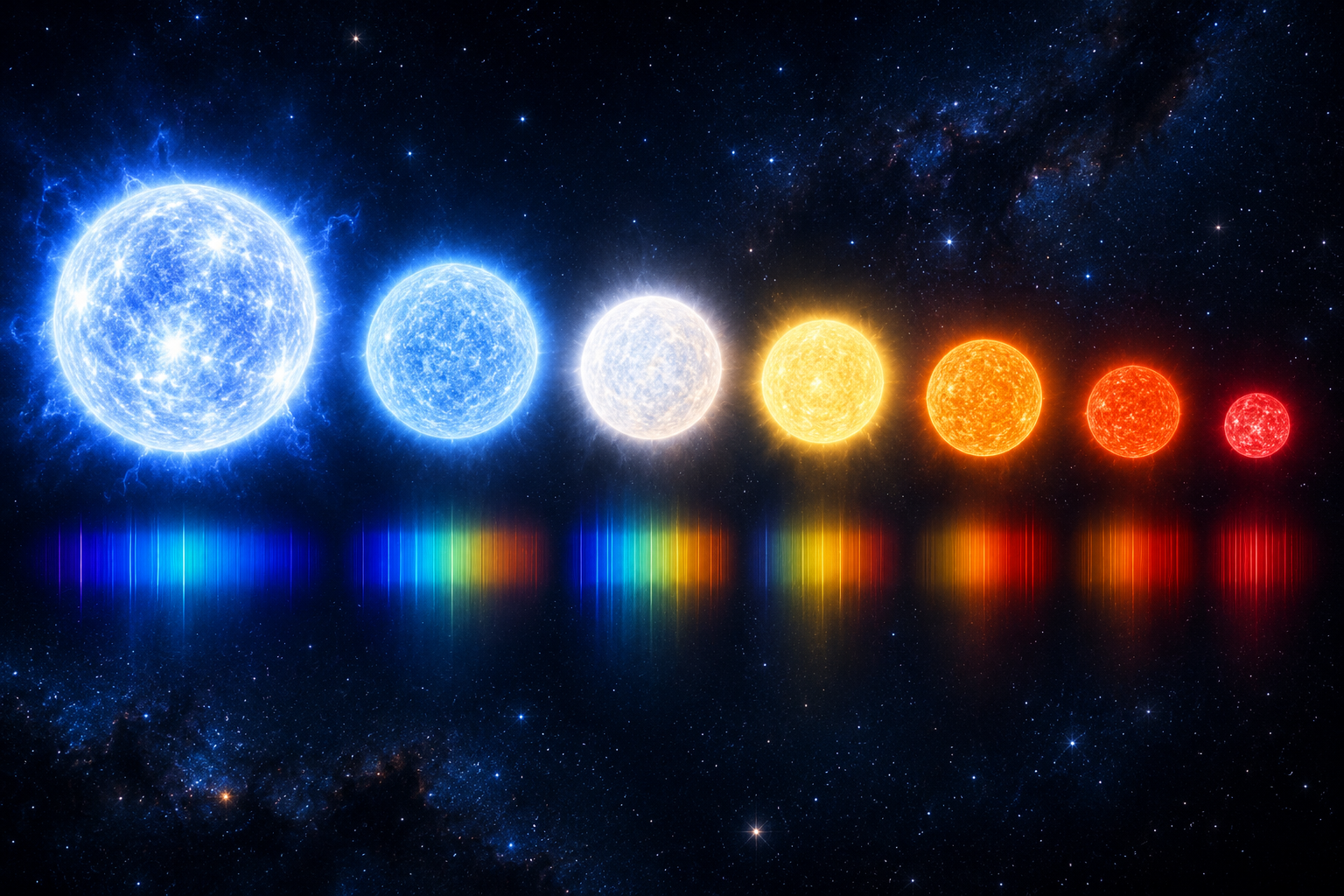
Her published system settled on the broad sequence OBAFGKM, later divided with numerals such as G2. The order is not alphabetical because it preserves the history of earlier categories while arranging the useful classes in a way that tracks temperature. O-type stars are hottest; M-type stars are coolest among the familiar main sequence classes. Our Sun is a G-type star.
One important precision: a spectrum is not merely a color swatch. The lines arise from atoms and ions under particular conditions, so their strengths change with temperature. Modern physics, instrumentation, and data analysis have greatly expanded what astronomers can infer from spectra. Cannon’s categories remain foundational, but they are not the whole of a contemporary stellar description; luminosity classes and detailed abundance, gravity, motion, and variability measurements add much more.
The Harvard & Smithsonian Wolbach Library’s account of Cannon’s spectroscopy notes that she could classify a star every two to three minutes and that the IAU formally adopted the system in 1922. That speed was meaningful because a classification method only becomes scientifically powerful when many people can use it consistently across a huge catalogue.
Why is the order OBAFGKM still useful?
The sequence gives beginners a surprisingly direct bridge from a telescope eyepiece to astrophysics. When you notice that a star looks blue-white, yellow, or orange-red, you are seeing part of the same physical story encoded in a spectrum. Color alone does not replace measurement, but it invites a good question: what is this star’s surface temperature and what do its spectral lines reveal?
That is why a modern observing session can be both simple and deep. You do not need equipment to begin asking which bright stars look noticeably different in color. On a clear Texas evening, pick out a blue-white star and a warm-toned one, let your eyes adapt, then compare observations with friends. Our Austin stargazing community is a welcoming place to find people who enjoy those kinds of sky conversations, whether you bring binoculars, a telescope, or only curiosity.
Cannon’s taxonomy also shows why shared standards matter. A star catalogue becomes more useful when an observer in one place can understand a classification made by someone elsewhere. Today’s sky surveys use digital detectors and software, yet their data products still converse with the stellar vocabulary Cannon helped establish. The Harvard Plate Stacks traces how later physics helped explain why the line patterns correspond to stellar temperatures.
How did collaboration shape Cannon’s legacy?
It is tempting to turn a history of science into a single heroic portrait. Cannon deserves clear credit for her central contribution, but the more accurate picture is richer: observatory work relied on collections, instruments, funding, observers, catalogers, assistants, and researchers who questioned and refined one another’s ideas. Cannon herself worked with assistants to build catalogues; later astronomers brought quantum theory and better measurements to bear on the meaning of the spectra.
That is also why the story resonates now. The astronomical community still depends on teams whose work spans observing, engineering, data stewardship, teaching, and public outreach. Read about the women leading NASA’s Roman Telescope for a present-day example, or revisit Sally Ride’s first flight for another chapter in space history shaped by people opening doors and doing exacting work.
What can a stargazer take from Cannon’s work tonight?
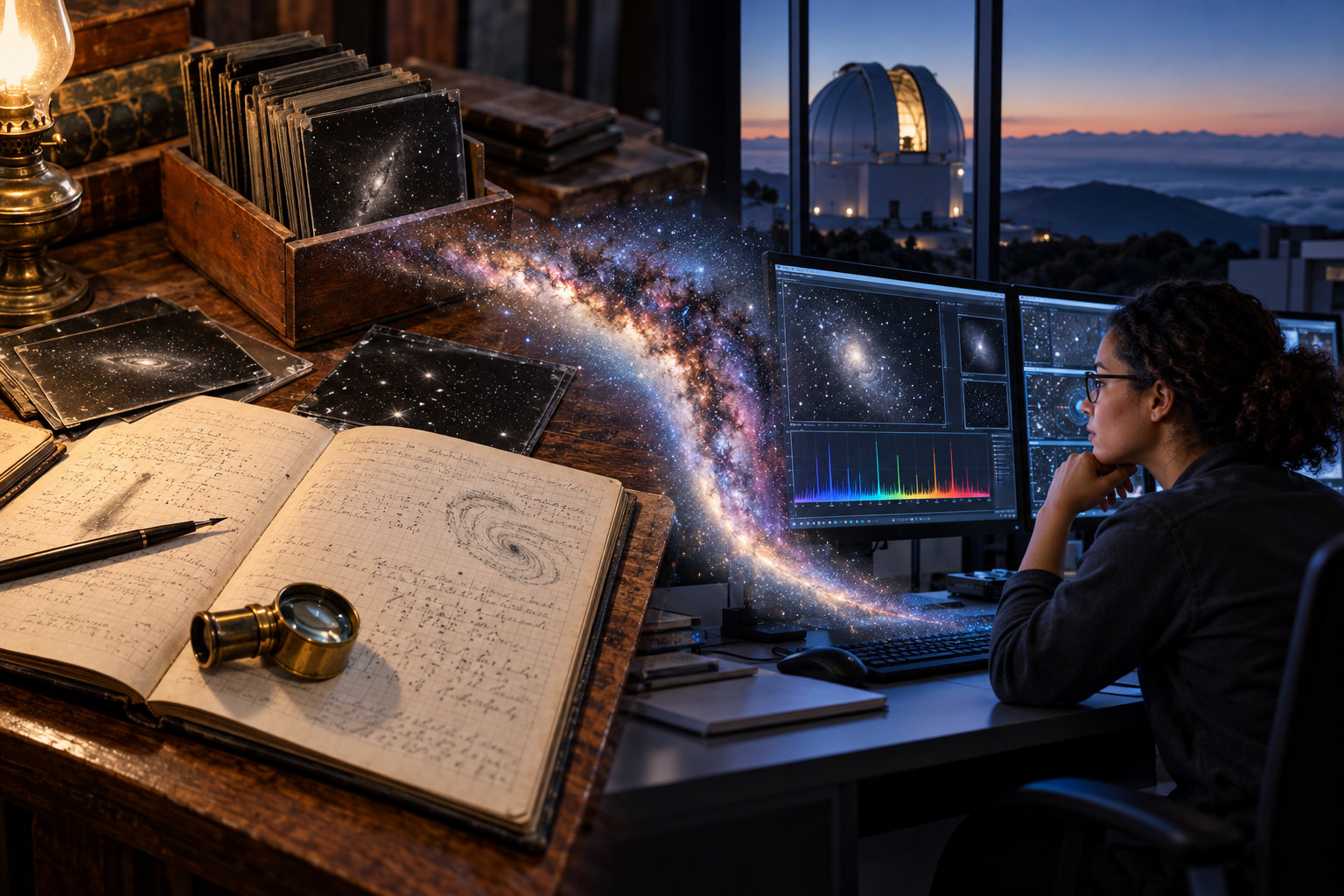
Start small: look for color, then look for company. A friend may notice a warm orange star you missed, or know the name behind a bright point you have admired for years. If a cloudy forecast keeps you indoors, choose one stellar type and read about a representative star instead. The habit Cannon’s work encourages is not memorizing a mnemonic for its own sake; it is connecting what you see to evidence.
And if you want more people for those conversations, join the Cosmic Match astronomy community and build a local circle around the night sky. The same curiosity that sends us to a star chart makes a great opening line at a public observing night: “What do you think that star’s color is telling us?”
For a modern reminder of how spectra keep opening new windows, see our explainer on IceCube and neutrino astronomy. Cannon’s glass plates and today’s detectors are very different tools, but both turn difficult-to-see signals into something people can investigate together.
FAQ
What does OBAFGKM mean in astronomy?
OBAFGKM is the familiar sequence of broad stellar spectral classes associated with Annie Jump Cannon’s Harvard classification work. In the usual temperature ordering, O stars are hottest and M stars are coolest; numbers refine each class.
Is the Sun an O, B, A, F, G, K, or M star?
The Sun is a G-type star, more specifically G2V in the widely used modern notation. The “V” adds a luminosity class, showing how contemporary classification includes more than the original broad letter sequence.
Did Annie Jump Cannon invent stellar classification by herself?
No. Cannon made the decisive, lasting refinement to a system developed within the Harvard College Observatory community, building on Williamina Fleming’s earlier work and a vast collection of spectra. The history is strongest when it credits both Cannon’s achievement and the team that made the catalogues possible.
Do I need a telescope to notice stellar colors?
No. Bright stars can show subtle color differences to the unaided eye under a dark, clear sky. Binoculars can make the experience more engaging, but they are not required.