Euclid Was Mapping the Dark Universe—Then It Found a New Comet
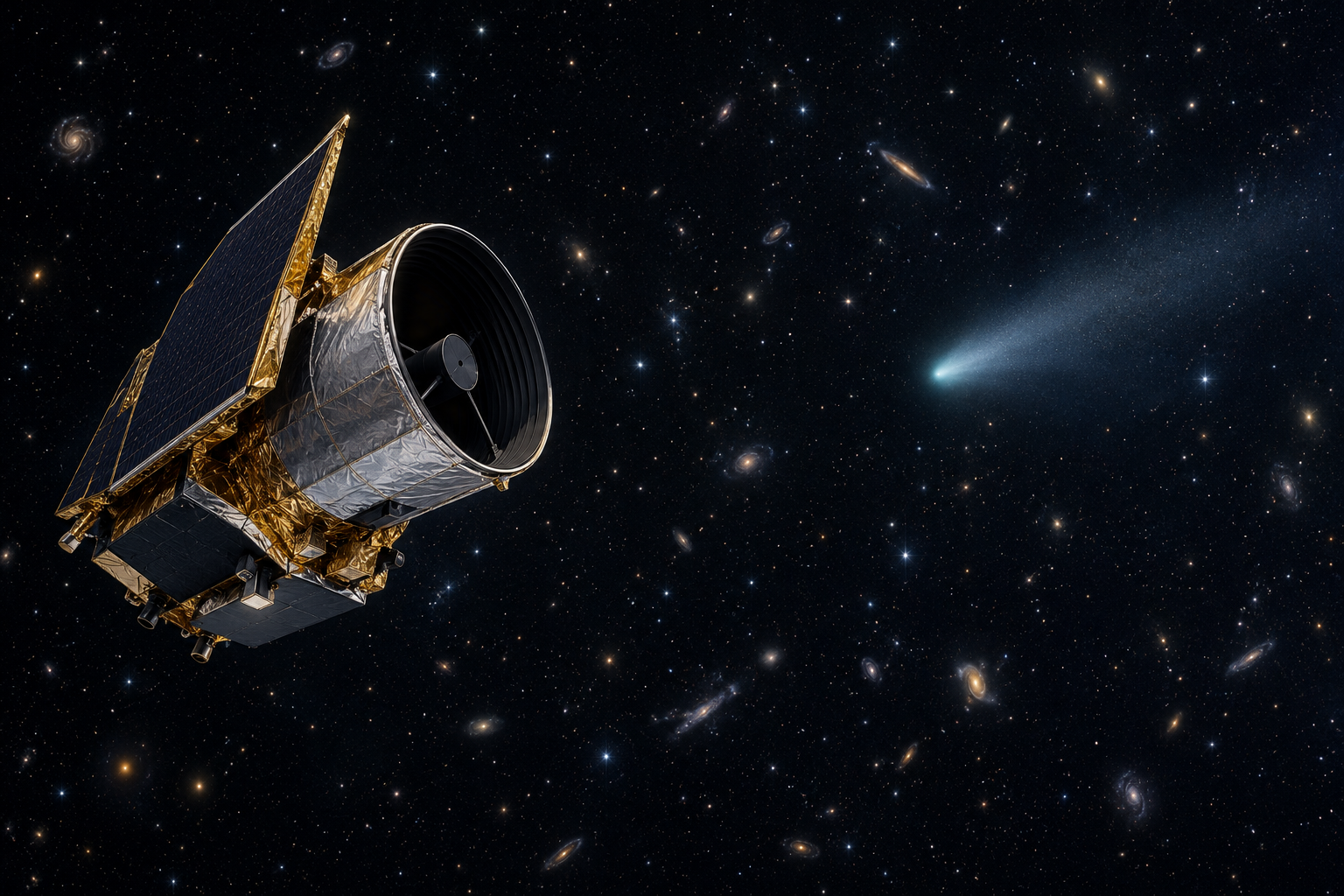
ESA’s Euclid space telescope was built to map the dark universe, not to hunt comets. Yet its survey images from September have revealed its first previously unknown comet: C/2026 S1 (Euclid). The find is a useful reminder that a mission designed to study distant galaxies can sometimes notice a nearby visitor moving through the same frame—and that the alert process matters as much as the discovery itself.
On 19 October, ESA announced Euclid’s discovery. This is not a new object to chase from a backyard telescope. It is a spacecraft-survey result, found about 1.3 billion kilometres from Earth, roughly between the orbital distances of Jupiter and Saturn.

What did Euclid discover?
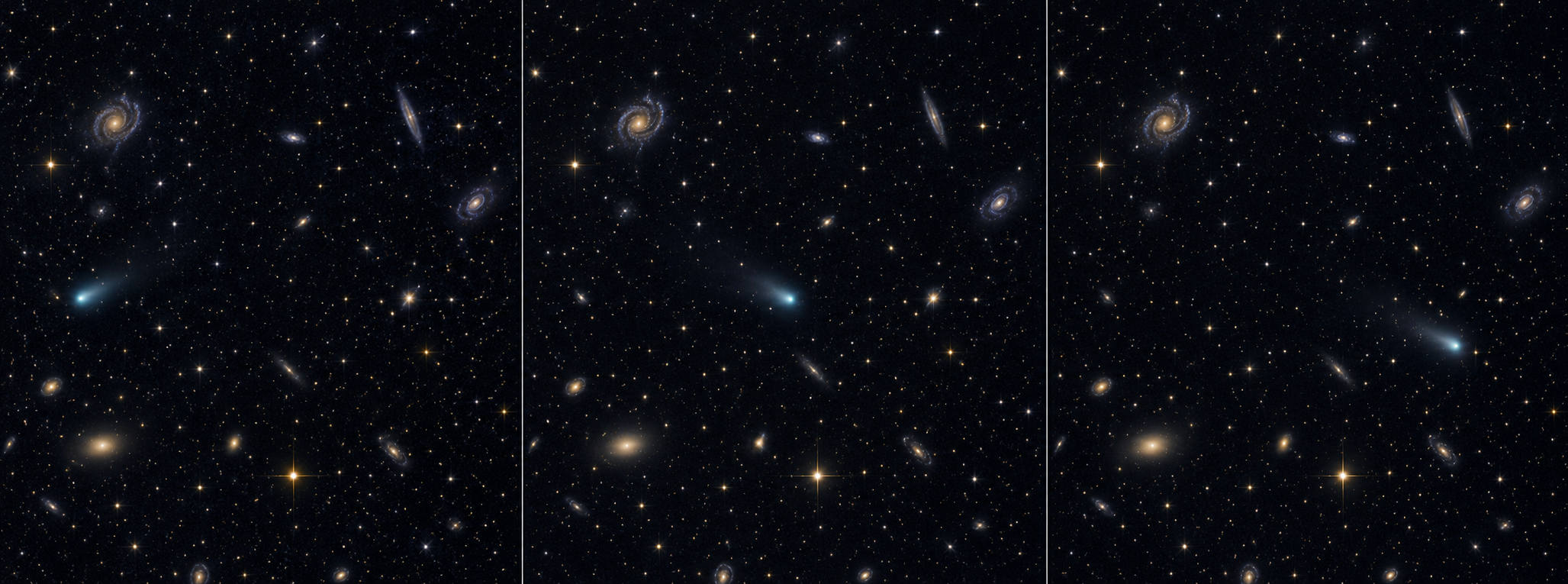
C/2026 S1 (Euclid) is the first previously unknown comet identified in Euclid data. The telescope had seen comets before, but those objects were already catalogued. In this case, a moving-object search developed by University of Helsinki PhD student Mikko Pöntinen flagged a streak across several images. When the team predicted where it should appear next, they recovered it in five image sets and noticed the fuzzy cloud—called a coma—that signals an active comet releasing dust and gas.
Euclid captured the object between 16 and 24 September in its Deep Field North. Checks against known-object catalogues found no match, so the team reported it to the International Astronomical Union’s Minor Planet Center. Ground-based observers then added follow-up observations, and the MPC confirmed the comet designation on 8 October.
That chain—survey image, software flag, human checks, shared report, follow-up—is how an unexpected speck becomes a named Solar System object rather than an intriguing artifact.
Why was a dark-universe telescope looking at a comet?
Euclid’s primary job is much bigger and much farther away. Over six years, it is measuring the shapes and distribution of billions of galaxies, out to about 10 billion light-years, to help scientists investigate dark matter and dark energy. That makes it a natural companion to stories such as NASA’s Roman Telescope and its own dark-universe mission.
But every ultra-sensitive galaxy survey has to account for foreground clutter. A moving comet trail or extra light can affect a deep image, so identifying Solar System objects helps Euclid clean its data for cosmology. The surprise is that Euclid is deliberately designed to avoid the crowded plane of the Solar System, where asteroids and comets are more common. Its usual “step-and-stare” plan also visits a patch of sky only once, rather than repeatedly tracking a target.
In other words, this discovery needed a fortunate geometry: the comet’s path and Euclid’s survey schedule lined up often enough for the team to recognize motion.
How did Euclid notice something that moves?
The beginner-friendly version is a celestial flipbook. Distant galaxies barely change position from one Euclid exposure to the next. A comet within our Solar System does. Software can look for an object that shifts consistently between images, then researchers can test whether its trail and appearance make physical sense.
ESA says C/2026 S1 was recorded in 16 total exposures across five fields of view. That is enough to establish a credible moving track, while the fuzzy coma distinguishes a comet from a point-like asteroid. It is a great example of why careful data handling is part of discovery: a feature that initially looks like noise can become a scientific alert when it repeats in the right pattern.
Why do the rapid alerts matter?
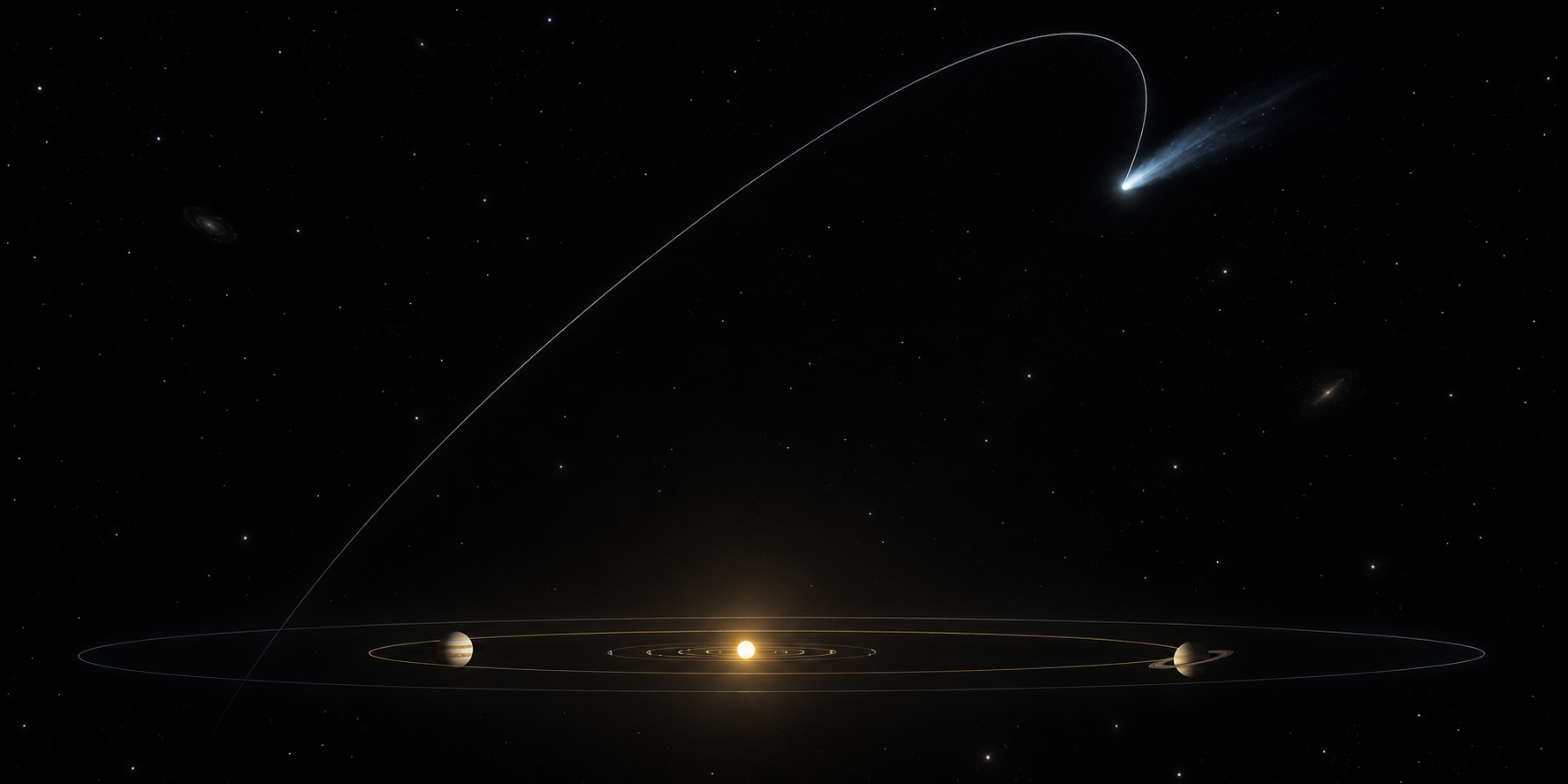
The comet is on a highly inclined path—think of it as arcing well above the Solar System’s usual flat planetary traffic lane—and takes thousands of years to complete an orbit. ESA emphasizes that very few comets are expected to be discovered by Euclid. The point is not that Euclid has turned into a comet-hunting mission.
Instead, this episode is a real-world test of coordination: find an object, confirm it quickly, share the alert, and let the wider observing community follow up. That workflow could be valuable if a future object is noticed while still far from the Sun. It also shows why science missions produce surprises beyond their headline purpose—much like the operational milestones behind MMX’s journey toward Phobos or the careful commissioning still ahead for CTAO-North’s new telescope array.
Is C/2026 S1 a target to watch from Earth?
No public naked-eye or amateur observing opportunity has been identified. ESA places C/2026 S1 about 1.3 billion kilometres from Earth, far beyond the kind of friendly sky event covered in a no-telescope stargazing guide. It is also not a suitable target for ESA’s future Comet Interceptor mission.
That does not make the story less fun. It makes the distinction clearer: this is a discovery about a survey telescope, a smart detection pipeline, and a global scientific handoff—not a promise of a bright comet in tonight’s sky. For more approachable space stories and people to share them with, join the Cosmic Match community.
FAQ
What is C/2026 S1 (Euclid)?
It is a newly identified comet found in Euclid survey images from September 2026. The Minor Planet Center confirmed the comet designation on 8 October.
Was Euclid built to discover comets?
No. Euclid’s main mission is to map the large-scale universe and investigate dark matter and dark energy. Detecting this comet was an unusual but useful by-product of its survey work.
Can I see Comet C/2026 S1 from Austin, Houston, or Los Angeles?
No public naked-eye or amateur viewing opportunity has been identified; this is a distant spacecraft-survey discovery, not a practical observing target from those cities or elsewhere right now.
Related reading
For a different question about comets—what they may have contributed to early-Earth chemistry—read why a new early-Earth study finds one cometary HCN delivery route exceptionally unlikely.